Latest update April 12th, 2026 12:50 AM


Venezuela said border issue was referred to ICJ against its will
Kaieteur News – The Venezuelan Government has made a statement, arguing that the case concerning the Essequibo region was referred to the International Court of Justice (ICJ) against its will.
The statement was made in response to the United Nations Secretary General, António Guterres, who recently reminded that he had referred the controversy to the ICJ in accordance with the power conferred on him by the 1966 Geneva Agreement. The controversy centers on the validity of the 1899 Arbitral Award that established the land boundary between then British Guiana and Venezuela. Venezuela’s rejection of the ICJ’s jurisdiction stands in stark contrast to Guyana’s approach. President Nicolas Maduro of Venezuela has been firm in his rejection, saying, “Venezuela has never recognised nor will it recognise the ICJ for the resolution of this issue.” This comes despite the fact that the government has participated in the case.
Guyana, on the other hand, has not only recognised but also actively embraced the ICJ’s jurisdiction and continues to urge Venezuela to comply. The Government of Guyana firmly believes that the Court is the appropriate forum for resolving Venezuela’s territorial claims to the Essequibo region. Guyana most recently sought the Court’s intervention to block Venezuela’s planned referendum to annex the Essequibo region, which constitutes a substantial portion of Guyana’s territory. Guyana’s application to the ICJ aims to prevent Venezuela from taking any actions that might alter the status of the region pending the Court’s final decision on the validity of the 1899 Arbitral Award, which settled the two countries’ borders over a century ago. Venezuela had, subsequent to that Award, accepted the award and even worked with Guyana and Brazil to jointly demarcate the territory, placing a monument on Mount Roraima to mark the place their three borders met. But Venezuela later changed its position.

The International Court of Justice
Venezuela’s recent behaviour has led to increased tensions in the region, with Caracas ramping up military activities near Guyana’s border. Maduro then reiterated a proposal for a direct meeting with President Irfaan Ali to resume discussions to resolve the controversy, even as the matter is before the Court, and even as his government moves forward with a referendum, seeking public support to annex the Essequibo region.
Guyana and Venezuela are scheduled to present their oral arguments to the ICJ on the referendum. Guyana is set to present its case today, Tuesday, 14 November 2023, while Venezuela will present the following day. This hearing is part of the ongoing case initiated by Guyana in March 2018, seeking the Court’s confirmation of the legal validity and binding effect of the 1899 Award.
The United Nations Secretary General’s spokesperson, in a recent statement, called on both nations to demonstrate good faith and avoid exacerbating the controversy. While Maduro’s administration has consistently maintained that Venezuela never consented to the Court as the mechanism for resolution, María Corina Machado, the presidential candidate of Venezuela’s opposition coalition, contradicted the Maduro regime’s stance. Machado has called for Venezuela to engage constructively in the ICJ process. In her view, this would offer Venezuela a chance to present a robust defense. “The controversy is being resolved at the level of the ICJ, regardless of whether we like it or not, that is where it is, and Venezuela has already acted, therefore, it cannot ignore it. The court is going to issue a verdict that is mandatory for us to comply with,” Machado stated in a recent interview with EFE. She also criticized the proposed referendum, calling it non-binding and potentially detrimental to Venezuela’s position under international law. Machado has faced significant obstacles from the current regime, while seeking office. The government banned her from holding public office. The US government said Venezuela must lift the bans on opposition candidates to avoid sanctions. But after Machado persisted and was voted to run against Maduro, Venezuela’s Supreme Court suspended the results and affirmed the ban on her holding public office.
Share this:

Discover more from Kaieteur News
Subscribe to get the latest posts sent to your email.
- António Guterres, Essequibo, International Court of Justice, United Nations Secretary-General, Venezuela
Similar Articles

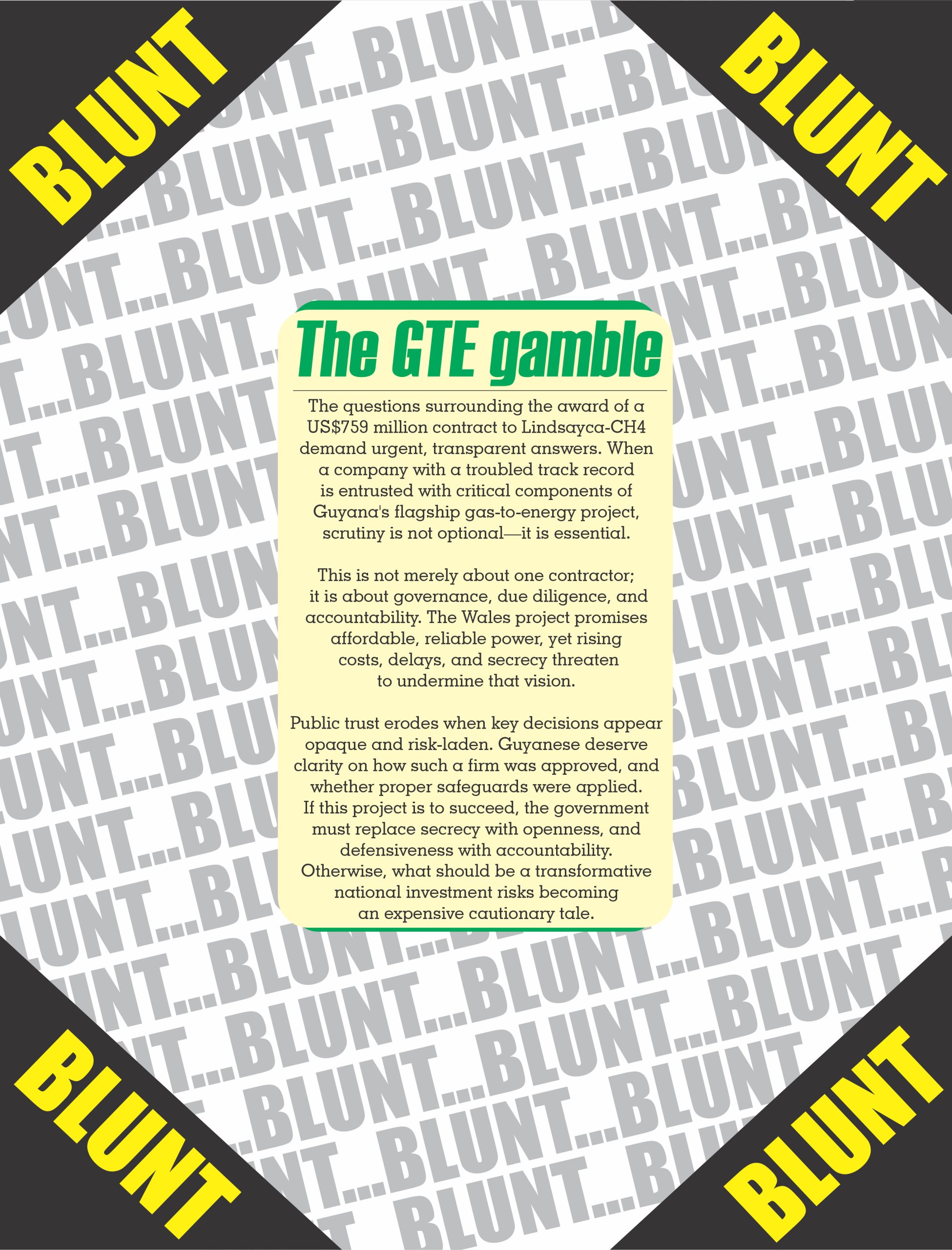
THE BLUNT OF THE DAY
Sports
Features/Columnists

Sir. Ronald Sanders

The GHK Lall Column

Weekend Cartoon