Latest update May 26th, 2026 12:35 AM


Latest News
- Pres. Ali defends foreign firms ‘flipping’ mining claims despite Guyana getting nothing from deals
- ‘Normalise with Israel or deal with Iran dies’ – Trump threatens Arab world
- Family says teen acted in self-defense in Corentyne fatal stabbing
- U.S. military launches new strikes on Iran
- Woman on the run after miner killed at Bamboo Landing
The case for reparations for post-slavery indentured labor
Dear Editor,
Anthropologist, author and University of Guyana lecturer, Dr. Kumar Mahabir recently presented a research paper at the Anton de Kom University in Suriname on the case for reparations for indentured servitude in the Caribbean and the wider Indian Diaspora. The paper was presented in person at the international conference on Slavery, Indentured Labour and Their Impact on Present Societies. The conference was organised by the History Department of the Faculty of Humanities, in collaboration with the Faculty of Graduate Studies and Research (FGSR), the Faculty of Social Sciences, the Social Science Research Institute (IMWO) of the Anton de Kom University of Suriname, and the Directorate of Culture. (Ministry of Education, Science and Culture).
Mahabir presented a compelling case for reparations for Indian indentureship. His presentation was followed by the arrival of the family of Sir John Gladstone in Guyana two weeks ago which marked a significant moment in history. The family expressed their sincere apologies for their ancestor’s direct involvement in both slavery and indentureship in the Caribbean country. John Gladstone was the father of four-time British Prime Minister, William Gladstone.
In the year 1838, John Gladstone played a pivotal role in introducing a workforce of Indian indentured labourers to Guyana that was intended to supplant the previously enslaved Africans. He owned several sugarcane plantations in then British Guiana – Demerara as it was called – on which slaves, and later indentured labourers worked, the largest of which were the Vreedenhoop and Belmont estates. Historical records indicate that John Gladstone was also associated with the ownership of two vessels responsible for the transportation of exploited labourers from India. These labourers were engaged in indentured servitude as a result of the abolition of slavery in 1834.
In a move towards reparatory justice, the Gladstone family announced their intention to contribute £100,000 to the University of Guyana’s International Institute for Migration and Diaspora Studies, inaugurated at that historic event. The family also made a commitment to allocate funding towards various unnamed projects in Guyana and the University of London’s Centre for the Study of the Legacies of British Slavery, both for five years. The hope is that a fair sum of this money would go to the study of indentureship that would also benefit Indian lecturers and students at the university, as well as fund projects in Indian communities in Guyana.
The following is Mahabir’s abstract: “In 1838, the first shipload of Indian indentured labourers to be brought to the Caribbean set foot in British Guiana. Over the next 80+ years, over half a million more would come, distributed to various colonies throughout the region to work on the colonial sugar plantations. Post-slavery indentureship was described by historian Hugh Tinker as a “new system of slavery”, it being a deceptive system riddled with abuse and exploitation. Amidst the calls for reparations being made in recent years by the descendants of enslaved Africans and indigenous peoples, the descendants of indentured Indians are also starting to make their voices heard and recognised. However, the argument in favour of reparations for indentured peoples, specifically Asian Indians who made up the vast majority of post-slavery indentured labourers, is less straightforward than it is for the victims of slavery and indigenous genocide.
“In a recent Zoom public meeting of 22 May 2022 on the topic ‘Should Indians in the Diaspora demand reparation for indentureship? Dr Hilary Brown, Programme Manager of Culture and Community Development at the CARICOM Secretariat posed the question: “There are established definitions of what constitutes a crime against humanity. And so that includes enslavement, genocide, dehumanisation…. Can we also classify indentureship as a crime against humanity, and in the dialogue, then, where does it fit?” This paper will look at the impact that indentured servitude had in the Caribbean, and interrogate the justifications for the descendants of indentured labourers to receive reparations.”
Yours truly,
Dr. Kumar Mahabir
Trinidad and Tobago
Share this:

Discover more from Kaieteur News
Subscribe to get the latest posts sent to your email.
Similar Articles
One thought on “The case for reparations for post-slavery indentured labor”

THE BLUNT OF THE DAY

Sports

Features/Columnists

Sir. Ronald Sanders

The GHK Lall Column

Weekend Cartoon
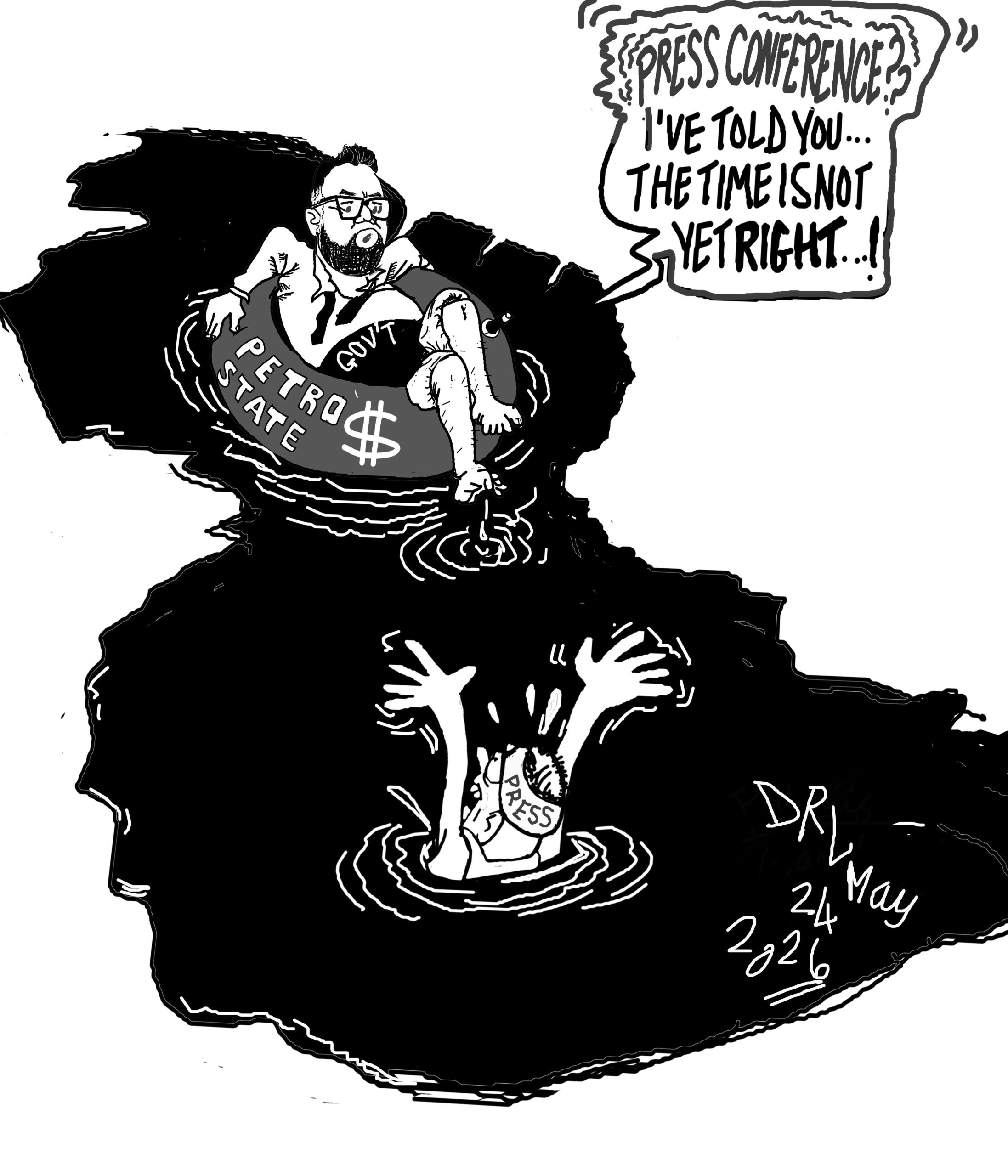


The marginalisation of descendants of people of indentured labourers should be seriously looked at as some govts. claiming to be
“democratic” discriminate heavily against their
advancement against heavy odds especially education