Latest update March 23rd, 2026 12:30 AM

Oct 11, 2018 Letters
Dear Editor,
I was pleased to have been invited by Dr. Raphael Hazel to respond to a Green Paper on the Natural Resource Fund (NRF) being proposed by the Guyana Government in light of the recent Oil & Gas discoveries off Guyana’s coast.
I also noted the Kaieteur News piece ‘Natural Resource Fund at risk for political gain – Int’l Analysts’ by Wilburg (Wednesday 10th Oct 2018) and seek your permission to make a few comments.
Governments don’t always get it right – democracy is a many-headed beast. However, I am encouraged by the fledgling efforts of the current coalition government to be transparent regarding the NRF. The Government ought to be commended and encouraged to be more open in many other areas of government as well.
Your piece on the NRF, as reported by Wilburg, highlighted the paper by Asim Ali and Patrick Schena (‘Harnessing Oil Wealth in Guyana via a Sovereign Wealth Fund: Look Before You Leap’, March 5, 2017, Social Sciences Research Network (SSRN) http://dx.doi.org/10.2139/ssrn.2979864). I do agree with the sentiments of the paper and other reports in the media that Guyana’s institutional oversight infrastructure is rather weak. However, in my response to the recent NRF Green Paper (13 Sept 2018), I made a suggestion which I hope will be taken seriously by the Government. My aim is to temper my criticisms with good workable solutions – I want to show that the NRF, though being a challenge, could be really positive and healthy for Guyana.
I am a Physicist and have worked in the UK Defence industry for almost 15 years. As a leader and provider of ‘next generation’ solutions, I have learned not to be overly distracted or frightened by the information overload possible in today’s media milieu. There is a need to remain focused on the task while delivering a workable solution in a timely manner. So here are my observations about the Green Paper.
I think the Green Paper was well written and deserves commendation. Within it, I can sense a desire to be transparent and furthermore, the Green Paper was clear in what it wanted to achieve. However, there are concerns about how these objectives can be achieved. How will the ideas of the Macroeconomic Committee (MEC), for example, be stress tested?
How is quality guaranteed? What mechanisms are in place to understand and monitor the behaviour and performance of the MEC? There seems to be no real stops for a future political takeover of the Fund.
To be able to achieve the objectives outlined in the Paper regarding stability, management quality, institutional oversight, and focus, I believe there should be an independent ‘Think Tank’ with the following aims:
1. The think tank should be an Independent Research Organisation (IRO) partially supported by the Government and partially self-supporting from its own research business in order to maintain political independence. In the early years the IRO may be fully supported by Govt and slowly weaned off.
2. The IRO should be experts on Guyana and Latin America economics, banking and finance as well as being proficient in global economies
3. The IRO should provide alternative Dear Editor,
I was pleased to have been invited by Dr. Raphael Hazel to respond to a Green Paper on the Natural Resource Fund (NRF) being proposed by the Guyana Government in light of the recent Oil & Gas discoveries off Guyana’s coast.
I also noted the Kaieteur News piece ‘Natural Resource Fund at risk for political gain – Int’l Analysts’ by Wilburg (Wednesday 10th Oct 2018) and seek your permission to make a few comments.
Governments don’t always get it right – democracy is a many-headed beast. However, I am encouraged by the fledgling efforts of the current coalition government to be transparent regarding the NRF. The Government ought to be commended and encouraged to be more open in many other areas of government as well.
Your piece on the NRF, as reported by Wilburg, highlighted the paper by Asim Ali and Patrick Schena (‘Harnessing Oil Wealth in Guyana via a Sovereign Wealth Fund: Look Before You Leap’, March 5, 2017, Social Sciences Research Network (SSRN) http://dx.doi.org/10.2139/ssrn.2979864). I do agree with the sentiments of the paper and other reports in the media that Guyana’s institutional oversight infrastructure is rather weak. However, in my response to the recent NRF Green Paper (13 Sept 2018), I made a suggestion which I hope will be taken seriously by the Government. My aim is to temper my criticisms with good workable solutions – I want to show that the NRF, though being a challenge, could be really positive and healthy for Guyana.
I am a Physicist and have worked in the UK Defence industry for almost 15 years. As a leader and provider of ‘next generation’ solutions, I have learned not to be overly distracted or frightened by the information overload possible in today’s media milieu. There is a need to remain focused on the task while delivering a workable solution in a timely manner. So here are my observations about the Green Paper.
I think the Green Paper was well written and deserves commendation. Within it, I can sense a desire to be transparent and furthermore, the Green Paper was clear in what it wanted to achieve. However, there are concerns about how these objectives can be achieved. How will the ideas of the Macroeconomic Committee (MEC), for example, be stress tested?
How is quality guaranteed? What mechanisms are in place to understand and monitor the behaviour and performance of the MEC? There seems to be no real stops for a future political takeover of the Fund.
To be able to achieve the objectives outlined in the Paper regarding stability, management quality, institutional oversight, and focus, I believe there should be an independent ‘Think Tank’ with the following aims:
1. The think tank should be an Independent Research Organisation (IRO) partially supported by the Government and partially self-supporting from its own research business in order to maintain political independence. In the early years the IRO may be fully supported by Govt and slowly weaned off.
2. The IRO should be experts on Guyana and Latin America economics, banking and finance as well as being proficient in global economies
3. The IRO should provide alternative Dear Editor,
I was pleased to have been invited by Dr. Raphael Hazel to respond to a Green Paper on the Natural Resource Fund (NRF) being proposed by the Guyana Government in light of the recent Oil & Gas discoveries off Guyana’s coast.
I also noted the Kaieteur News piece ‘Natural Resource Fund at risk for political gain – Int’l Analysts’ by Wilburg (Wednesday 10th Oct 2018) and seek your permission to make a few comments.
Governments don’t always get it right – democracy is a many-headed beast. However, I am encouraged by the fledgling efforts of the current coalition government to be transparent regarding the NRF. The Government ought to be commended and encouraged to be more open in many other areas of government as well.
Your piece on the NRF, as reported by Wilburg, highlighted the paper by Asim Ali and Patrick Schena (‘Harnessing Oil Wealth in Guyana via a Sovereign Wealth Fund: Look Before You Leap’, March 5, 2017, Social Sciences Research Network (SSRN) http://dx.doi.org/10.2139/ssrn.2979864). I do agree with the sentiments of the paper and other reports in the media that Guyana’s institutional oversight infrastructure is rather weak. However, in my response to the recent NRF Green Paper (13 Sept 2018), I made a suggestion which I hope will be taken seriously by the Government. My aim is to temper my criticisms with good workable solutions – I want to show that the NRF, though being a challenge, could be really positive and healthy for Guyana.
I am a Physicist and have worked in the UK Defence industry for almost 15 years. As a leader and provider of ‘next generation’ solutions, I have learned not to be overly distracted or frightened by the information overload possible in today’s media milieu. There is a need to remain focused on the task while delivering a workable solution in a timely manner. So here are my observations about the Green Paper.
I think the Green Paper was well written and deserves commendation. Within it, I can sense a desire to be transparent and furthermore, the Green Paper was clear in what it wanted to achieve. However, there are concerns about how these objectives can be achieved. How will the ideas of the Macroeconomic Committee (MEC), for example, be stress tested?
How is quality guaranteed? What mechanisms are in place to understand and monitor the behaviour and performance of the MEC? There seems to be no real stops for a future political takeover of the Fund.
To be able to achieve the objectives outlined in the Paper regarding stability, management quality, institutional oversight, and focus, I believe there should be an independent ‘Think Tank’ with the following aims:
1. The think tank should be an Independent Research Organisation (IRO) partially supported by the Government and partially self-supporting from its own research business in order to maintain political independence. In the early years the IRO may be fully supported by Govt and slowly weaned off.
2. The IRO should be experts on Guyana and Latin America economics, banking and finance as well as being proficient in global economies
3. The IRO should provide alternative viewpoints, strategies and, or investment trajectories, and enquiries, into the status quo as presented by the Macroeconomic Committee to the Ministry of Finance
4. The IRO should provide mechanisms to Stress-Test any proposals emerging from the Macroeconomic Committee of the NRF, including modelling and testing of assumptions of financial and economic ideas in relation to the objectives of the NRF
5. The IRO should study the management and monitor the operations of the NRF within the context of its financial, economic and investment decisions in relation to global economic trends.
6. In general, the IRO should be (and only be) a credible witness in a court of law.
7. The IRO should provide economic viewpoints and outlook for Guyana, Latin America and Caribbean (LAC) countries
8. The IRO should provide independent long-term Scenario Planning for Guyana
9. The IRO is a Regional Centre of Excellence for Economic & Financial Policy matters in Guyana and LAC countries.
10. The IRO should recruit and challenge STEM professionals to be involved in Economic & Financial Policy matters so as to have a broader multidisciplinary perspective of the economy, and also to help create and stimulate the Scientific Research & Development, and Intellectual Property (IP) base and footprint of Guyana. 11. The IRO is an independent economic and financial policy research forum that looks at all aspects of the Guyana economy.
12. The IRO aims to provide independent (successful) strategies for Guyana given the extant geopolitical and geo-economic climate.
13. Such strategies and research output should be widely available both locally and internationally via regular publications of the IRO, thereby maintaining a significant amount of transparency in relation to the NRF, other entities in Guyana and LAC countries. Some aspects of the IRO may be confidential if done via contract to specific clients, though reporting annually its business operations.
Suitable IRO names could include e.g., ‘The Ramphal-Thomas Institute’ in recognition of the contributions of Sir Shridath Ramphal and Professor Clive Thomas to Guyana.
The focus on oil exclusively in the NRF Green Paper seems strange to me. There seems to be no mention of income from Bauxite, Gold, Diamonds, Timber and possibly others not yet exploited e.g., Uranium, Hydroelectricity, Iron, Copper. Where do the incomes from these natural resources go? Shouldn’t Guyana be thinking of incorporating these too into this legislation? Don’t the same arguments of good sound financial governance apply to these too?
In summary, I take the view that this is possibly the greatest opportunity for Guyana to set principles in place to get it right from the start. There may be a few teething problems, yes, but as long as we remain committed to those founding principles – that commitment will root out corruption, greed, exploitation and other undesirable traits that blight success.
Sincerely,
Dr. Jolyon M De Freitas
Editor’s Note. Dr De Freitas is a Physicist with over 25 years experience in both academia and industry. He worked on the NASA/Stanford University Gravity Probe B Satellite programme as well as in the UK Underwater Defence sector, including large-scale fibre-optic sensing arrays for Oil & Gas reservoir monitoring. He holds a PhD from Aberdeen University and a postgraduate diploma from the University of Cambridge Judge Business School covering entrepreneurship, innovation management and strategy.
Subscribe to get the latest posts sent to your email.
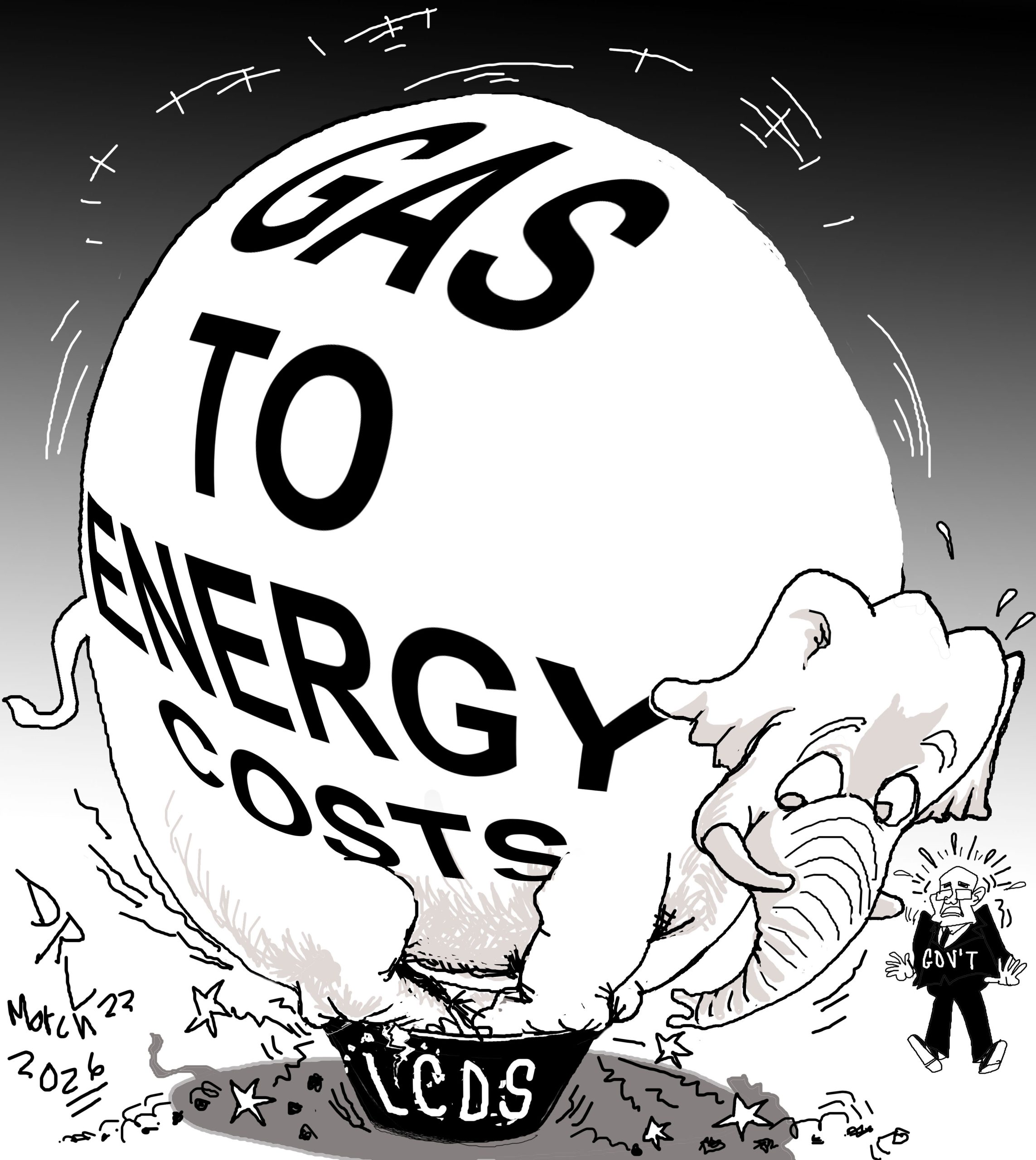
Your children are starving, and you giving away their food to an already fat pussycat.
Mar 23, 2026
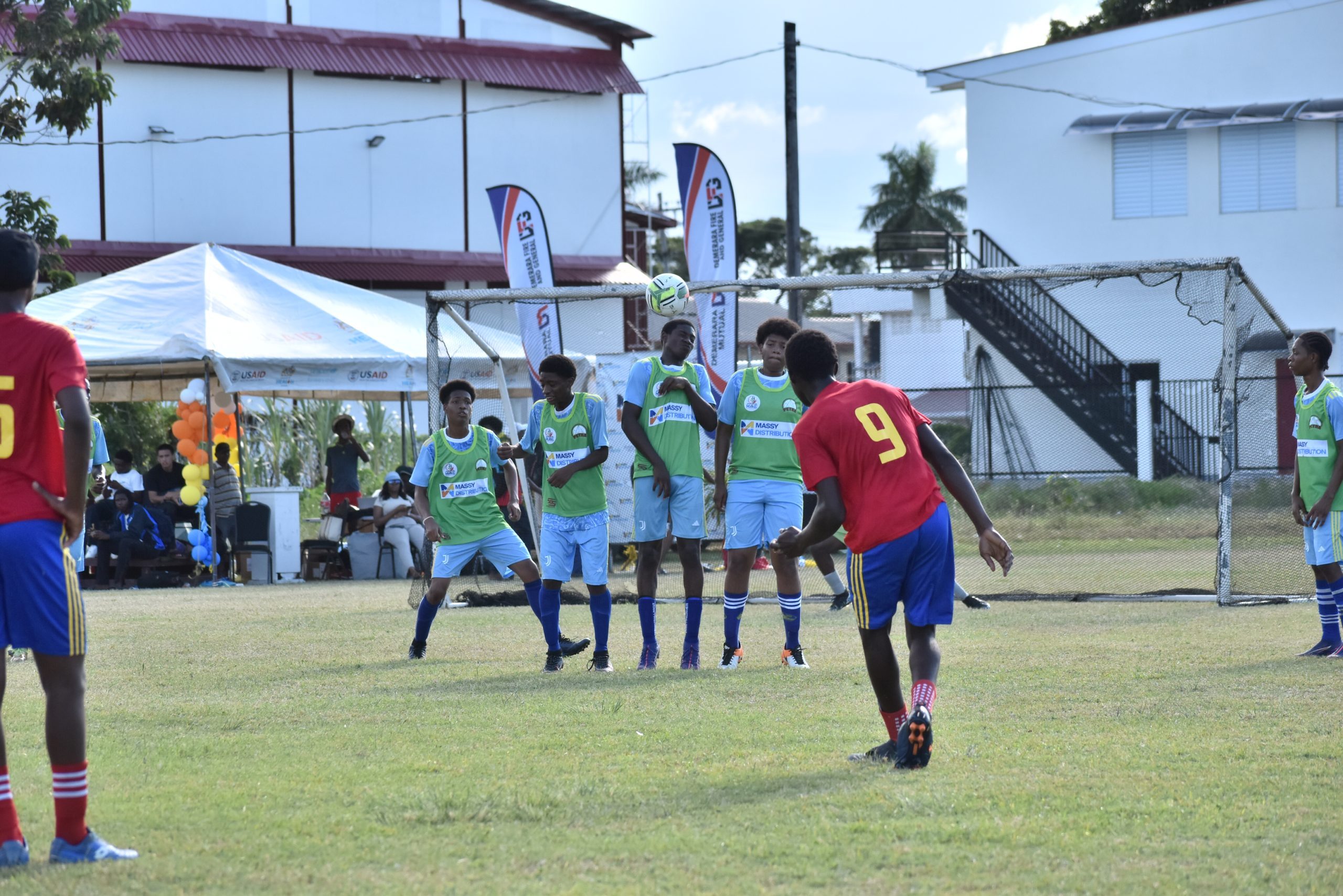
– Lodge, Santa Rosa, Three Mile Sec’ among first round winners Kaieteur Sports – Sunshine and steady breezes set the stage for a dramatic second day of action in the 12th Annual Massy...Mar 23, 2026
(Kaieteur News) – Something extraordinary is taking place in Guyana. It is a sudden and powerful movement, and it is happening right before our eyes. Across the country, systems that were once used mainly by residents are now being flooded with applications from abroad. Overseas-based Guyanese...Mar 22, 2026
By Sir Ronald Sanders (Kaieteur News) – The war in Iran is already at Caribbean doors. The attacks in Iran and the Gulf are being justified by some on the grounds that Iran’s record on terrorism, nuclear ambition, and regional meddling leaves the “free world” with no choice but to act...Mar 23, 2026
(Kaieteur News) – Juan Edghill is a spiritual man. More than an ordinary one, a Bishop he is. Receive a bow Bishop Edghill. Now, the difficult part: where art thou, Eminence? Thou shalt be seen and heard (minister and evangelise), but of those nary a whisper, not even the thin squeaking of...Freedom of speech is our core value at Kaieteur News. If the letter/e-mail you sent was not published, and you believe that its contents were not libellous, let us know, please contact us by phone or email.
Feel free to send us your comments and/or criticisms.
Contact: 624-6456; 225-8452; 225-8458; 225-8463; 225-8465; 225-8473 or 225-8491.
Or by Email: glennlall2000@gmail.com / kaieteurnews@yahoo.com