Latest update August 26th, 2026 11:47 AM


Latest News
- Opposition Leader released on $100k bail following Demerara River standoff with police
- Guyana must build refinery to guard against global shocks
- Exxon resumes oil pumping at Liza Unity
- Suriname turns down Guyana offer of alternative ferry
- Family of 14 among Guyanese stranded in Suriname amid ferry service suspension
IMPORTANCE OF THE COMMONWEALTH
Yesterday Guyana joined the Commonwealth nations to celebrate the 88th anniversary of Commonwealth Day under the theme “Towards a Common Future.” 
It is a voluntary association of 53 sovereign states with deep roots and enormous strengths. Nearly all members are former British colonies or dependencies of those colonies. Regardless of size, power or wealth, no member state in the Commonwealth exercises power over the others. Rather, the Commonwealth of Nations is an international organization in which countries with diverse social, political, and economic back-grounds are regarded as equal in status with common values and goals.
Such common values and goals include the promotion of democracy, human rights, good governance, respect for the rule of law, individual rights, free trade and global peace, among others, all of which are promoted through multilateral projects and meetings, such as the Commonwealth Games, held once every four years.
Queen Elizabeth II serves as the head of the organization. It is a symbolic position which does not imbue her with any political or executive power over any member states. The Secretary General of the Commonwealth is the chief executive officer of the organization.
Member states have no legal obligation to one another and are united by language, history, culture and their shared values of democracy, freedom of speech, human rights and the rule of law which are enshrined in the organization’s Charter and promoted by its members.
The Commonwealth of Nations was first officially formed in 1931 when the Statue of Westminster bestowed legal recognition to the sovereignty of dominions. Its original members were the United Kingdom, Canada, Australia, New Zealand, South Africa, Ireland and Newfoundland, now a province of Canada.
The decolonization process which began in 1949 after the end of World War II gave birth to the modern Commonwealth of Nations. Its newest member is Rwanda, which joined in 2009 and its most recent departure was the Maldives, which left the organization in 2016.
The main decision-making forum of the organization is the Commonwealth Heads of Government Meetings which take place every two years in different cities where prime ministers and presidents assemble for several days to discuss matters of mutual interest, such as trade, investment and security issues, among others. There are also regular meetings of ministers of education, health, trade etc. The headquarters of the Commonwealth Secretariat is located in Marlborough House in London.
The 53 states that are members of the Commonwealth of Nations comprise three in Europe, twelve in North America and the Caribbean, Guyana in South America, nineteen in Africa, seven in Asia and eleven in the Oceania. Currently, five of these states: Brunei, Lesotho, Malaysia, Swaziland and Tonga are ruled by monarchs and the rest including Guyana are republics.
The Common- wealth have a combined population of 2.4 billion people, which is almost a third of the world’s total population with an estimated 1.3 billion living in India, and 95% live in Asia and Africa combined. Together, the Commonwealth covers an area of 29,958,050 kilometers or 11,566,870 square miles which is equivalent to 20 percent of the world’s land mass. It spans all six inhabited continents and produced a nominal gross domestic product (GDP) of $10.45 trillion or 14% of the world’s GDP when measured in purchasing power parity (PPP).
While intra-Commonwealth trade and investments have helped to improve the economies of member states and boost their future development prospects, yet, they face new and unprecedented challenges. These include weak global trade, low investment flows; new cross-border security threats; the effects of climate change on small and other vulnerable states; and threats to their shared values of democracy, good governance and security challenges such as global terrorism, organized crime and cyber-attacks.
In order to overcome these challenges, all member states have pledged to work together to ensure that the Commonwealth has the institutional strength to face and overcome these challenges effectively. Together they have the opportunity to build a reformed and revitalized Commonwealth in light of these challenges.
Share this:

Discover more from Kaieteur News
Subscribe to get the latest posts sent to your email.
Similar Articles
hits

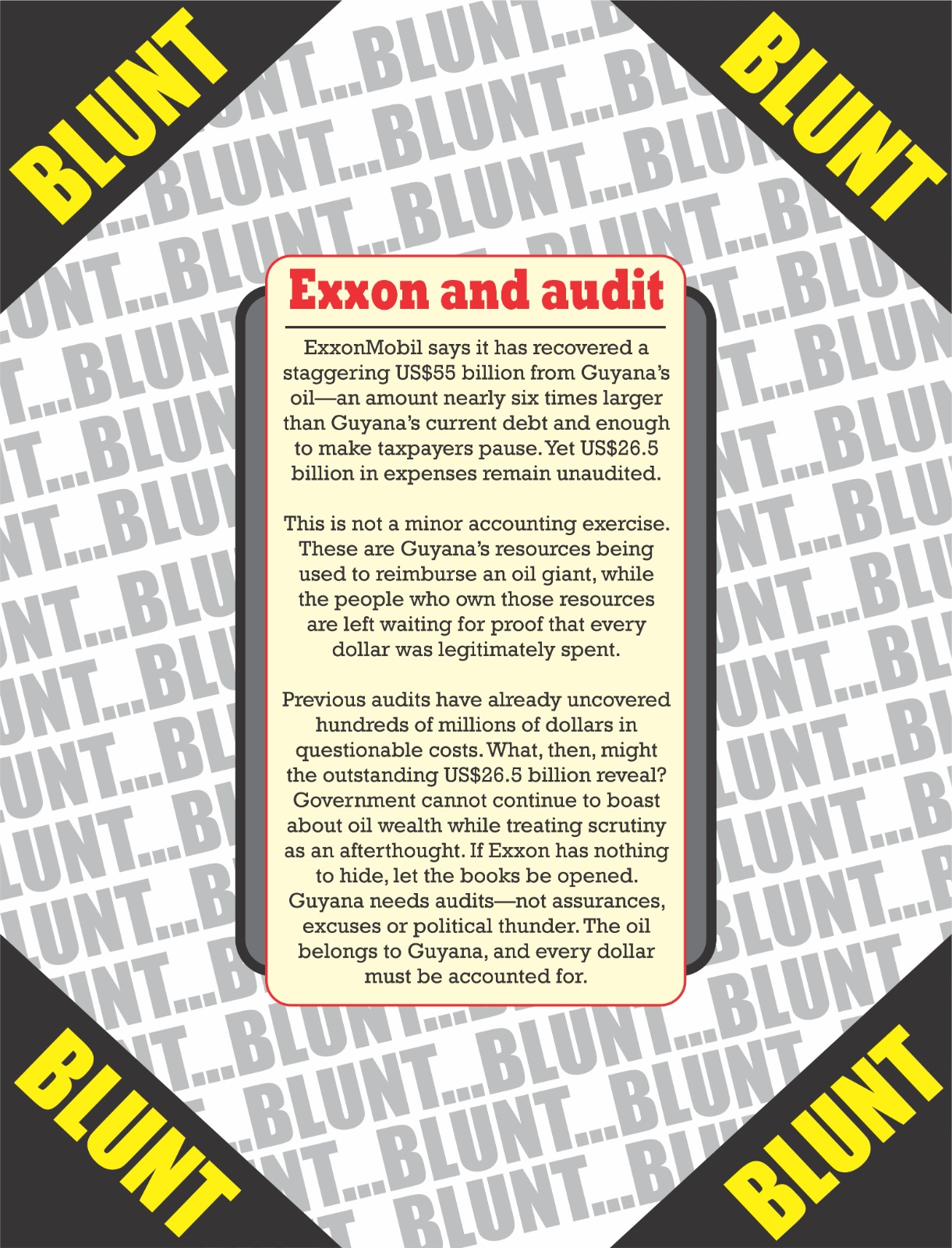
Blunt of the day
Sports

Features/Columnists

Sir. Ronald Sanders

The GHK Lall Column

Weekend Cartoon


