Latest update October 11th, 2026 10:40 AM



Ramotar’s warning
(Kaieteur News) – Former President Donald Ramotar’s warning that the Caribbean is being “re-colonised” by the United States raises a fundamental question that every Caribbean government, including Guyana’s, ought to confront: How much influence should a powerful foreign government be permitted to exercise over the affairs of sovereign states?
The Caribbean knows something about colonialism. For centuries, European powers treated these islands and territories as possessions, extracting their resources while determining their political and economic destinies. Independence was supposed to end that arrangement and restore to Caribbean peoples the right to determine their own affairs. But political independence is meaningless if economic dependence and geopolitical pressure eventually produce the same result by different means.
Ramotar points to US sanctions, military actions, pressure on governments and Washington’s opposition to certain relationships with China as evidence of an emerging form of domination. He also questions the silence of Caribbean leaders in the face of what he considers violations of international law and alleged abuses associated with US military operations in the region.
Caribbean governments should not become so dependent on Washington that they lose the courage to speak when they believe international law or national sovereignty is being violated. But there is an uncomfortable contradiction that cannot be ignored. Ramotar’s criticism comes while the political party with which he is associated, the PPP/C, governs Guyana and has itself been moving closer to Washington. The clearest example is the handling of Guyana’s longstanding medical cooperation with Cuba.
For decades, Cuban medical personnel have played an important role in filling gaps in Guyana’s healthcare system. The Government terminated the formal bilateral arrangement but subsequently continued employing Cuban medical professionals directly and paying them in accordance with Guyanese labour laws.
The Government insists that its approach is lawful and that Cuban doctors and nurses remain welcome to work here under proper employment arrangements. That explanation may be legally defensible. But the broader question remains: Was Guyana’s original decision to terminate the bilateral arrangement influenced by pressure from Washington?
The Government should answer that question transparently. If the decision was entirely Guyana’s, say so clearly and explain the national-interest considerations. If American pressure played a role, the public deserves to know that too. There is nothing wrong with Guyana having close relations with the United States. Nor is there anything wrong with maintaining strong relations with China, Cuba, Venezuela, Britain, India or any other country. A small state such as Guyana should be building relationships everywhere, not becoming subordinate to anyone.
That principle becomes particularly important as Guyana’s oil wealth transforms its geopolitical significance. Washington, Beijing and other major powers have obvious strategic and economic interests in Guyana. Our natural resources, geographic location and emerging economy make us increasingly important. This should give Guyana greater leverage, not less.
We must therefore be wary of replacing old forms of dependency with new ones. The Government should also resist the temptation to treat criticism of US influence as anti-Americanism, just as criticism of Chinese involvement should not automatically be labelled anti-China. The issue is not which foreign power wins. The issue is whether Guyana wins.
If a Chinese company offers the best value, it should be considered on merit. If an American company offers the best proposal, it should likewise be selected on merit. Procurement, diplomacy and national policy must be governed by transparent rules and Guyana’s interests, not pressure from foreign capitals. Ramotar is therefore right about one thing: sovereignty matters. But sovereignty cannot be defended selectively. It cannot be invoked when convenient and abandoned when politically expedient.
Guyana fought for independence so that Guyanese could determine Guyana’s destiny. That responsibility now rests with those in government. Our friends abroad are welcome. Our partners are welcome. Our investors are welcome. But Guyana must remain Guyana.
Share this:

Discover more from Kaieteur News
Subscribe to get the latest posts sent to your email.
Similar Articles
One thought on “Ramotar’s warning”
Website Hits

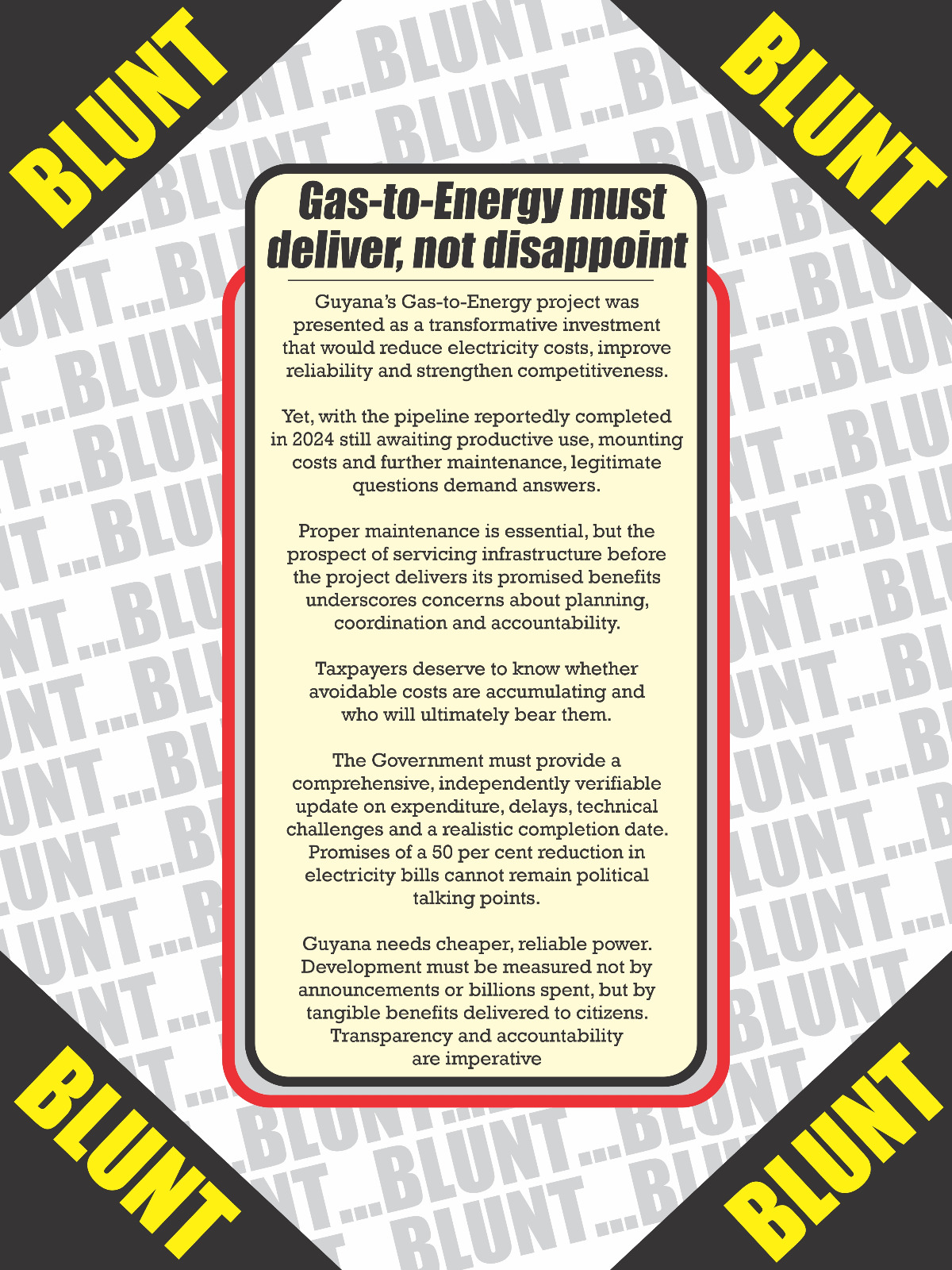
Blunt of the day
Sports

Features/Columnists

Sir. Ronald Sanders

The GHK Lall Column

Weekend Cartoon


Ramotar probably missed the MAP OF THE UNITED STATES last week
by another Donald, showing the entire NORTH AMERICA(includes Canada) and
the Caribbean countries interposed by the US FLAG.
A clear sign that these smaller countries being pushed into a corner, just like
Irfan Ali and Guyana has.