Latest update September 7th, 2026 10:50 AM


Latest News
- President Ali’s mother sues Hana Mohamed for $600M in libel claim
- “U.S. grateful to Guyana for helping address migration issues” – Ambassador Theriot
- Ram urges Pres. Ali to ring-fence new oil projects to stop Exxon eating into Guyana’s profits
- Fire destroys house at Ogle
- Iran warns of ‘painful response’ if it suffers further attacks
The importance of Black History Month must be emphasized
Dear Editor,
The African Business Roundtable (ABR) salutes all African Guyanese entrepreneurs during Black History Month in February. Kudos must be given to the first 83 African Guyanese entrepreneurs who saved their money, some by burying it in the ground, and who rolled out their savings in a wheel barrow to buy Plantation Northbrook and renamed it Victoria in 1839. Five women Maria Grant, Belinda Hopkinson, Catherine Thom, Molly Archer and Hanna Foster should be remembered as heroines.
History has recorded that within 12 years, freed Africans in Guyana defied the odds of over 200 years of enslavement and the genocidal loss of over 450,000 lives, to pool their monies to establish communities that subsequently were under seized by the British whom relentlessly deployed 12 different techniques including flooding and taxes to destroy the Village Movement.
However, within 12 years of the first purchase, the freed Africans asserted their independence in a dramatic way, in that over 42,000 of the 82,000 population lived in villages they had bought and had set up their own local government. Over the first 12 years, freed Africans spent approximately US$2 1/2 million, the equivalent of over US$ 2 billion in today’s terms.
This greatest entrepreneurial endeavor in any post slavery society should put to rest the still racist view by several Sunday paper writers whom still tell their constituency that Africans were lazy and still are. Part of this falsity is the still lack of understanding of what the Village Movement was all about. It wasn’t just about buying land. It was far more and consisted of 10 separate but integrated goals: (1) real estate development (2) agricultural crop production (3) self-governance (4) community development (5) a sustainable life in a now new Guyanese environment (6) the creation of a new identity after enslavement (7) freedom and economic independence (8) schools and churches of their own (9) food security and (10) gold production and other economic activities.
Black History Month in the calendar year of February should remind all Guyanese of the contributions and sacrifices (450,000) African Guyanese lives made for Guyana and should be provided reparatory justice. Amerindians did receive reparatory justice in the form of 13.8% of Guyana by the Guyanese Parliament even though the Wai Wais, Macushis and Wapishanas came to Guyana 100 to 200 years after Africans were here in Guyana.
Black History Month should also remind African Guyanese Youth of their innate abilities which enslavement and discrimination cannot stop. The Destruction of Black Wall Street is something they should remember. In 1921, a thriving Black community known as the “Little Africa” section of Greenwood, Oklahoma, a suburb of Tulsa, was the type of community that African Americans are still, today, attempting to reclaim and rebuild. It was modern, majestic, sophisticated and unapologetically Black. Tragically, it was also the site of one of the bloodiest and most horrendous acts of terrorism that the United States has ever experienced.
As many as 300 African Americans lost their lives and more than 9,000 were left homeless when the small town was attacked, looted and literally burned to the ground beginning in 1921. It’s impossible, however, to realize what was lost in Greenwood, which was affectionately known as “Black Wall Street.”
The oil booms of the early 1900’s had many moving to Tulsa for a shot at quick economic gains and high life, and African Americans hoped to prosper from the new industry as well. Tulsa, like many cities and towns throughout the US, was hostilely segregated, with African Americans settling into the northern region of the city.
African Americans in the area created entrepreneurial opportunities for themselves, which housed an impressive business center that included banks, hotels, cafes, clothiers, movie theaters, and contemporary homes. Greenwood residents enjoyed many luxuries that their White neighbors did not, including indoor plumbing and a remarkable school system that superiorly educated Black children.
It was pure envy, and a vow to put progressive, high achieving African Americans in their place that would cause the demise of the Black Mecca many called “Little Africa”, and its destruction began the way much terrorism, violence and dispossession against African Americans did during that era.
A young White woman accused a young Black man of attempted sexual assault, which gave local mobs and White men acting as police just cause to invade the unsuspecting community. Linda Christenson, a White woman, wrote the following on this terrorist act:
“The historical record documents a sustained and murderous assault on black lives and property. This assault was met by a brave but unsuccessful armed defense of their community by some black World War I veterans and others.
During the night and day of the riot, deputized whites killed more than 300 African Americans. They looted and burned to the ground 40 square blocks of 1,265 African American homes, including hospitals, schools, and churches, and destroyed 150 businesses. White deputies and members of the National Guard arrested and detained 6,000 black Tulsans who were released only upon being vouched for by a white employer or other white citizen. Nine thousand African Americans were left homeless and lived in tents well into the winter of 1921.”
African Guyanese history like African American history has been distorted by the media. I hope this letter helps to remind all Guyanese that the nation’s patrimony belongs to all, including oil and local content must from Exxon and its contractors must reflect this.
Eric Phillips
President, ABR
Share this:

Discover more from Kaieteur News
Subscribe to get the latest posts sent to your email.
Similar Articles
One thought on “The importance of Black History Month must be emphasized”
Website Hits

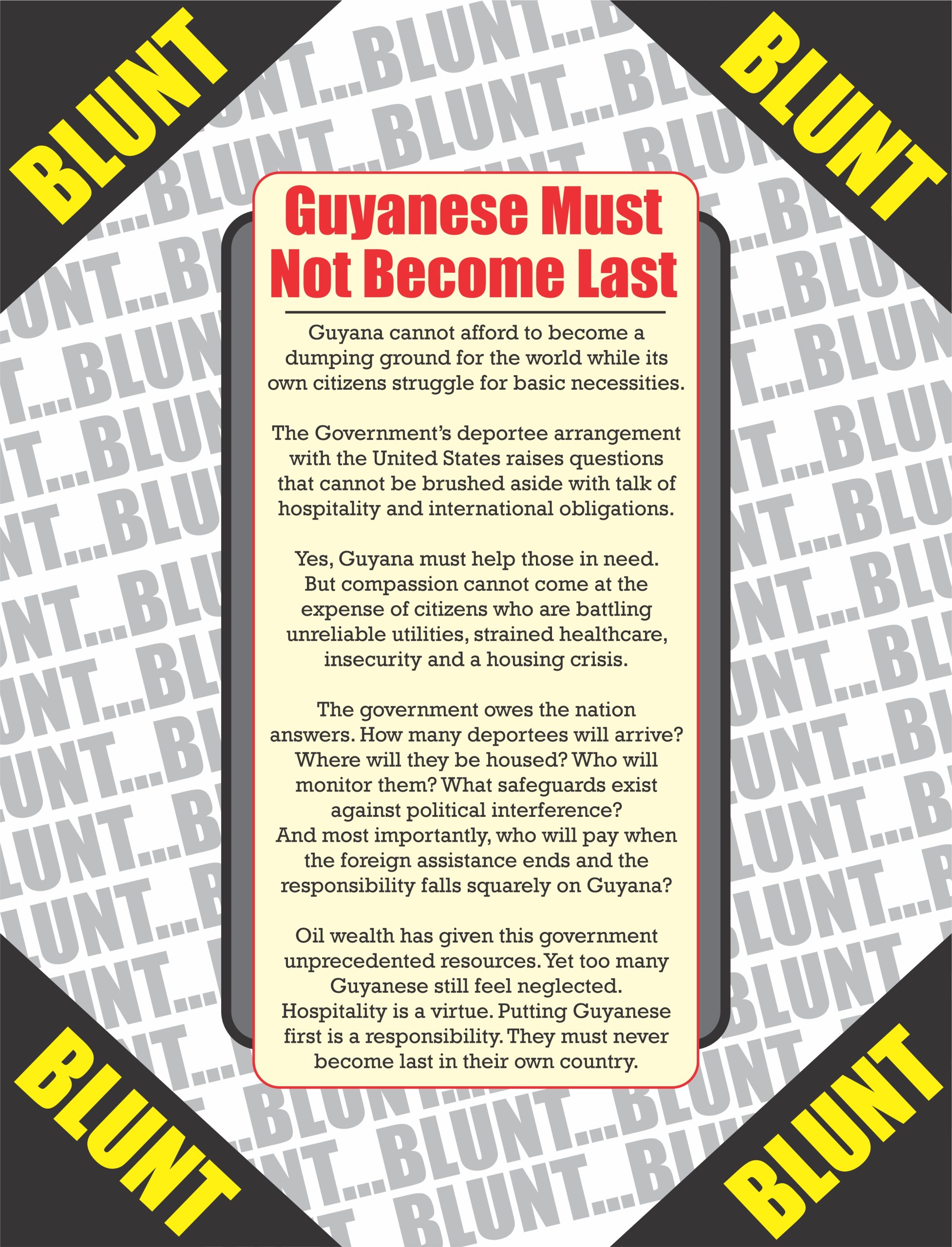
Blunt of the day
Sports

Features/Columnists

Sir. Ronald Sanders

The GHK Lall Column

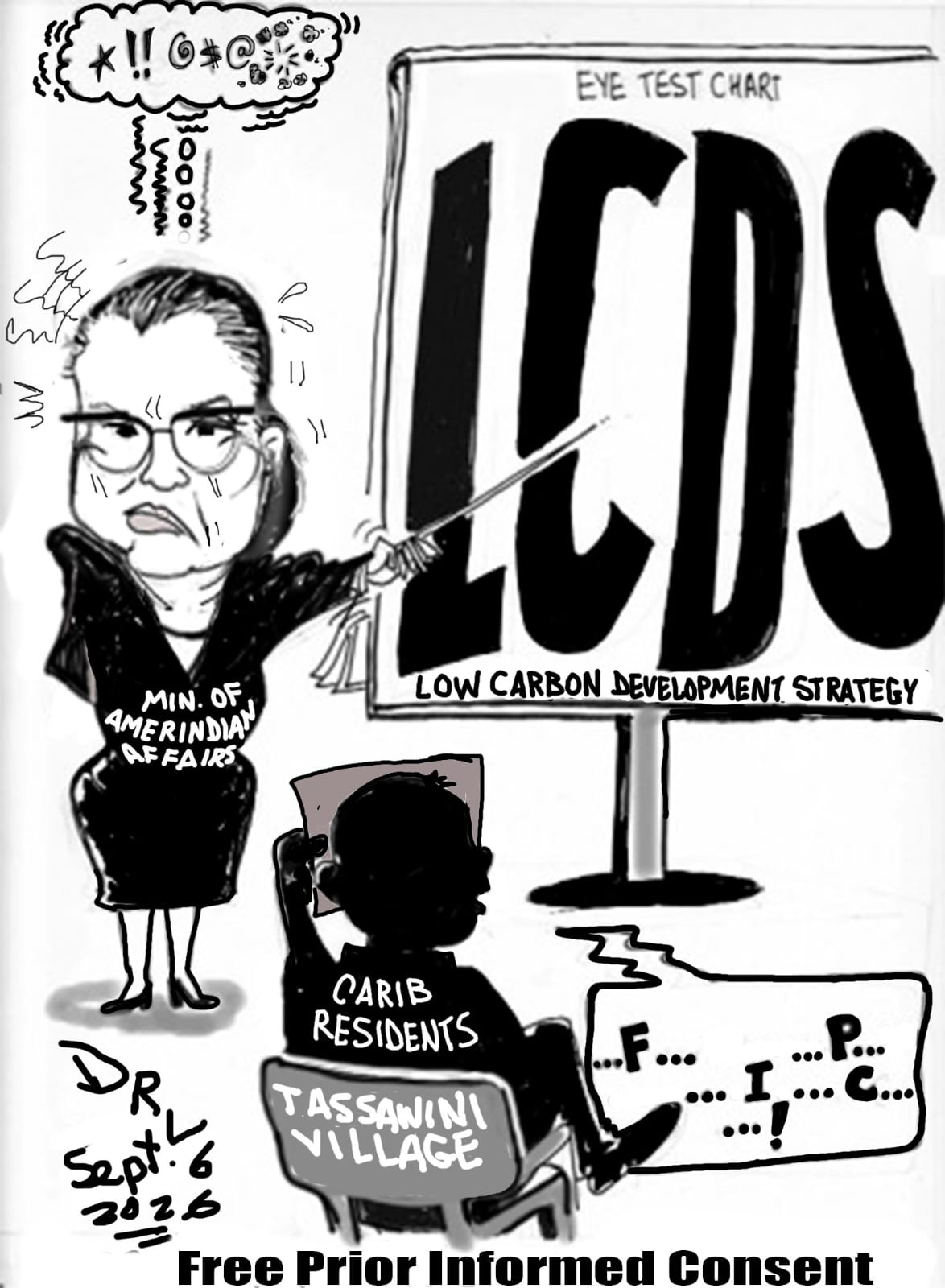
Weekend Cartoon


You cannot compare American blacks history with Guyanese blacks, they differ on all fronts. What Guyanese blacks have achieved since slavery is more than the blacks in America. Upper class in British Guiana was dominated by whites and Portuguese, with a few Indians and blacks, however the large middle class was dominated by blacks with a few Indians, the lower class was dominated by the Indians. Cultural, educational, health and security sectors were in the hands of blacks.
So no, you may try to make a comparison between the two nationalities but you are dead wrong. American blacks has not achieved much in comparison to Guyanese blacks. As you have noticed I used the word black (s) and not Africans because I do not know if these folks are Africans or Hebrews.