Latest update August 2nd, 2026 12:45 AM



Latest News
- Govt. backs down on Barima memorial plan
- ‘Billions flow overseas while Guyana gets nothing’ – Glenn Lall
- “Bones, not concrete’: Families of Barima victims demand their dead
- Israeli strikes kill four across Gaza, destroy medical supply warehouse
- Oil’s curse is hanging over the World’s fastest-growing economy – Bloomberg report
Oil’s curse is hanging over the World’s fastest-growing economy – Bloomberg report
Can Guyana outrun the mismanagement and corruption that have afflicted so many other petro-states?
Bloomberg Opinion (July 29, 2026) – It was a night of remembrance.
(Kaieteur News) – Guyana was celebrating the anniversary of its independence from the UK, and the most solemn moment was approaching: the raising of its flag at midnight, to mark the historic handover on May 26, 1966. The president, foreign dignitaries and members of the diplomatic corps stood mute before the massive Golden Arrowhead banner as a military band drummed to a climax. A light rain drifted across Fort Island, in the middle of the Essequibo River, a venue chosen to signal Guyana’s sovereignty over a territory long claimed by Venezuela.
Yet as the minutes passed, something was going awry: The flag was stuck. Whoops.
Despite repeated efforts by soldiers of the Guyana Defence Force, the colors would not rise. Others rushed in to help. Nothing worked. After about 45 minutes of hapless struggle, the flag was left at half-mast, illuminated against a burst of fireworks.
While the malfunction could be dismissed as horrible luck, the same could not be said of the chaos that followed the ceremony’s conclusion. Ministers, top guests and ordinary citizens scrambled to board the ferry back to the mainland through a narrow entrance, a bottleneck that quickly descended into angry disorder. I was lucky to catch a seat on a speedboat, but some VIPs did not make it home until 5 a.m.
That fiasco was more than an embarrassment. For a nation awash in newfound oil wealth, with proven crude reserves of nearly 11 billion barrels, it was a small but telling reminder of the enormous organizational challenges behind what is arguably the world’s most extraordinary nation-building experiment. Billions of dollars are pouring into what was once one of the Western Hemisphere’s poorest and most isolated nations, offering its 950,000 people a once-in-a-lifetime opportunity to escape decades of underdevelopment. Gross domestic product has billowed sixfold since 2019, when a consortium led by ExxonMobil Holdings Corp. began producing crude. Guyana is not only the world’s fastest-growing economy; it’s also the largest oil producer per capita and the first and only member of the Heavily Indebted Poor Countries Initiative to reach high-income status.

TOPSHOT – View of Kaieteur, the world’s largest single drop waterfall, located in the Potaro-Siparuni region of Guyana, on April 12, 2023. The falls are part of Essequibo, an oil-rich area of 160,000 square kilometers that is administered by Guyana. (Photo by Martín SILVA / AFP) (Photo by MARTIN SILVA/AFP via Getty Images)
The country is already attracting attention from oil majors, infrastructure developers, banks, hotel chains and logistics firms eager to ride the boom. If Guyana manages this windfall strategically, it will not only build a more prosperous and equitable society at home. The ascent of the so-called Land of Six Peoples, a diverse, English-speaking country that has long seen itself as culturally, historically and even aesthetically rooted in the Caribbean, could reshape this corner of South America, in both geopolitical and cultural terms. As an energy powerhouse, it has the potential to forge new regional links, deepening its integration with northern Brazil and the Caribbean as well as diversifying its economy into sectors such as tourism, food production and critical minerals.
Yet looming over those economic superlatives and lofty ambitions is the so-called resource curse that has plagued so many nations suddenly blessed with a mineral bonanza. Like them, Guyana has profound vulnerabilities: weak state capacity, fragile institutions, labor shortages and geopolitical uncertainty. Its history of bitter political divisions, racial tensions and stark inequality, moreover, has created fault lines that vast new wealth could reopen. The decades following independence brought economic decline, strife and repression, triggering waves of emigration throughout the 1970s and 1980s. Today, Guyana still has one of the world’s largest diasporas relative to its native-born population.
For the future to overcome the past, Guyana must dramatically strengthen governance and transparency, build a capable bureaucracy, train its workforce and resist the authoritarian and populist temptations that so often accompany commodity booms. It will also need to cultivate partners, from geopolitical allies to global corporations, and learn to navigate the tensions inherent in such relationships. None of that will be easy.
The country still has time to beat the odds and avoid the malaise that has mired nations such as Angola, Equatorial Guinea, Nigeria and its neighbor Venezuela. Yet after recently spending a week in Georgetown speaking with everyone from President Irfaan Ali to opposition leaders, business executives, academics and newly arrived Cuban migrants, I came away less optimistic. Nobody expects Guyana to become the new Norway — overnight, or frankly, ever. But its current trajectory could easily make it yet another place where oil proved not to be salvation but an economic and moral catastrophe, benefiting a connected elite while leaving most of the population behind.
While its new energy riches remain largely out of sight, pumped from deep beneath the Atlantic about 120 miles off the coast, signs of the oil boom are everywhere. I’ve never seen so many excavators and dump trucks in one place. A crucial $262 million, four-lane bridge over the Demerara River opened in October, linking the country’s two most populous regions and sharply cutting traffic and travel times. Citigroup Inc. recently established a representative office in the capital, while France opened an embassy last year, following Qatar in 2023, as geopolitical interest in the country grows. New branches of American restaurant franchises have sprouted, from Wendy’s to Papa John’s and Starbucks, where the smallest latte costs almost $6. Hotels are being added to accommodate rising visitor numbers amid a real estate frenzy. Even the country’s first padel club is nearing completion.
That doesn’t mean Georgetown, which the Nobel Prize-winning author V.S. Naipaul lauded in the 1960s as the “most exquisite city in the British Caribbean” for its distinctive colonial wooden homes, is about to become the next Dubai, as some hyperbolic commentators suggest. For starters, the tallest modern building in the country is about a dozen stories high, a dwarf by Middle Eastern luxury standards. Guyana has never issued an international sovereign bond, and its stock exchange is still so illiquid that it trades only once a week. My conversations with local and foreign businesspeople seesawed between enormous excitement about Guyana’s rapid economic transformation and concerns over soaring costs, the shortage of skilled workers, limited access to US dollars for international operations and a lack of transparency in public procurement and concessions.
I also saw plenty of reminders of the hardships that many Guyanese still endure: nine families crammed into a small upper-floor apartment just blocks from the presidential palace and open sewage running alongside the city’s main market amid banners celebrating Guyana’s journey “from sugar & rice to oil & gas.” In a corner of Georgetown’s Cummingsburg district, residents live wedged between piles of garbage and the base of one of Exxon’s largest local contractors. The $500-a-night Marriott hotel where I stayed, the nerve center of the business community, ran out of water while I was there; power outages in parts of the country remain a fact of life. During the shutdown of the Strait of Hormuz in April, Guyana even experienced a fuel shortage due to logistical disruptions and a lack of refining capacity.
Future-Proofing the Economy?
Against this complex backdrop, the government’s biggest challenge is convincing the public that the oil windfall is reaching ordinary citizens rather than mainly enriching connected politicians and multinational corporations like Exxon and its partners, Chevron Corp. and China’s Cnooc Ltd. That means building a modern state capable of delivering prosperity in a country where public services and infrastructure have long been deficient. It also explains the government’s fixation on highly visible projects, from bridges, highways and ports to a new arrival terminal at Cheddi Jagan International Airport. Healthcare and education have also become a priority: University tuition was made free last year, while cash transfers of about $500 reached almost half a million Guyanese.
At first glance, this looks like exactly the kind of development strategy that draws praise from international consultants. Ali, the energetic 46-year-old president who won reelection in September for his center-left People’s Progressive Party/Civic, or PPP/C, has ambitious plans to turn Guyana into a major global energy supplier while diversifying the economy. His futurist vision encompasses everything from AI investment, digitization and technology to producing Netflix Inc. series.
“All of these areas are working together in future-proofing the economy, so the economy is not dependent in any way, shape or form on one area of growth,” he told me during a conversation at the bar of the Marriott. “It is broad. It is highly integrated, and it’s what I would say progressive.”
As part of that plan, the government is launching the Guyana Development Bank with more than $200 million in initial funding to finance venture projects, including start-ups that require no collateral. During our interview, Ali also left the door open to creating a national oil company that would participate directly in the country’s energy industry, depending on the outcome of an ongoing assessment of offshore prospects. “If the data shows us that there is a great possibility of a development where every Guyanese can be involved with the state, with the government, then we’ll definitely examine that in a comprehensive way,” he told me.
It all looks impressive on paper. But much of it sounds like a carefully rehearsed TED Talk. Guyana is trying to leap several stages of development at once. It’s fair to wonder whether delusions of grandeur have overtaken execution. Grand visions usually stumble where they matter most: implementation. Guyana’s weak bureaucracy, fragile institutions and shortage of skilled workers pose real obstacles to its president’s sweeping plans.
The well-documented pathogenesis of the resource curse also offers ample reason for skepticism. In poor countries that suddenly strike oil thanks to advances in offshore drilling, newly enriched governments acquire overwhelming power relative to every other institution or group in society. That creates extraordinary opportunities to transform a nation and equally extraordinary opportunities to abuse such power, says Michael L. Ross, a political science professor at UCLA and one of the world’s leading experts on natural-resource politics.
As unprecedented revenues begin pouring in, oil wealth creates a strong temptation to sideline independent institutions and concentrate decisions in the hands of a well-connected elite. Then comes the practical challenge of finding enough skilled officials to negotiate with and oversee companies like Exxon, which has spent more than a century perfecting the art of maximizing profits, securing favorable contracts and limiting transparency.
“These countries start with weak institutions and often oil turns them worse. Wealth is getting concentrated. Investment in infrastructure or education gets behind. There is a lot of corruption. This is something that happens periodically,” Ross told me, citing Venezuela, Nigeria and Chad as examples. “Guyana’s trajectory is probably neither the best-case nor the worst-case outcome.”
Indeed, the country offers a mix of encouraging and worrying signs. Politics in Guyana has long followed ethnic lines, with the country’s two main parties drawing most of their support either from citizens of Indian or African descent, fueling recurring tensions and occasional bouts of violence. Yet despite a traumatic attempt to rig the 2020 vote, Guyana remains a democracy, and last year’s election saw the surprising emergence of Azruddin Mohamed’s We Invest in Nationhood (WIN) party, which captured 16 out of 65 seats in the unicameral National Assembly despite being only three months old. The result broke the historic duopoly between the PPP/C, which largely represents Indo-Guyanese voters, and the People’s National Congress, which draws Afro-Guyanese support, signaling that the global trend toward backing fresh political faces has also reached Guyana’s shores.
At the same time, the governing party still retains more than half the seats in the assembly, giving it tight control over the legislature, so much so that it remained shut for several months, only reconvening in early June after gentle pressure from Western diplomats. The Carter Center’s report on the election flags multiple areas where Guyana needs to improve to recover public trust in its democracy, from increasing political representation and strengthening the independence of electoral authorities to boosting transparency in campaign finance, a key source of electoral inequality. Corruption remains a recurring complaint. Guyana ranks 84 out of 182 nations in Transparency International’s Corruption Perceptions Index, with little improvement in recent years.
The government has so far navigated corruption allegations largely unscathed, but a new controversy has raised the political stakes. In early July, WIN’s Mohamed revealed that President Ali owns a 150-acre ranch south of Georgetown, alleging conflicts of interest and personal enrichment and calling on him to resign. Ali acknowledged owning the property but said he purchased it before becoming president and properly disclosed it to the authorities. Even so, the lingering question for many is how members of the political elite managed to amass such vast wealth in such a short time. Meanwhile, Mohamed, who is one of Guyana’s richest persons, and his father have themselves been sanctioned by the US and indicted on allegations that they evaded millions of dollars in taxes and royalties through fraudulent gold exports and related money-laundering schemes.
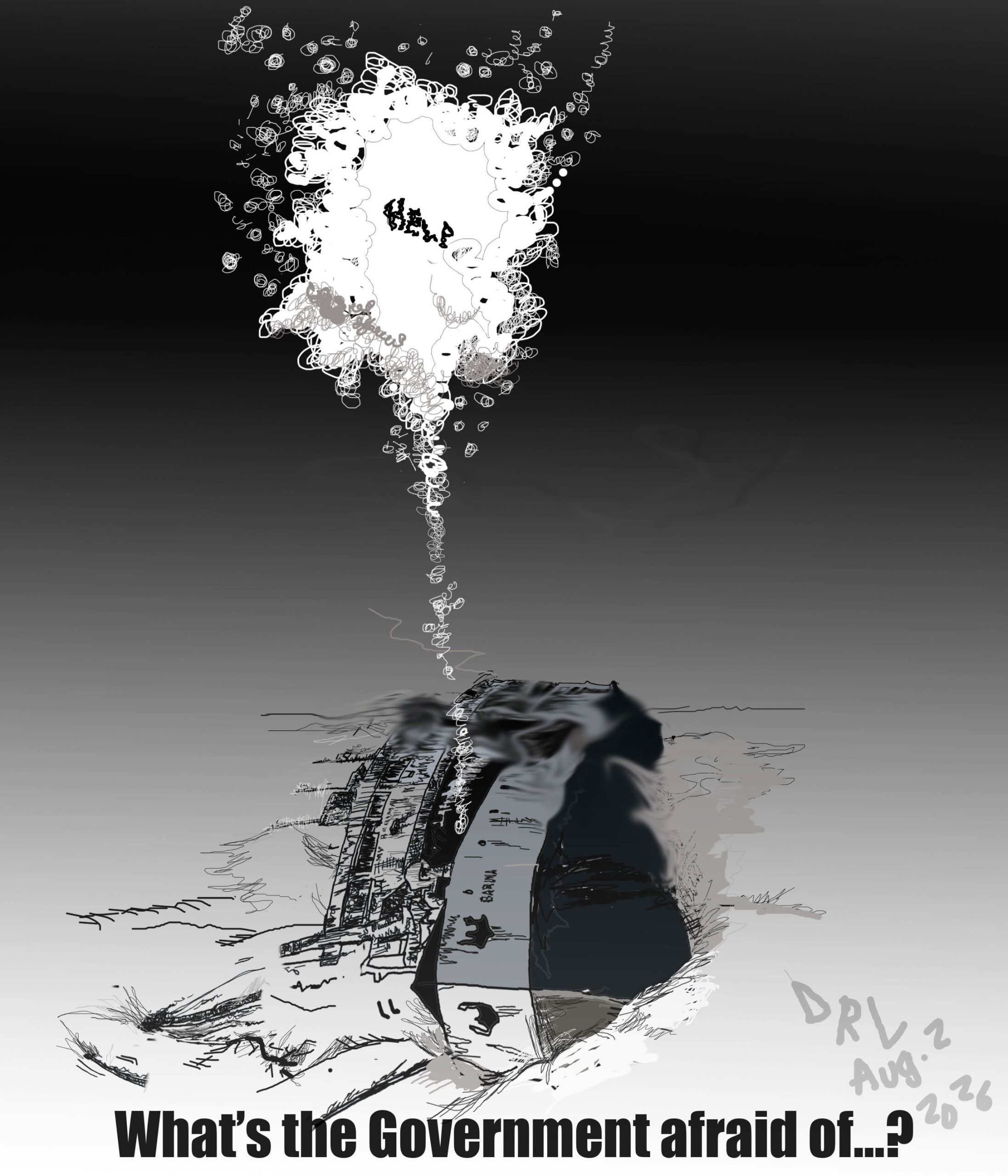
Compounding the government’s problems is the deadliest maritime disaster in Guyana’s history. An 87-year-old state-run ferry carrying an estimated 179 passengers capsized off the Essequibo coast on July 18 while sailing from Georgetown to Port Kaituma, a remote Indigenous community near the Venezuelan border. Authorities estimate that about 100 people may have died. The vessel’s age and the poor emergency response, with some survivors reportedly left adrift for hours, sparked public outrage and protests. In a revealing display of the authorities’ low tolerance for dissent, three civil activists were briefly arrested for staging a peaceful demonstration during a vigil in solidarity with the victims.
A useful way to judge Guyana’s trajectory is to see how it fares on the dozen benchmarks laid out in the Natural Resource Charter, a set of principles developed in 2010 by economists and policy experts to help resource-rich countries turn commodity booms into lasting prosperity.
As an experiment, I asked Claude to score Guyana against the charter. Its verdict: The country meets four principles on accountable public decision-making, investing revenue for citizens, smoothing revenue volatility, and international harmonization; it partially fulfills those on building an inclusive national strategy, state enterprise accountability, public spending efficiency and diversification; and it falls short on transparent and competitive rights allocation, local content participation, upholding the highest corporate environmental, social and human rights standards, and structuring tax and contract terms to capture the full value of its resources.
That broadly matches the findings of the 2021 Resource Governance Index, a diagnostic tool created by the New York-based Natural Resource Governance Institute to assess how commodity producers manage their resources. It placed Guyana in the “weak” performance category, with an aggregated score of 56 out of 100. “As a new producer, Guyana is still developing the institutional framework to successfully govern its oil and gas sector. With weakness evident in value realization, revenue management and the overall enabling environment, the government should prioritize the development of a robust resource governance framework,” the report concluded.
Where does Guyana come up short? The biggest gaps are institutional. Creating a state-owned oil company, for instance, could help the government capture a larger share of oil rents. But doing so before the necessary institutions are in place risks creating another vehicle for waste, political favoritism and graft. Moreover, executing megaprojects requires meticulous, long-term planning, something that Guyana isn’t yet fully equipped to do. Take the flagship $1.9 billion gas-to-energy project, the country’s largest infrastructure initiative. It aims to bring offshore natural gas ashore through a pipeline to fuel a 300-megawatt power plant, cutting electricity costs and emissions. The project is running about two years behind schedule and has seen costs escalate after encountering major soil challenges.
Construction of the specialized Paediatric and Maternal Hospital, one of the 12 state-of-the-art hospitals the government hopes to complete by 2028, has also been delayed, reportedly because of changes of ownership in the construction company. And while these facilities could be transformative, they also underscore Guyana’s chronic shortage of healthcare workers, many of whom have for years emigrated to better-paying destinations.
That shortage is being eased, in part, by thousands of irregular Cuban and Venezuelan workers, who are easy to spot on the streets of Georgetown by the Spanish they speak. They bring technical skills, a strong work ethic and a willingness to take jobs the country desperately needs filled.
But I wonder how they’ll integrate over the long run into a small society that already has more than its share of ethnic tensions. (Locals dismiss virtually anyone from South America as “Spanish” even, at times, the Brazilians with whom they share a 1,000-mile border.) For businesses, migrants are the quickest way to meet soaring demand. Many Guyanese, however, may see them as unfair competition for jobs they themselves struggle to access. The same applies to foreign oil workers earning salaries well above local standards, a gap that can easily fuel resentment.
The Risks of Overpromising
Poor transparency is compounded by the lack of reliable statistics. Positive signs abound in the economic data, from booming vehicle sales to a rapidly expanding mortgage market. Yet the government took three years to publish a preliminary report from the 2022 census and its final results are still pending. Even more baffling is the absence of an official poverty estimate covering the years of extraordinary economic growth.
When I asked Finance Minister Ashni Singh about this, he argued that poverty should be measured across multiple dimensions, including access to healthcare, education and sanitation, all of which he said have reached record levels of coverage. Fair enough. But when poverty estimates range from 58%, according to the Inter-American Development Bank, to just 18% to 20%, according to some local economists, the country’s data compass appears broken.
My suspicion is that the government may be reluctant to publish such figures for fear of handing the opposition a powerful political narrative. That would be short-sighted. Citizens, investors and anyone trying to understand Guyana’s transformation need better data and greater transparency to judge where the country is really headed.
In that respect, the government’s biggest political risk may be overpromising and underdelivering, raising expectations to such levels that even genuine progress cannot satisfy voters. Some of that tension shows up in a recent poll by the University of Guyana’s GREEN Institute. Just over 42% of respondents said they were somewhat or very optimistic about the country’s outlook over the next 20 years, while 40% described themselves as somewhat or very pessimistic — not exactly a picture of euphoria.
The survey cautions that its sample overrepresents the more educated segments of society and part of the diaspora. Even so, the findings suggest a complex public mood: About 43% said the benefits of growth are real but unevenly distributed, while another 27% said the economy being built is simply not the kind of society they want. Foreign oil companies, meanwhile, were considered the least trusted institutions included in the survey.
The emerging picture is one in which oil wealth could sharpen not only ethnic divisions but class disparities. Especially during periods of high oil prices, governments can be tempted to channel jobs, contracts, flagship projects or subsidies toward political supporters and allied regions rather than where they generate the greatest public benefit, creating fertile ground for patronage and corruption.
This risk isn’t just theoretical: It’s what happened next door in Venezuela after Hugo Chávez came to power in 1999 and soaring oil prices flooded the country with petrodollars that were used to fulfill unmet social demands and geopolitical goals. Guyana is not destined to follow the same path. If anything, the government appears acutely aware of those dangers and the population knows firsthand the perils of copying its neighbor’s disastrous Chavista model. But the risk will remain as long as the oil money keeps flowing without clear oversight.
The company is by far the country’s largest investor and taxpayer, having committed more than $60 billion with its partners to develop seven approved offshore projects plus an eighth pending one that together will lift production capacity to 1.7 million barrels a day by 2030, from roughly 900,000 today. That investment alone is nearly double Guyana’s current $34 billion GDP, giving Exxon an outsized influence over the country’s economy and, inevitably, its politics.
That is an uneasy position for the American producer. Since oil production began in 2019, the company has paid more than $9 billion into Guyana’s Natural Resource Fund, helping finance many of the country’s transformative projects. (The fund held $3.64 billion at the end of the first quarter, after the government made large withdrawals.) Yet if this unprecedented flow of money and profits fails to translate into better living standards, Exxon will likely become a target of public frustration.
Fairly or not, many Guyanese view Exxon as a power behind the scenes, giving the company the unofficial role of arbiter of modern Guyana. That perception could fuel public resentment and demands to rewrite the favorable contract the company secured in 2016. Production-sharing contracts in neighboring Suriname generally impose a 6.25% royalty on gross oil output; Guyana charges just 2%.
“The contract is not necessarily in the best interest of Guyanese,” said Odessa Primus, a member of Parliament and secretary-general of WIN. “Exxon has to look out for their best interest. And they have done so very well. Clearly whoever’s getting paid over there to negotiate these contracts deserves a raise to pay.”
Exxon told me royalties are only one component of the petroleum agreement and should not be viewed in isolation. “The agreement was negotiated with the Government of Guyana and reflected competitive terms at a time when there were significant exploration, technical and price risks,” a company spokesperson said. “The success of exploration in Guyana also lowered exploration risk in Suriname, leading to different terms in later contracts.”
In any case, beyond the government’s reassurances, geopolitics also shields Exxon from changes to Guyana’s contractual terms. Consider the impact of Guyana’s legal case in its territorial controversy with Venezuela over the disputed Essequibo region, which represents about 70% of its territory and is adjacent to its offshore oil deposits. Virtually everyone I spoke to in Georgetown agreed that the International Court of Justice, which is expected to rule in the coming months, is highly unlikely to invalidate the definitive 1899 settlement agreement that established the boundary and confirmed UK sovereignty over the territory that became present-day Guyana.
Yet for Georgetown, the problem is increasingly political. Guyana remains militarily vulnerable — it doesn’t have a single fighter jet or warship, despite rising defense spending — and depends on US diplomatic support to deter Venezuelan adventurism. That reality creates another constraint on policymaking. Any effort to impose tougher conditions on foreign oil producers, including a possible carbon tax, risks colliding with a broader strategic calculation: Guyana benefits from having powerful American interests invested in its stability and security.
With Venezuela’s dramatic political U-turn under acting president Delcy Rodríguez and her surprising rapport with Washington, the US may now find itself mediating between two supposed allies. Donald Trump might well pressure Georgetown into offering some form of compensation to Caracas, allowing Rodríguez to claim a political victory. Alternatively, a Venezuelan regime desperate to recover its domestic popularity could misread Washington’s intentions and launch some form of armed incursion, much as the Argentine junta did in 1982 with the Falklands/Malvinas.
In both scenarios, Guyana has gone from enjoying unconditional US backing to a more ambiguous situation in which Venezuela at least has Washington’s ear. And if Venezuela’s oil industry eventually recovers with US support, that renewed economic strength could translate into greater pressure on Georgetown.
Torn Between Two Lovers
The second geopolitical hotspot is China’s deep involvement in Guyana’s infrastructure and logistics projects, part of a cumulative $13 billion in investment through the end of 2025. That is the kind of strategic footprint Washington would like to expunge. The Demerara River bridge illustrates why China succeeds where American and European firms often struggle: cost and speed. To add insult to injury, the Chinese government donated a superb recreational park on the bridge’s western bank for families and children. Low profile and soft power can be more effective than swaggering rhetoric.
As things stand, China continues to underbid everyone, placing Guyana’s government in the uncomfortable position faced by many of its regional peers: Accept dramatically lower costs under Belt and Road cooperation at the risk of upsetting Washington? Or choose pricier Western-backed projects and potentially slow development?
The biggest test may come with the planned auction for a strategic deepwater port in Berbice, in the country’s east. China is rumored to have offered to build the project for roughly $500 million, less than half of what Bechtel Group Inc., which is conducting the port studies, estimates it would cost. When I asked Ali about this, he denied receiving a Chinese proposal and said the government was instead in talks with American, Qatari and Saudi groups.
If this were purely about price, China would win the contract. But after the alarms the US raised over the Chancay Port in Peru, Georgetown is unlikely to casually hand Beijing control of a strategic asset like the country’s first large-scale port. What is clear is that Washington is paying close attention to Guyana. Several US delegations have recently visited on fact-finding missions, particularly about the country’s vast critical minerals potential.
As Guyana grows richer, more strategically important and more deeply integrated into global energy markets, these geopolitical and economic tensions will intensify. For now, it can afford mistakes. As production rises, the initial cost of developing the projects is cleared and higher prices prevail, oil will generate billions of dollars in additional revenue. Turmoil in the Middle East has also reinforced the advantage of the country’s unfettered maritime access. But in the end, Guyana’s future will depend less on what Mother Nature provides than on whether its institutions and society can keep pace with the extraordinary opportunities and pressures that her bounty has unleashed.
Share this:

Discover more from Kaieteur News
Subscribe to get the latest posts sent to your email.
Similar Articles

Blunt of the day
Sports
Features/Columnists

Sir. Ronald Sanders

The GHK Lall Column

Weekend Cartoon