Latest update September 22nd, 2026 10:30 AM


PUC flags GWI’s unsustainable finances, $13.4B lost through water leaks
(Kaieteur News) – The Guyana Water Incorporated (GWI) remains under severe financial pressure, with its revenue in 2025 falling short of what was needed to meet operating and financing costs, while an estimated $13.44 billion worth of treated water was lost before it could generate income, according to the Public Utilities Commission’s (PUC) 2025 Annual Report.
The commission said the utility’s financial position remains unsustainable despite continued investment in expanding the country’s water infrastructure.

PUC flags GWI’s unsustainable finances, $13.4B lost through water leaks
According to the report, GWI earned $5.72 billion in revenue last year, a 28.5 per cent drop from its 2022 peak of about $10.5 billion. The company also recorded a net loss of $177.4 million, leaving it unable to cover its operating expenses and financing costs.
“The indicated figures were not enough to cover the combined operating and financing costs,” the PUC stated.
While GWI saw stronger performance in the second half of the year and increased water sales by 2.5 per cent, the gains were not enough to return the company to profitability.
“Despite improved performance in the second and final quarters and a 2.5% increase in sales, the utility still incurred an overall loss,” the report said.
The commission noted that GWI continued investing heavily in upgrading treatment facilities and expanding the distribution network under the Coastal Water Treatment Infrastructure Programme, which is partly financed by the Inter-American Development Bank (IDB). However, those projects have also increased pressure on the company’s finances.
“These investments were aimed at enhancing the service quality, [but] they were a contributing factor to funding pressure on a short-term basis, which influenced a continued dependence on the support of the government,” the report said.
Although GWI maintained enough liquidity to meet its short-term obligations, the PUC said its overall financial position remained weak.
Billions Lost Before Water Reaches Customers
The commission identified non-revenue water as GWI’s biggest financial burden. It estimated that approximately $13.44 billion worth of treated water was lost in 2025 through leaking pipelines, illegal connections, faulty meters and other unbilled consumption. The losses represented between 60 and 70 per cent of all potable water produced during the year.
“This high volume of loss was primarily driven by aged infrastructure and environmental factors, though incremental progress is expected following upgraded service networks,” the report stated.
The PUC said those losses continue to cripple the company’s finances.
“Much like in previous years, these losses impeded the company’s ability to generate a profit and required government subventions to cushion the financial impact of non-revenue generating connections,” it added.
To reverse the trend, the commission urged GWI to adopt practices used by more efficient regional utilities, pointing to Belize Water Services Limited, which has reduced non-revenue water to about 25 per cent through aggressive leak detection, infrastructure replacement and full metering.
“The commission intends to collaborate with the company on a comprehensive strategy to reduce physical leaks and improve billing accuracy, a necessary step to address this financial drain,” the report said.
Collections Improve, But Cash Still Slow to Flow
Despite its financial struggles, GWI exceeded international targets for collecting revenue.
The utility billed customers $6.32 billion during 2025 but collected $7.38 billion, reflecting the recovery of outstanding arrears and advance payments.
“This performance reflected the successful recovery of prior arrears and prepayments,” the commission noted.
However, the report found that customers are still taking far too long to pay their bills.
The PUC estimated GWI’s Days Sales Outstanding (DSO) at about 150 days, nearly double the accepted utility benchmark of 60 to 80 days.
“While the collection efficiency remained within acceptable levels, the elevated DSO suggested that payments were not made within reasonable timeframes,” the report said.
According to the commission, delayed payments could point to affordability challenges, billing weaknesses or poor enforcement of credit control measures.
“As a result, cash flow and capital expenditure were impacted,” the report concluded.
Share this:

Discover more from Kaieteur News
Subscribe to get the latest posts sent to your email.
Similar Articles
Website Hits

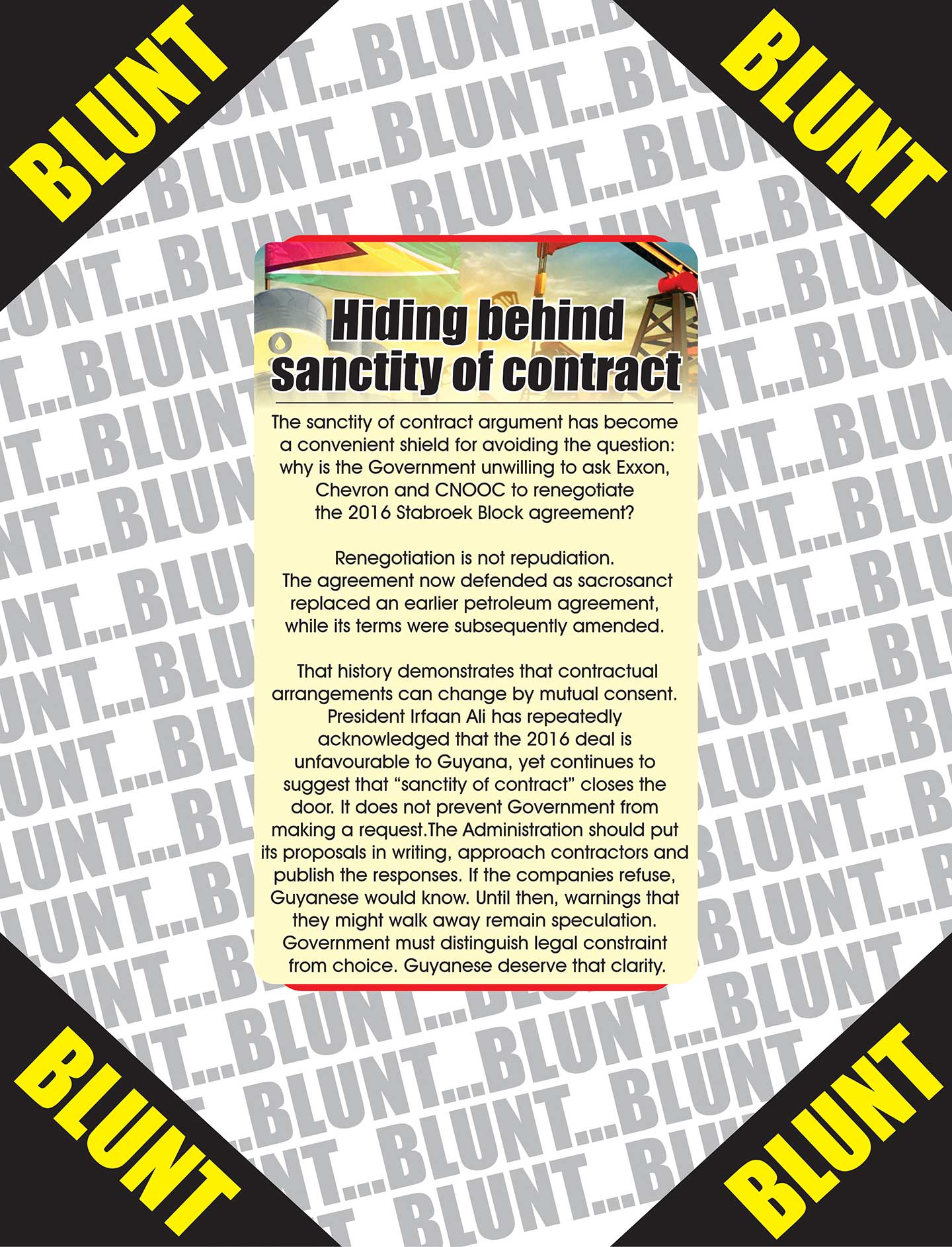
Blunt of the day
Sports

Features/Columnists

Sir. Ronald Sanders

The GHK Lall Column

Weekend Cartoon