Latest update August 11th, 2026 5:12 PM



Latest News
- Guyanese should be outraged over Govt. silence on 50% profits now due to country – former Finance Minister
- Guyana’s oil take could triple – opposition leader
- Friends killed in Eversham smash-up
- At least 111 killed after powerful earthquake hits western Colombia
- Calls mount in Trinidad for probe into CCJ
‘Guard assets paid for by Guyana from oil companies’ – T&T expert warns
…says oil giants sold off Trinidad’s production equipment, pocketed cash
(Kaieteur News) – Each piece of material and equipment used in the production of oil and gas, from tiny screws and drill bits to the massive Floating Production Storage and Offloading vessels (FPSOs) that operate in the Stabroek Block are paid for by Guyana’s oil through cost recovery. The long list of cost recoverable items includes the company’s giant Ogle Headquarters, a distinguished fleet of vehicles and other items used for the sector.
Cost recovery allows the oil companies to finance the sector, hand Guyana the bill and then take the country’s oil to repay its investment. This process is not unique to Guyana. In fact, Guyana’s neighbour, Trinidad and Tobago which has been producing oil for over a century lost tremendous revenue when its production activities started to wind down, an experience Guyana can learn from.

T&T Energy expert, Anthony Paul
Sounding the alarm over this injustice was Trinidadian energy expert, Anthony Paul in a column published in this newspaper on Sunday. Paul held high-level operational, technical, and commercial roles with the government of T&T, Petrotrin, Amoco, and BP. With over 45 years of experience in the sector, he has advised numerous government, national oil companies, multinational operators, service companies, and international financial institutions in complex and evolving jurisdictions.
In laying the foundation to the lesson for Guyana, the Senior Energy and Strategy Advisor highlighted that petroleum value goes far beyond production- how many barrels, how much revenue, how much cost oil, how much profit oil, and how fast the Natural Resource Fund grows.
He explained, “Petroleum value does not move only when oil is produced. It can move before production, beside production and after production…that is why Guyana has to look beyond production numbers.”
Paul noted that Trinidad and Tobago’s long history offers key lessons on what can happen when mature assets, licence renewals and transfers are not treated as national value events.
He said, “When Petrotrin was collapsing, Trinidad and Tobago could have used expiring or renewed licences to strengthen the national company. Instead, valuable producing assets remained with or moved through private operators. Some were later sold. The public question became unavoidable: if the people’s petroleum had helped repay the cost of those assets, why did the people not capture more value when the assets were transferred?”
Given T&T’s experience, Paul said that Guyana should begin asking these critical questions before it finds itself in the similar situation.
Notably Article 20 of the 2016 Production Sharing Agreement (PSA) requires the contractor to hand over assets paid for by Guyana upon expiry or termination of the contract.
According to the agreement at 20.1 (b)(i) the contractor shall “deliver to the Minister, free of charge…all installations, works, pipelines, pumps, casings, tubings, engines and other equipment, machinery or assets of a fixed or permanent nature constructed, used or employed by the Contractor or the Operator in the Contract Area.”
It adds at 20.1 (b)(ii) “deliver to the Minister, free of charge, any fixed assets relating to Petroleum Operations outside the Contract Area and movable assets owned by the Contractor or Operator and used or employed in connection with Petroleum Operations and located in Guyana for which costs have been fully recovered in accordance with Annex C herein; where costs have not been fully recovered the provisions of Article 20.1 (b)(iii) shall apply.”
Assets not fully cost recovered shall be purchased by the minister.
While stakeholders have argued that Guyana owns the assets its oil has paid for, the country’s Chief Policymaker for the oil and gas sector, Vice President Bharrat Jagdeo made a startling disclosure in contrast to that position.
He previously told reporters that ExxonMobil could sell those assets to pay for cleanup costs relating to an oil spill.
The VP explained, “It’s a simple thing. You’re not part owner of any company. You don’t own these assets. So, ExxonMobil puts in the investment. They create a company; the company has these assets. We are entitled to receive in the future, 50%, once everything is paid off…you are entitled to collect 50% of future profits and they get 50% and then 2% royalty on the gross…that’s your entitlement to collect.”
A noticeably annoyed Jagdeo continued, “It’s a simple thing. Why do we have to keep explaining this all of the time? We don’t own 50% of the company. We have an entitlement as a state to 50% of the revenue. That is why we don’t have to supply any capital to invest, we don’t supply any capital.”
He pointed out that the Co-Venturers raise the capital and invests, allowing Guyana to enjoy the entitlement.
On the other hand, Jagdeo said that if the company was to dissolve and sell the assets, Guyana may then be entitled to 50% of the assets. “Now if you have a dissolution of the company and they sell off the assets, I guess we are entitled to 50% of the assets too in the situation where you dissolve the company so I hope that clarifies your question,” he noted.
This explanation attracted fiery criticism from the former Head of the Environmental Protection Agency (EPA), Dr. Vincent Adams.
He said, “All assets are being bought and paid for, by Guyana through cost oil, and per the PSA, will be turned over to Guyana free of charge upon termination; so, it is daftness to keep repeating that he will seize our own assets from EMGL.”
Share this:

Discover more from Kaieteur News
Subscribe to get the latest posts sent to your email.
Similar Articles
2 thoughts on “‘Guard assets paid for by Guyana from oil companies’ – T&T expert warns”

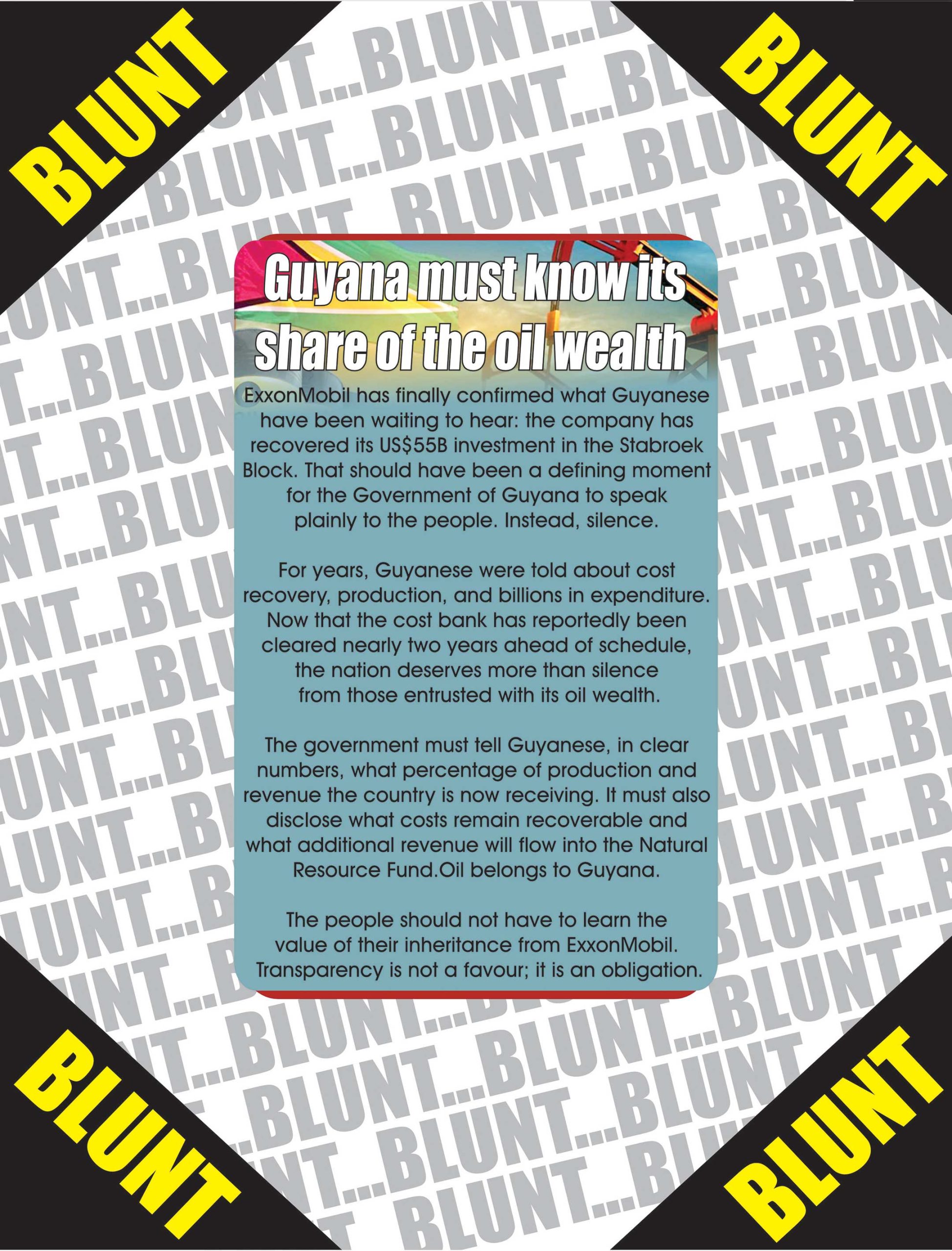
Blunt of the day
Sports
Features/Columnists

Sir. Ronald Sanders

The GHK Lall Column

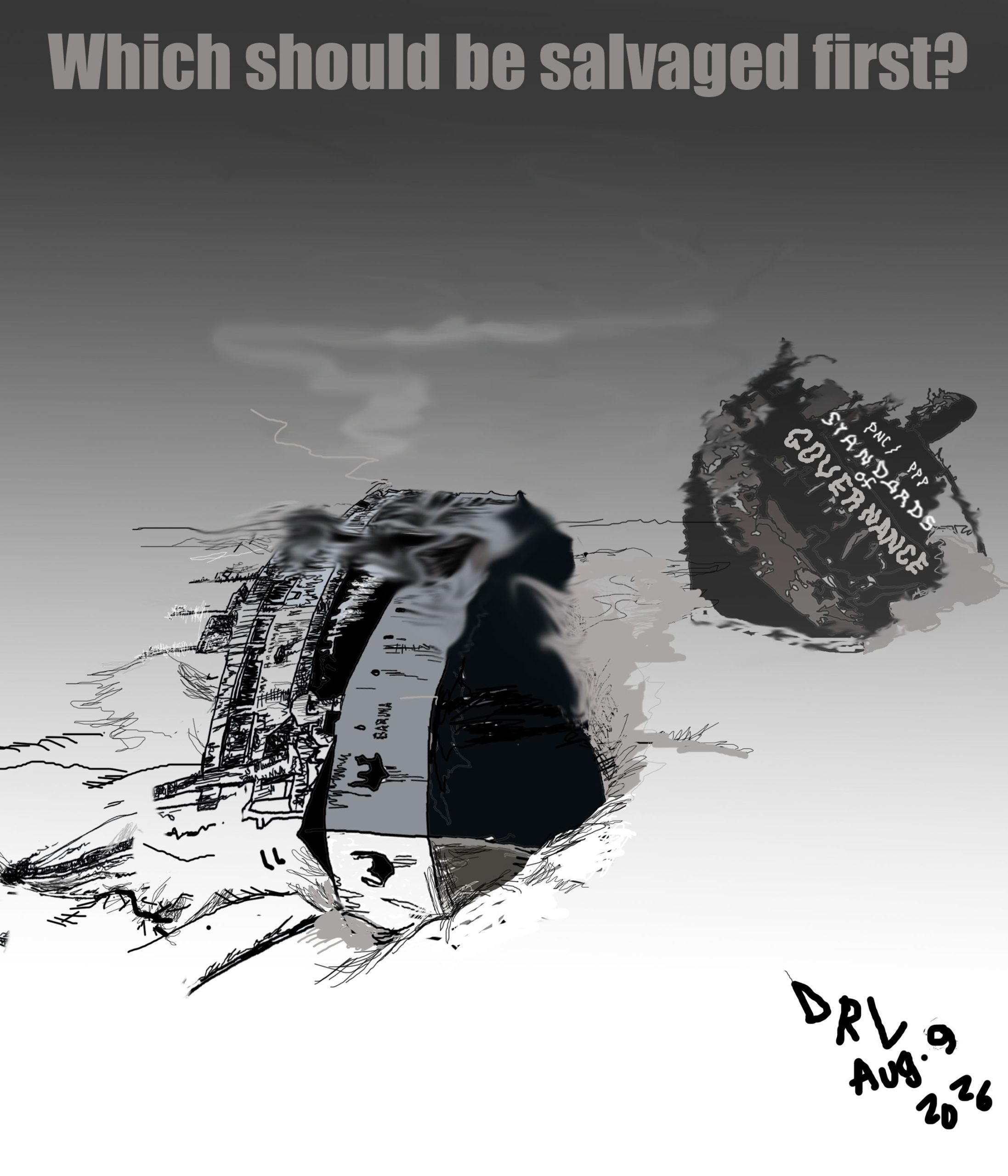
Weekend Cartoon


How receptive is Guyana to foreign investment regarding micro refineries? Generally?
In The Actively Approaching Age of The Apocalypse, and The Increase, of Proverbs 22:16 Greed, from *Psalms 12:8; 94:1-23, and 109 folks, which Use, 2 Timothy 3:1-9 folks, as Co-Conspirators, will Do All Dirty Jobs, against 🇬🇾, for Self Aggrandizement!
Be on High Code Red Alert, and Shrewdly Vigilant, and Please Exercise Caution in your BZNS Affairs 🇬🇾, IN JESUS NAME, I Ask, Bhai Bharrat Jagdeo!
Mr. Anthony Paul, is A Very Close Neighbor, whose Country’s Fingers, were BURNT, by The Issues, he has Shared! He’s simply Sounding The Alarm, To Save Guyana, from A Similar Fate! He just means Well Thank you, Much! From 🇬🇾 Bahen, Sue Colbert!✝️💖👍✅️💯