Latest update July 24th, 2026 12:30 AM



Latest News
- MV Barima Disaster… 72 confirmed dead
- Parliament must determine COI’s composition for MV Barima probe – Dr. Campbell
- Nine victims of MV Barima tragedy laid to rest
- Transparency Int’l Guyana demands IMO probe of MV Barima tragedy
- Police detain, then apologise to, peaceful protesters at national vigil for MV Barima victims
Glenn Lall sounds alarm on Exxon’s ‘87.5% grab’
…says Guyanese remain poor amid oil wealth
(Kaieteur News) – Kaieteur News Publisher Glenn Lall has once again raised concerns about ExxonMobil contract delivering blistering critique of Guyana’s oil sector while accusing both government leaders and oil giant of presiding over what he describes as a system designed to keep the country rich on paper but poor in reality.

Businessman, Glenn Lall
In a fiery and emotionally charged commentary on Kaieteur Radio last Monday night on his Glenn Lall Show, Lall warned that unless Guyanese citizens wake up to what he called “a deliberate design,” the consequences would be irreversible and self-inflicted. He said for years, Guyanese have been told that oil would transform the nation. According to him, since first oil in 2019 from the Stabroek Block, successive administrations have touted rapid economic growth, global recognition, and a future of shared wealth. “Indeed, Guyana has recorded some of the fastest GDP growth rates in the world, driven largely by offshore oil production, but beneath these glowing statistics lies a troubling contradiction. If oil was truly transforming Guyana people would not still be struggling to eat, pay bills, and survive.”
The 50% illusion
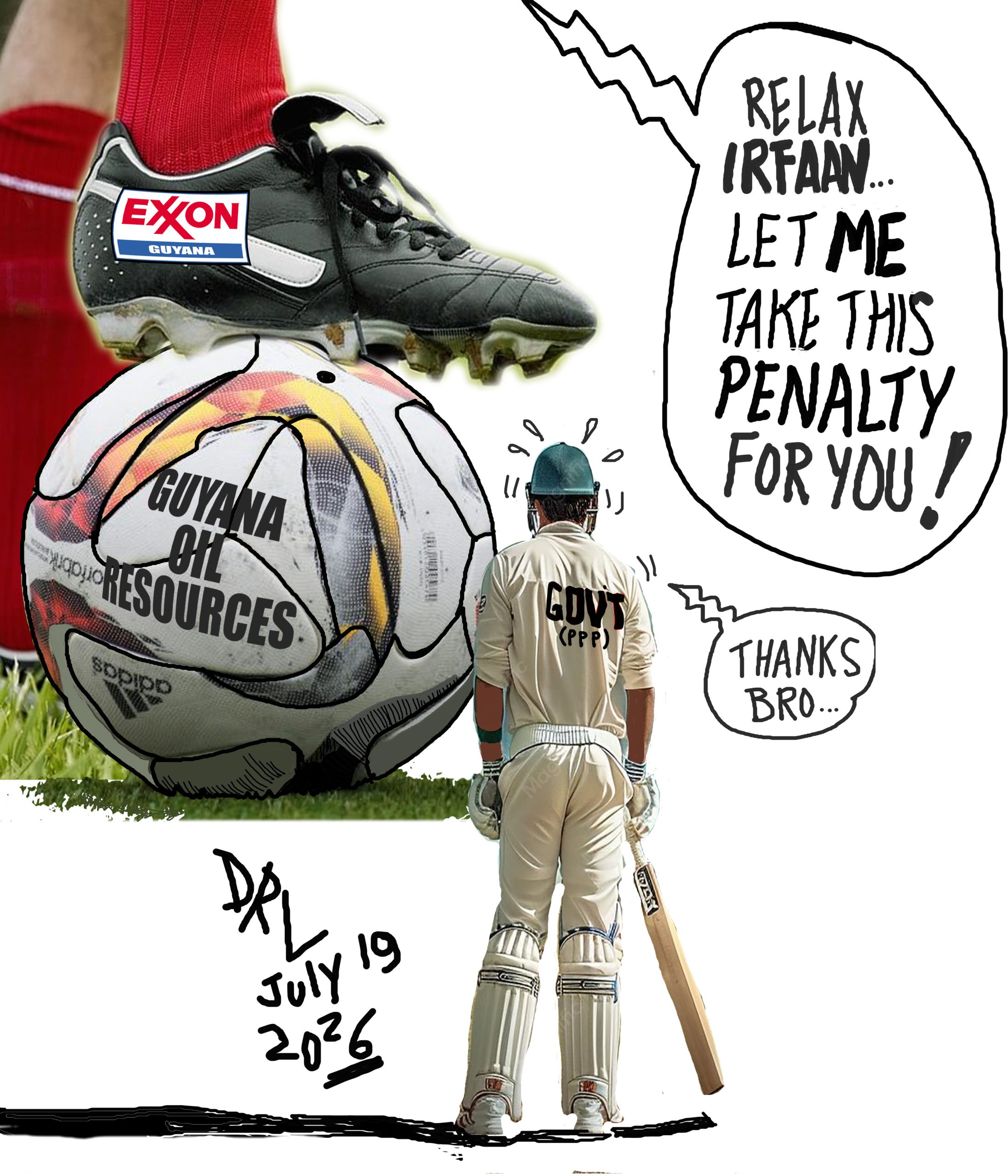
Lall further zeroed in on the Production Sharing Agreement (PSA) signed between Guyana and ExxonMobil and its partners. The contract states that Guyana receives a 50% share of profits after costs are recovered. But according to Lall, this is where the deception begins.
He explained that under the agreement, ExxonMobil is allowed to take up to 75% of daily oil production as “cost oil” to recover its investment. The remaining 25%—termed “profit oil” is then split equally between the company and Guyana. The result, he said Guyana effectively receives just 12.5% of total oil production during the cost recovery phase. “That is not half,” Lall emphasised: “That is half of a quarter.”
Kaieteur News has previously reported on this structure, pointing out the absence of key safeguards such as ring-fencing, which allows companies to charge costs across multiple projects, prolonging the period before Guyana sees larger revenues. Lall has argued that ExxonMobil has created a cycle that prevents Guyana from ever reaching the point of full profit sharing.
He pointed to the successive development of projects: Liza Phase 1, Liza Phase 2, and subsequent developments such as Payara and Yellowtail as evidence of a rolling system of cost recovery. According to him, just as one project nears repayment, new projects are introduced, adding fresh costs to the ledger. This, he says, keeps Guyana locked into the 12.5% bracket. Lall has previously warned about the lack of ring-fencing provisions in the PSA: meaning costs from new developments can be deducted against revenues from producing fields. He has argued before that this allows ExxonMobil to continuously defer higher payments to the country.
“This is not investment anymore,” Lall declared. “This is our oil paying for their expansion.”
Still on the issue of ring-fencing, he said this provision would prevent companies from using costs from new projects to offset profits from existing ones. “Without it, revenues from producing fields can be used to finance future developments, effectively delaying the country’s access to higher profit shares.”
Lall insists that introducing ring-fencing could immediately change Guyana’s financial trajectory. “The contract does not prevent it,” he argued. “It can be done.” Not just Lall, but several other oil experts and transparency advocates both locally and overseas have urged the government to renegotiate or strengthen oversight mechanisms.
BILLIONS OUT, DEBT UP
Turning his attention to Guyana’s ballooning debt Lall pointed out that between 2020 and 2026, more than US$60 billion worth of oil has been extracted from Guyana’s waters. “Yet during the same period, the country has climbed from approximately US$2.6 billion to around US$10 billion.” However, Lall questions the logic of rising debt in the face of unprecedented oil revenues. “When a country earning billions keeps borrowing more, something is definitely wrong…”
The businessman alleged that project costs themselves may be inflated—a claim that, if true, would further disadvantage Guyana. Higher costs he said mean more oil diverted to cost recovery, reducing the share available to the country. Kaieteur News has previously reported on concerns raised by experts regarding the auditing of oil expenses. While the government has initiated audits of ExxonMobil’s claims, questions remain about capacity, transparency, and enforcement. Guyana contracted auditors have also flagged discrepancies in costs recovered by ExxonMobil, which is yet to be resolved.
“If costs are inflated,” Lall said, “then Guyana is not only paying, but overpaying.”
Lall stopped short of blaming ExxonMobil alone, placing significant responsibility on Guyana’s political leadership past and present. He argued that both major parties, including the People’s Progressive Party and the People’s National Congress, bear responsibility for the terms of the agreement and its continued implementation. “This is not accident. This is choice,” he said.
Kaieteur News has long maintained an editorial stance critical of the PSA, describing it as lopsided and unfavourable to Guyana. Beyond the numbers, Lall returned repeatedly during the commentary to the human impact. He painted a picture of ordinary Guyanese families still struggling despite the country’s oil wealth an observation that resonates in many communities where the cost of living remains high and inequality persists. “The wealth is leaving,” he warned. “But the struggle remains.” Lall ended with a stark warning: if citizens fail to respond, they must accept the consequences.
Share this:

Discover more from Kaieteur News
Subscribe to get the latest posts sent to your email.
Similar Articles

Blunt of the day
Sports
Features/Columnists

Sir. Ronald Sanders

The GHK Lall Column

Weekend Cartoon