Latest update July 29th, 2026 2:28 AM



Latest News
- Captain, crew members charged with 72 counts of murder
- Weeping captain: ‘we don’t deserve this’ says vessel was unfit to sail
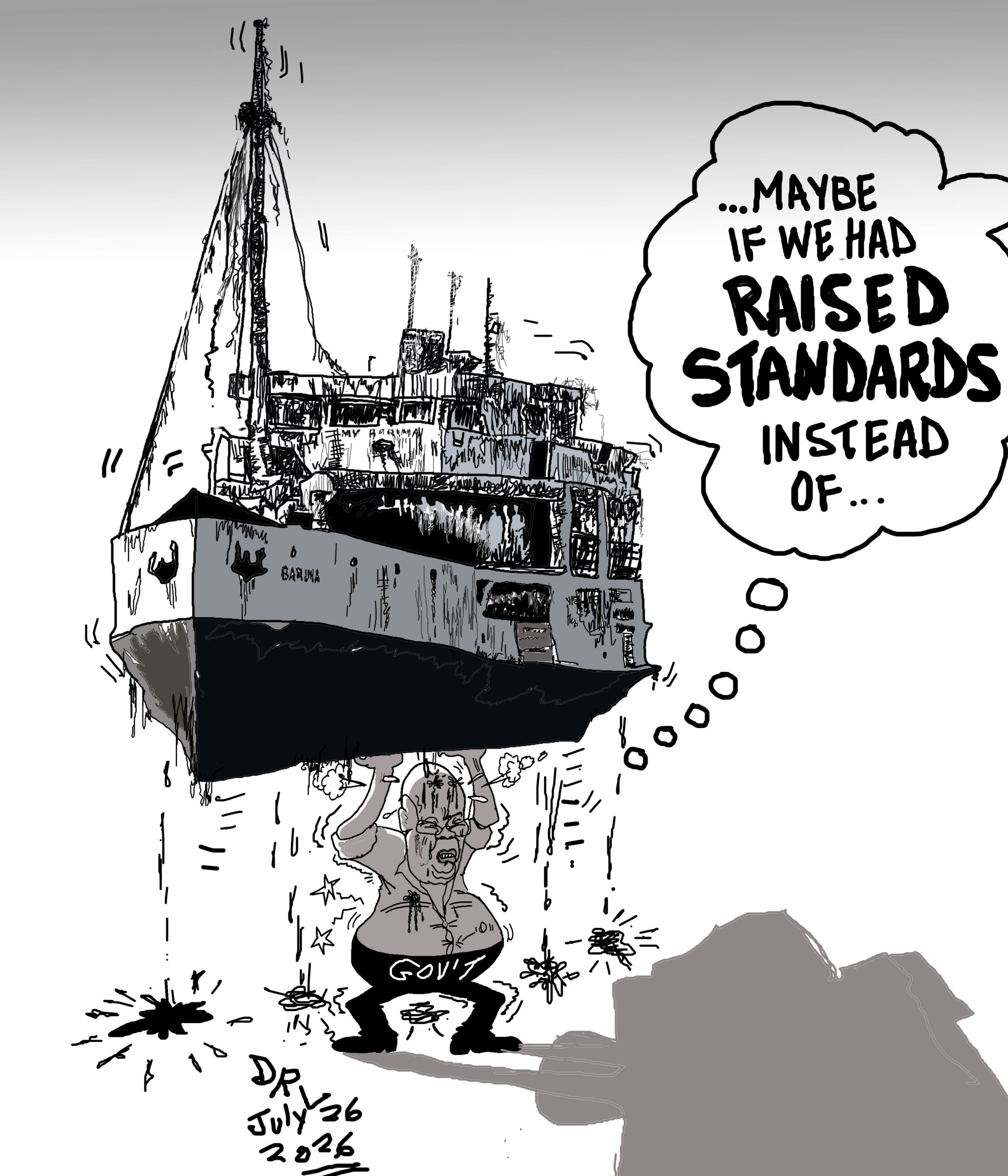
- Mohamed’s offer to raise MV Barima, pushes Govt. to say victims’ relatives will decide
- Guyana’s predictable fiscal regime will work for you’ – Dr. Singh tells investors at COTA
- Chinese Enterprises Association donates relief supplies to CDC for families affected by MV Barima tragedy
The Brazilian “Engagement” — Investment or Institutional Skullduggery?
Dear Editor,
When the Ministry of Agriculture announced in early March that Brazilian investors were exploring “major agro-development opportunities” in Guyana, the briefing had all the optics of a regional success story. The meeting was described as “high-level,” involving technical cooperation, agricultural expansion, and infrastructure linkages between Brazil’s Roraima state and Guyana’s interior.
The narrative was clear: integrate the South American agricultural crescent with the Caribbean basin by opening the Linden–Lethem corridor and revitalizing the Parika Port. According to the Ministry’s statement, the venture could “redefine food security,” generate thousands of jobs, and expand cross-border commerce worth hundreds of millions.
But the numbers being whispered and the players involved tell a murkier story — one that substitutes transparency with discretion, and legal process with political brokerage.
The Shifting Role of GO-Invest
Guyana’s Investment Act (2004) mandates the Guyana Office for Investment (GO-Invest) to oversee all foreign direct investment proposals. The agency’s core responsibilities include due diligence, fiscal review, concession screening, and the verification of investor credentials.
Yet, according to internal correspondence seen by this writer, GO-Invest was not formally consulted regarding the “Brazilian agricultural engagement.” Its exclusion is unusual — particularly for a project involving potential land allocations exceeding 10,000 hectares in the intermediate savannahs of Region Ten and the Rupununi.
One senior civil servant within GO-Invest, who requested anonymity, described the Ministry-led negotiations as “an opaque parallel process” guided by political rather than technical imperatives. “If foreign land access is being negotiated outside GO-Invest protocols,” the official noted, “then we’ve effectively nullified our investment control framework.”
This procedural bypass coincides with mounting concerns about concession abuse. Between 2020 and 2024, more than 110 state land leases were granted under special ministerial approval — many never vetted by GO-Invest.
The Mystery of the “Anonymous” Brazilians
Authentic Brazilian agribusiness giants — Amaggi, SLC Agricola, and BrasilAgro — have all issued public filings indicating interest in soy and corn cultivation in northern South America. None, however, have reported partnerships or allocated capital in Guyana in their public disclosures through 2025.
That gap creates confusion. If these were legitimate Brazilian investors, their participation would appear in shareholder or commodities filings lodged with Brazil’s Comissão de Valores Mobiliários (CVM). It does not.
Instead, sources indicate that intermediaries claiming to represent “a private Brazilian consortium” have been engaged directly by the Agriculture Ministry since late 2024, conducting site assessments in the Lethem and Mabura areas without formal ministry tendering.
Economic modeling suggests that even a 10,000-hectare agro-concession, if developed for soy or maize, could yield an annual output of 35,000 to 45,000 tonnes, with export values of US$12–15 million. That is major revenue potential — and therefore major incentive for land speculation.
As Guyana’s infrastructure improves, these leases could become prime assets. The concern voiced by rural landowners and agricultural co-ops is that politically brokered leases will later be “flipped” to larger Brazilian or multinational firms at enormous profit, leaving Guyanese regulation and communities by the wayside.
Rise Guyana Inc. — A “Facilitator” in the Shadows
Corporate registry data raises more questions than it answers. Rise Guyana Inc., registered in 2022, lists no public financial statements and identifies its headquarters as a small office in Houston, East Bank Demerara. No record of its directors or beneficial owners appears in publicly accessible corporate filings.
Yet, Rise Guyana has participated in multiple Ministry-led delegations to Brazil, including one held in Boa Vista in February,2026. Several photos released on social media show its representatives present alongside government officials. According to one source in the Ministry, “Rise Guyana is operating as a broker, securing land options on behalf of Brazilian syndicates before the infrastructure financing closes.”
If that assessment is accurate, it would represent a privatization of the state’s investment negotiation role — effectively inserting a non-transparent broker between the government and foreign investors. Such arrangements blur the line between public service and private profiteering, and could run afoul of Guyana’s Procurement Act (2003) and Integrity Commission Act (1997).
The Broader Economic Context
Guyana’s agro-export potential has surged since the onset of the oil boom. Agricultural exports, valued at US$189 million in 2023, rose nearly 12% year-over-year [Guyana Bureau of Statistics]. Brazilian trade through the Lethem border reached a record US$43 million in goods in 2024, with Roraima emerging as the second-largest cross-border supplier.
Major infrastructural projects now underway — the Linden–Mabura Hill Road (US$190 million) and the proposed Parika Deepwater Port (US$270 million) — will soon make bulk land transport and export viable for agribusiness operations. These developments dramatically increase the speculative value of interior lands. As one economist from the University of Guyana observed, “Infrastructure always precedes speculation. Whoever secures holdings before the road opens can leverage them into long-term concessions worth tens of millions.”
Public Accountability and the Path Forward
The government has multiple channels to demonstrate good faith:
- Disclose the full list of Brazilian entities involved and their investment commitments.
- Publish any Memoranda of Understanding or letters of intent.
- Confirm GO-Invest oversight role and adherence to statutory process.
- Release Rise Guyana’s corporate structure and beneficial ownership.
Transparency is not optional. It is fundamental to ensuring that hinterland development benefits citizens rather than intermediaries.
For now, this “Brazilian engagement” appears less like foreign investment and more like a case study in institutional bypass — one that risks turning Guyana’s frontier into a speculative playground for undisclosed interests. Guyana stands at a crossroad: the promise of regional integration or the peril of privatized diplomacy. The choice — and its consequences — will be defined in how the government answers one simple question:
“Who is really at the table?”
Sincerely,
Hemdutt Kumar
Share this:

Discover more from Kaieteur News
Subscribe to get the latest posts sent to your email.
Similar Articles

Blunt of the day
Sports

Features/Columnists

Sir. Ronald Sanders

The GHK Lall Column

Weekend Cartoon