Latest update August 5th, 2026 1:26 AM



Latest News
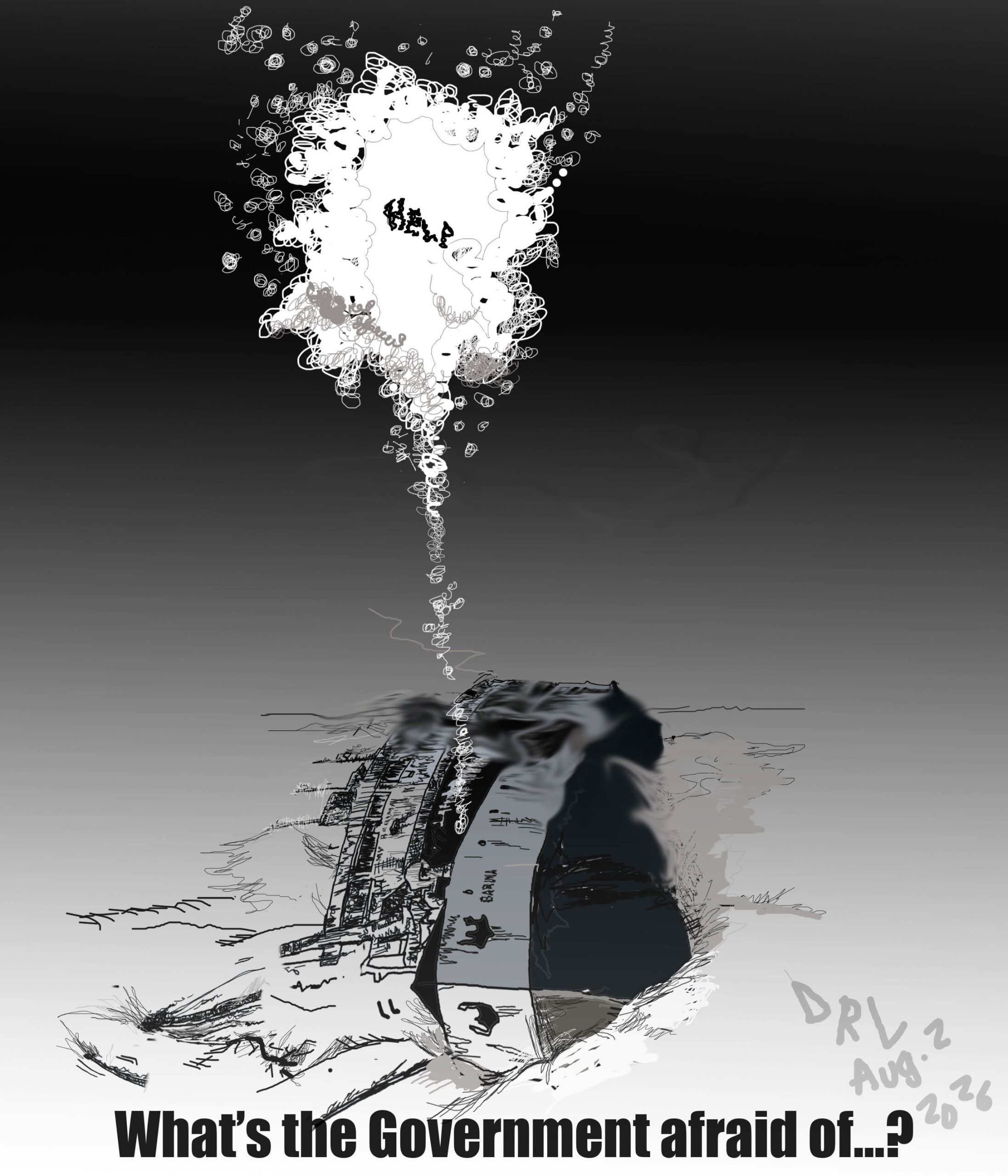
- Govt. secretly invited Dutch firm to raise MV Barima long before issuing tender – well-placed sources
- Guyana still to receive full 50% profits promised by VP Jagdeo
- Jagdeo faces hostile Linden protests
- Trump blasts ExxonMobil, Chevron for making “too much money” during war, says companies should lower prices
- GMSA rails against Govt’s $496 million water bottling plant
Mind Your Business: The Psychological Vestiges of History: How the Past Lives in Present Behavior
By Dr. Eon Andre George, PhD, EdD
(Kaieteur News) – One of the most overlooked truths in psychology is that history does not remain neatly in the past. It lives on in attitudes, fears, expectations, and coping styles that are passed from one generation to the next. Often, people do not even realise that what they feel or how they react has roots deeper than their personal experiences.
In Guyana and across the Caribbean, history is not just something in textbooks. It is something families lived through, adapted to, and survived. The psychological imprint of slavery, indentureship, colonisation, forced migration, and political instability did not disappear when those systems ended. Human beings carry experience forward, not only through stories but through learned emotional responses and survival strategies.

Dr. Eon Andre George, PhD, EdD
Psychologists refer to this as historical or intergenerational trauma, the idea that the effects of large-scale social suffering can echo across generations (Brave Heart, 2003; Danieli, 1998). In very practical terms, this can look like a Guyanese grandmother who constantly tells her grandchildren to “always have something put away for hard times,” even when the family is stable, or a parent who strongly discourages children from trusting authority figures because of stories passed down about unfair treatment or political unrest. These are not random attitudes. They are survival lessons that once made sense in difficult periods and were handed down out of care. This does not mean people are permanently damaged. It means they adapted to difficult realities, and those adaptations sometimes outlive the conditions that created them.
Survival Once Required Emotional Control
In plantation societies and colonial systems, emotional expression could be risky. Speaking too freely, showing anger, or displaying vulnerability could invite punishment or exploitation. Over time, emotional restraint became a survival tool. That cultural memory did not simply vanish. Many Caribbean families still value “keeping yourself together,” maintaining composure, and not showing too much emotion publicly.
These traits can be strengths. They can foster resilience and dignity. However, when emotional control becomes emotional suppression, the cost can be high. Research in psychology shows that chronic suppression of emotions is linked to increased stress, anxiety, and even physical health concerns (Gross & John, 2003). Feelings that are never processed do not disappear. They often re-emerge as irritability, withdrawal, or tension in relationships. Understanding this context helps us see that what looks like coldness or stubbornness may sometimes be inherited emotional discipline shaped by history.
Why Mistrust Can Be Learned
In societies where ancestors lived under unequal power structures, mistrust was often protective. Trusting the wrong authority could have serious consequences. Over generations, cautiousness toward institutions and leadership could become normalized. Today, this may appear as skepticism toward government, schools, or even community leadership. While times have changed, the psychological template for self-protection can remain. From a psychological perspective, this is not irrational paranoia. It is learned vigilance shaped by collective memory.
Studies on collective trauma note that communities exposed to long-term instability often develop heightened awareness of risk and power dynamics (Hirschberger, 2018). Recognizing this can help leaders build trust in ways that are culturally and historically sensitive.
The Pressure to Succeed and “Make the Family Proud”
Many Caribbean households strongly emphasize achievement, reputation, and respectability. Children are often reminded not to “shame the family” and to pursue education or status. While this can motivate success, it also carries psychological weight.
Historically, achievement was one of the few available ways to reclaim dignity in systems that denied humanity and opportunity. Success was not only personal; it was symbolic. That legacy continues today. For some young people, the pressure to excel is not just about ambition but about carrying family hopes and historical pride.
Psychology recognizes that high-expectation environments can build resilience or anxiety depending on the emotional support provided (Ungar, 2013). Balanced encouragement strengthens development, but fear-based pressure can strain mental health. In many Guyanese households, for example, a child preparing for CSEC or CAPE exams may hear constant reminders that the entire family is depending on their success or that failure would be a disgrace. While the intention is often to motivate, a child who feels loved only when achieving may begin to associate self-worth with performance. Over time, this can produce anxiety, fear of failure, or emotional withdrawal rather than confidence. When expectations are paired with reassurance, guidance, and emotional safety, however, they can foster determination and healthy resilience.
Healing Does Not Require Blame
Acknowledging psychological inheritance is not about blaming history or making excuses for present behavior. It is about awareness. When people understand where patterns come from, they gain the power to reshape them.
Healing grows in environments where emotional literacy is encouraged, where counseling is normalized, and where resilience is celebrated alongside vulnerability. Caribbean culture already has strong community bonds, humor, faith, and adaptability. These are psychological assets. They provide a foundation for growth when paired with awareness.
The goal is not to change Caribbean identity. The goal is to understand it more deeply.
A Forward-Looking Perspective
Guyana and the Caribbean are not defined by trauma. They are defined by endurance, creativity, and resilience. Still, resilience becomes even stronger when people understand the forces that shaped them. Psychology offers tools to recognize inherited patterns, strengthen healthy ones, and gently revise those that no longer serve current realities.
The past shaped the Caribbean mind, but it does not have to limit the Caribbean future. When societies understand how history lives in behavior, they gain the freedom to choose which legacies to carry forward and which to transform. And that awareness is where generational healing begins.
Share this:

Discover more from Kaieteur News
Subscribe to get the latest posts sent to your email.
Similar Articles

Blunt of the day
Sports

Features/Columnists

Sir. Ronald Sanders

The GHK Lall Column

Weekend Cartoon