Latest update August 8th, 2026 12:30 AM



Latest News
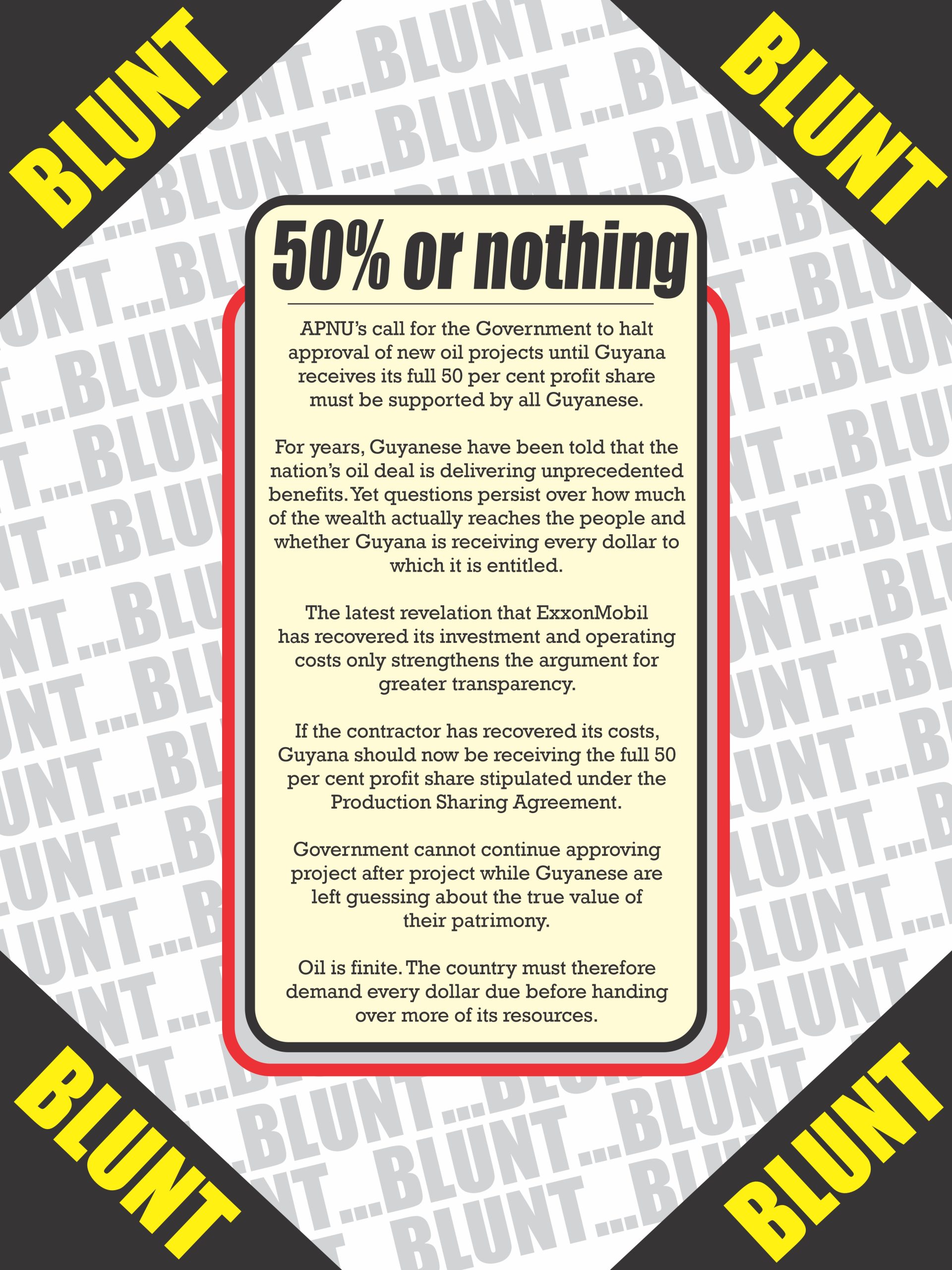
- ‘No new oil projects until Guyana gets full 50% profits’ – APNU tells Govt.
- Two dead in Water Street brawl
- “We will follow you wherever you go” – opposition vows to beef up protests against government
- Trump says war ‘can’t go much longer’
- Guyana’s oil helps cushion impacts from Middle East disruption – Exxon
Jurisprudence in Guyana, CCJ, Privy Council, and America
Dear Editor,
Is Guyana (Court of Appeal or Supreme Court) and or CCJ Jurisprudence superior to the American Supreme Court and the Privy Council of Britain? The answer is largely opinionated. Some local and Caribbean lawyers and political analysts as well as politicians prefer the CCJ and local courts over an overseas based one because of nationalism, among other reasons. Most regional lawyers prefer the independent non-partisan Privy Council (PC) over the CCJ as the apex court. The American Supreme Court has no ties to the region.
For the record, court rulings (Court of Appeal – Chancellor’s Office) in Guyana can only be appealed at the CCJ (our apex court), not the Privy Council (PC) which Burnham broke off from in 1970. Other Caricom countries (except, Dominica, Barbados, Belize) have Privy Council, not CCJ, as final court. The American Supreme Court (ASC) pays no heed to the Privy Council or rulings in any other jurisdiction – its jurisprudence is primarily American home grown based on the interpretation of the constitution as drafted by the founding fathers and notes they left behind in debates. The CCJ or Privy Council or our own courts hardly cite landmark rulings of the ASC. The rulings of ASC and PC provide sound scholarship and erudition in contrast with the local court and CCJ primarily because of its history. The ASC is almost 250 years and the PC some 350 although Commonwealth rulings is just a hundred. In contrast, CCJ is just over 20 years old.
Jurisprudence in Guyana and the Anglophone Caribbean is based on English Common law, statues, traditions, and legal precedents of the Commonwealth; rulings of the Privy Council and CCJ of late would also be based on interpretation of common law and other precedent setting decisions. The legal system in Guyana is grounded on the (largely flawed – filled with contradictions) 1980 constitution that (supposedly). English law is derived from judicial decisions in the UK and Privy Council and lately from rulings in the Commonwealth, by the CCJ, and our own courts though the latter hardly made any landmark decisions like the ACS and PC. A few judgments in Guyana stood out but were controversial and overturned because they can’t hold up with logic, common sense, and rationality.
I am not a lawyer, but in my studies of political science two courses on constitutional laws were mandatory, as also two courses on Educational Law in pursuing my post graduate degree in Education Administration and two courses on international law. I also taught constitutionalism course for some two decades. So I am equipped with some knowledge on constitutional law. American and British courts tend to be fair and judicious in contrast with local courts in each Caribbean territory. Courts in Guyana and Trinidad historically have tend to be politically and racially biased.
Legal luminary Fenton Ramsahoye used to laugh at some of the judicial rulings in the Caribbean. Almost every ruling against his clients were overturned on appeal at the PC. Ditto Ramesh Maharaj; they always look forward going before the Law Lords confident of victory. Most Trinis and Caribbean people also prefer the Privy Council over local courts or the CCJ; off course, people prefer CCJ over Guyana’s local courts that historically tend to be politicized. The ASC and PC tend to be neutral although recently the ASC has become too politicized deferring to the executive branch. One is reminded that the ASC has accorded rights to the public that are not specified in the constitution. It also gave powers to the federal government that are not stated in the constitution. In contrast with ASC granting maximum rights to the people, local courts have denied or restricted rights to people in Guyana. As an example, the PC and ASC asserted that candidates can run for office as independents (although not specified in constitutions) whereas in Guyana the judges ruled the constitution does not say candidates can run as independents for office) and therefore they can’t run. The South African Supreme Court also sides with independent candidacies. Clearly, the Law Lords made more creative, enlightened rulings than Guyanese judges giving rights to the public not specified in constitutions. Unlike Guyana’s judges, who are strict constructionist, PC and ASC tend to stretch the meanings of clauses in the constitution and in laws. The CCJ tends to follow pattern of PC and is likely to overturn rulings of appeal court in Guyana on rights of the individual and independent candidacies. Also, the ASC tend to grant unlimited free speech unlike in Guyana where judges support libel that American courts would scoff at.
The US Supreme Court and the Privy Council have established a large body of judicial precedent setting decisions (stare decisis) respectively interpreting the American constitution and multiple constitutions of the Commonwealth as well as their laws. They gave clarity to laws and clauses in the constitutions. The CCJ interprets constitutions and laws of the four territories that accept it as their apex court, and it has not been known for any standout landmark rulings compared with the PC or ASC. The apex courts have been charged with resolving specific disputes and in so doing have provided guidance for lower courts in deciding cases involving similar disputes. Freddie Kissoon wrote that Caribbean judgments are superior the Americans and presumably the CCJ. He is wrong.
Privy Council and ASC judgments are considered superior to those of Caribbean courts because of the long history of those courts, expertise of judges and impartiality from influence of politicians, and quality of judgments based on sound reasoning.
Yours sincerely,
Vishnu Bisram
Share this:

Discover more from Kaieteur News
Subscribe to get the latest posts sent to your email.
Similar Articles

Blunt of the day
Sports

Features/Columnists

Sir. Ronald Sanders

The GHK Lall Column

Weekend Cartoon