Latest update December 14th, 2025 1:16 AM

Dec 14, 2025 Features / Columnists, Peeping Tom
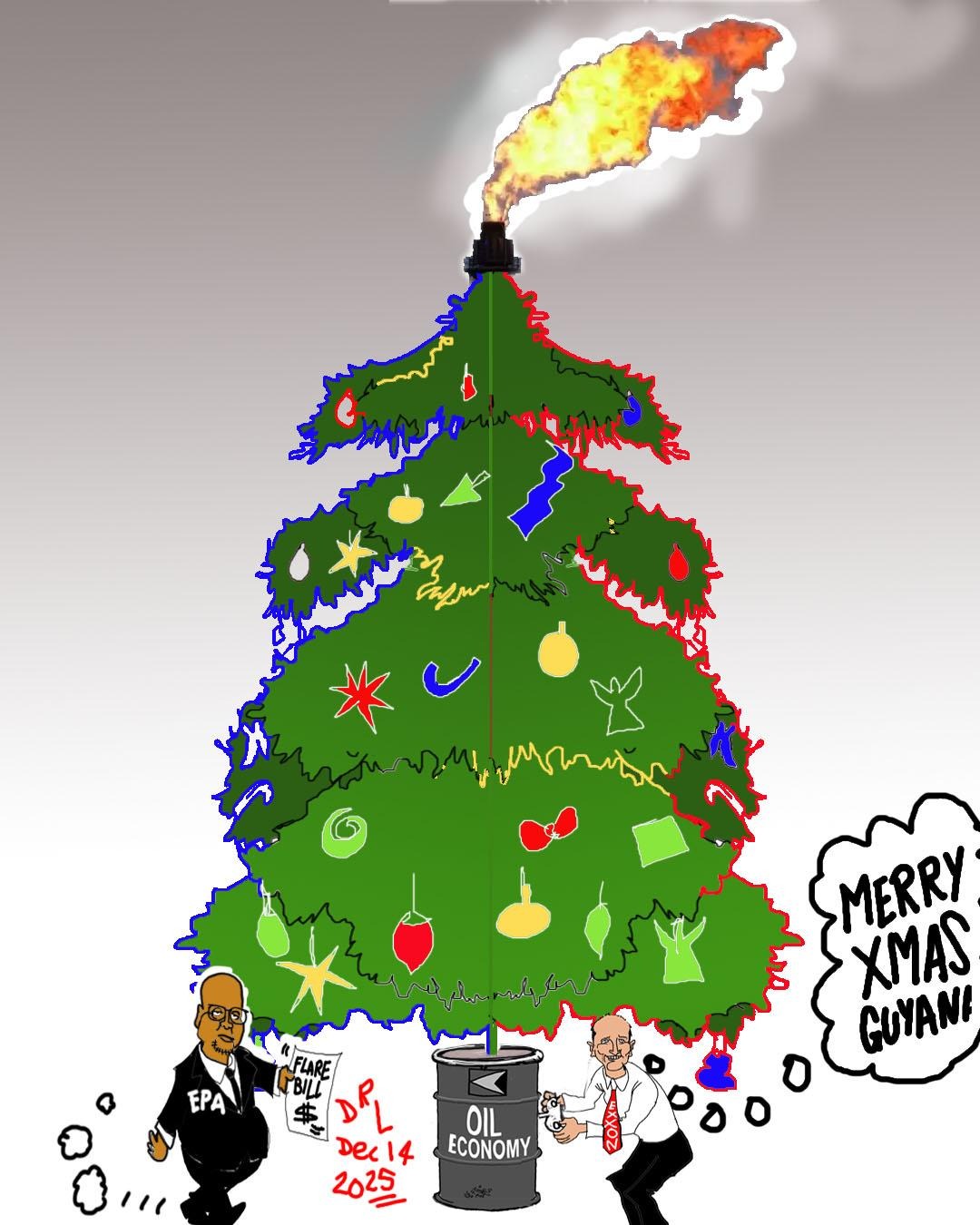
(Kaieteur News) – The annual budget season in Guyana has come to resemble a familiar civic ritual. On cue, the private sector rises to plead for reduced taxes, fresh incentives, and renewed concessions, all offered in the soothing language of growth, competitiveness, and national development.
The argument is always the same, and so is the outcome: public revenue quietly transferred into private hands, on faith rather than evidence, and with little accounting to the people who are asked to foot the bill.
This arrangement is routinely described as “incentivizing” business, but the word disguises more than it reveals. What these concessions actually represent is a lien on future public revenue—a discount on taxes yet to be collected, granted in advance and largely without conditions. The State forgoes hundreds of billions of dollars annually in remitted, waived, or uncollected taxes. In exchange, it receives promises: jobs will appear, incomes will rise, money will circulate, prosperity will trickle down. This is the secular theology of the modern private sector, endlessly rehearsed but rarely interrogated.
Experience, however, has not been kind to this creed. Guyana has travelled this road for decades, and the promised destination remains stubbornly out of reach. The scale of concessions bears no proportional relationship to the creation of quality employment or broad-based income growth. What has grown, with impressive speed, is private accumulation—often concentrated and frequently insulated from meaningful public obligation. If incentives were meant to seed a more equitable economy, the harvest has been thin.
The moral hazard of this model is most starkly visible in the administration of Value-Added Tax. VAT, in theory, is a neutral instrument, collected on behalf of the State. In practice, it has become a shadow subsidy for unscrupulous businesses. The dishonest businesses lift money from consumers. It is pocketed by the dishonest ones and never fully remitted.
What should have been public revenue instead becomes a slush fund, an interest-free loan, a private investment pool. While working people struggle with a rising cost-of-living, some firms expand on the back of these unremitted taxes they were never meant to keep. It is a quiet form of theft, rendered respectable by inertia and weak enforcement.
Yet calls for the removal of VAT will be resisted. Yet the irony is acute. Private-sector expansion, fuelled by concessions and unremitted taxes, contributes to an overheating economy—higher prices, distorted demand, and widening inequality. The working class pays twice: once at the checkout counter, and again through foregone public services.
At the center of this architecture sits what might be called the Jagdeo model: an approach to development that treats concessions as an end in themselves, not as instruments to secure measurable public benefit. Under this model, incentives are granted upfront, with little concern for whether savings are passed on to consumers, reinvested productively, or shared with workers. The State gives, and then waits—patiently, optimistically, and usually in vain.
There is nothing radical in saying that this model has failed. What is radical is the refusal to acknowledge it. Incentives are not inherently wrong. High and poorly structured taxes can indeed discourage investment. But concessions without conditions are not policy; they are gifts. And gifts of public money demand public returns.
A new model is not only possible but necessary, one that is redesigned to improve benefits to the State rather than defer them indefinitely. The same logic should apply to domestic private enterprise. If tax concessions reduce the cost of investment, then that reduction should yield dividends to taxpayers.
One obvious mechanism is equity. Future incentives—whether tax holidays, reduced tax rates, or accelerated allowances—should be linked to a state stake in the beneficiary businesses. If the public provides seed capital indirectly through foregone revenue, the public should share in ownership, profits, and long-term value. This is not expropriation; it is reciprocity.
Incentives should also be explicitly tied to reinvestment: in local supply chains, in worker training, in productivity-enhancing technology. These commitments must be measurable, time-bound, and enforceable. Anything less is theatre.
Finally, tax reform itself must escape its piecemeal captivity. Adjusting rates here and granting exemptions there, under pressure from well-organised interests, produces incoherence and inequity. What is needed is a comprehensive re-examination of the tax system—one that balances competitiveness with fairness, revenue with development, and private profit with public purpose.
The question is not whether Guyana can afford to change course. It is whether it can afford not to. Continuing to funnel public resources into private hands without return is not development policy; it is a perpetual cash grant, dispensed on private terms.
The Jagdeo model, whatever its intentions, has run its course. It is time to replace faith with evidence, generosity with accountability, and concessions with contracts that finally work for the people who pay for them.
(The views expressed in this article are those of the author and do not necessarily reflect the opinions of this newspaper.)
Subscribe to get the latest posts sent to your email.
Your children are starving, and you giving away their food to an already fat pussycat.
Dec 14, 2025
Kaieteur Sports – The Guyana Defence Force’s (GDF) Women’s Football team were the center of attention on Friday evening as the champions of the Women’s Division One League officially became...Dec 14, 2025
(Kaieteur News) – The annual budget season in Guyana has come to resemble a familiar civic ritual. On cue, the private sector rises to plead for reduced taxes, fresh incentives, and renewed concessions, all offered in the soothing language of growth, competitiveness, and national development....Dec 14, 2025
(Kaieteur News) – The Caribbean is living through a moment of rising geopolitical tension. As the United States intensifies pressure on the Maduro government in Venezuela, the ripples reach CARICOM shores fast. None of these countries chose this confrontation, yet each of them is forced to...Dec 14, 2025
Hard Truths by GHK Lall (Kaieteur News) – Guyanese have their hands full and their minds fully attuned in this busy Xmas Season for Guyanese. It is about more than black-cake and pepper-pot. It is from the Dr. Bharrat Jagdeo watch to the Dr. Irfaan Ali Watch. Like a baby delivery that is...Freedom of speech is our core value at Kaieteur News. If the letter/e-mail you sent was not published, and you believe that its contents were not libellous, let us know, please contact us by phone or email.
Feel free to send us your comments and/or criticisms.
Contact: 624-6456; 225-8452; 225-8458; 225-8463; 225-8465; 225-8473 or 225-8491.
Or by Email: glennlall2000@gmail.com / kaieteurnews@yahoo.com