Latest update August 17th, 2026 10:20 AM



Latest News
- Two Australian firms now hold 770 km² gold lands in Guyana
- Mayor demands answers as Linden grid breaks under industrial weight
- Colombian president asks Trump to suspend tariffs to help earthquake recovery
- $6.6B Bath Hospital must deliver more than ‘grand ceremonies’ – Opposition Leader says
- Fast-growing Guyana still depends on private planes for medevac
Corruption in Guyana
Dear Editor,
Corruption is a worldwide phenomenon that is deeply ingrained in our socio-political landscape. It is so ensconced in the daily fabric of our public and governance systems that, paradoxically, some corrupt practices are normalised as administrative efficiency. Corruption, while without a universally accepted definition, is widely understood to be the misuse of public office for private gain, whether that gain be material, political, or otherwise.
Corruption in Guyana does not only occur through covert monetary dealings but also through the systemic manipulation of our institutions for personal or partisan advantage. The pervasiveness of this problem is such that citizens rarely question its presence, particularly when the practice is of benefit to them. A clear example is the payment of “expedition fees” for public services such as the issuance of a passport. If the state possesses the administrative capacity to deliver a passport within three (3) days, we must interrogate why this is not the standard practice. Instead, efficiency has been commodified, and those with the financial means can secure preferential treatment. This transactional culture extends across public institutions, including law enforcement and the judiciary, where monetary inducements or bribes as we know it, can make for the avoidance of traffic charges, disappearance of evidence, and even prosecution failures.
Such realities raise critical questions about the governing philosophy of the current administration. The Ali government and by extension the PPP, while rhetorically acknowledging corruption, appears structurally dependent on it. Our constitutional framework itself, in some respects, allows for individuals who lack integrity to have significant discretionary power in the office of the presidency. Point to note is that key public offices like the Director of Public Prosecutions and the Commissioner of Information falls under Presidential appointments, and those office holders are protected by tenure security. While these public offices are designed to preserve institutional independence, in practice the appointments are often given to political loyalists, thereby eroding any semblance of impartiality they are meant to safeguard.
There are many other examples which reinforce this and other trends. May I posit that the government’s refusal to release the 2022 census data ahead of the 2025 election raises legitimate concerns about electoral transparency and the manipulation of information flows for political survival. Such practices are symptomatic of a governance system in which corruption is not merely incidental but systemic, serving as a structural and main pillar of political dominance.
President Ali’s public rhetoric about combating corruption must be placed against this backdrop. Comparative political analysis suggests that highly corrupt governments rarely dismantle the very mechanisms that sustain their power, as such efforts would amount to political self-destruction. Indeed, if we were to take a look at Ali’s first term, budgetary allocations specifically targeting anti-corruption measures were negligible, and what little was done amounted to performative gestures. Symbolically, even the prohibition of the word “corruption” in the National Assembly reflected a government uneasy with scrutiny, preferring semantic censorship over substantive reform.
It is my belief that repeated statements from the United States government in highlighting corruption involving high-ranking officials within Guyana has prompted President Ali to make bold declarations about addressing corruption in his second term. Whether these promises materialise into meaningful reform or merely constitute another facade, time will tell.
In concluding, the entrenchment of corruption in Guyana is neither accidental nor peripheral, it is systemic, institutionalised, and sustained by a political culture that conflates governance with patronage. The persistence of any People’s Progressive Party led administration in power is, to a significant degree, facilitated by this culture of corruption. For genuine transformation to occur, every citizen must critically observe, interrogate, and reject the normalisation of corrupt practices, both subtle and overt, which compromise national development and undermine democratic governance.
Regards,
Clayon F. Halley
Share this:

Discover more from Kaieteur News
Subscribe to get the latest posts sent to your email.
Similar Articles
One thought on “Corruption in Guyana”

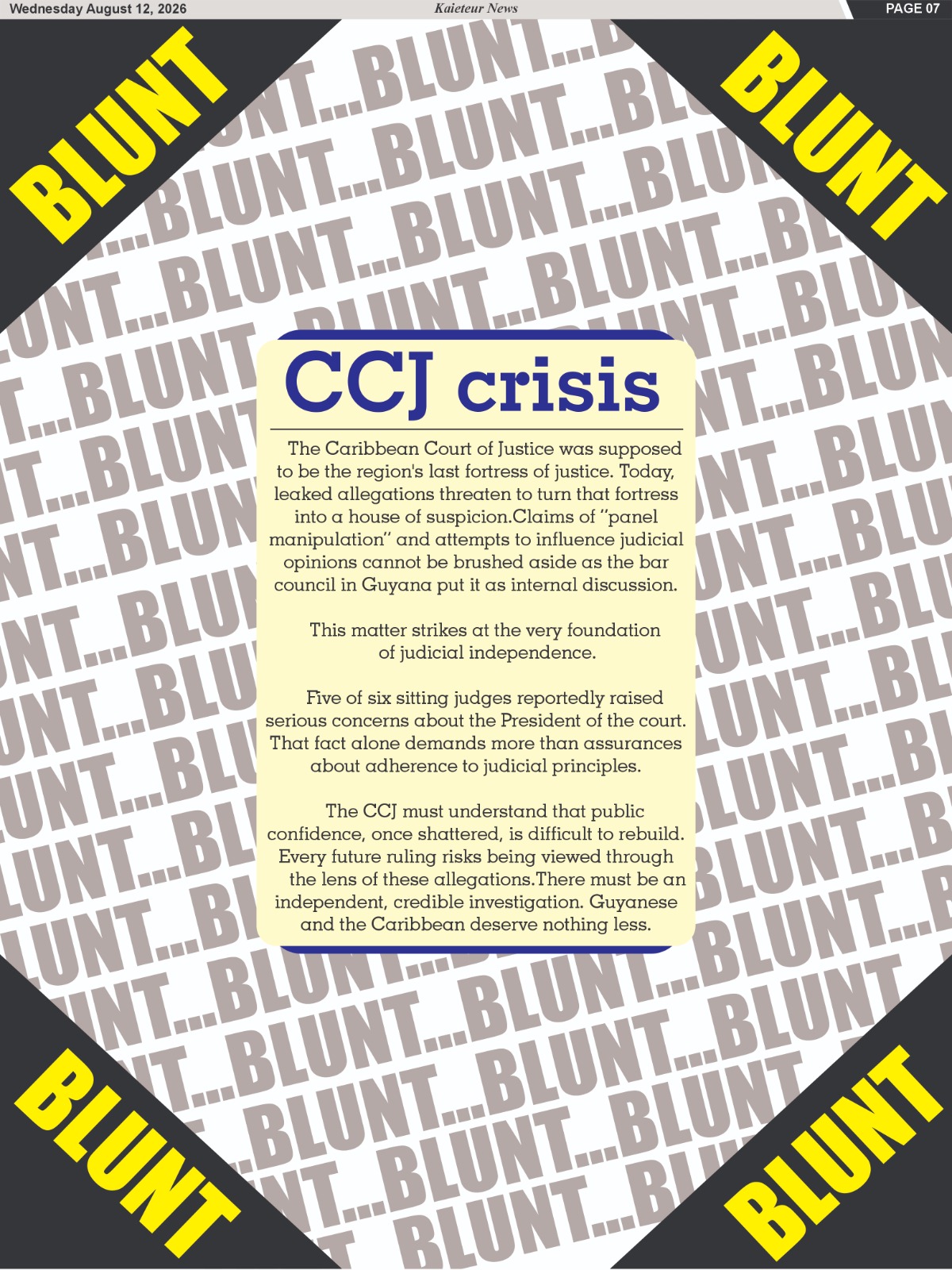
Blunt of the day
Sports

Features/Columnists

Sir. Ronald Sanders

The GHK Lall Column

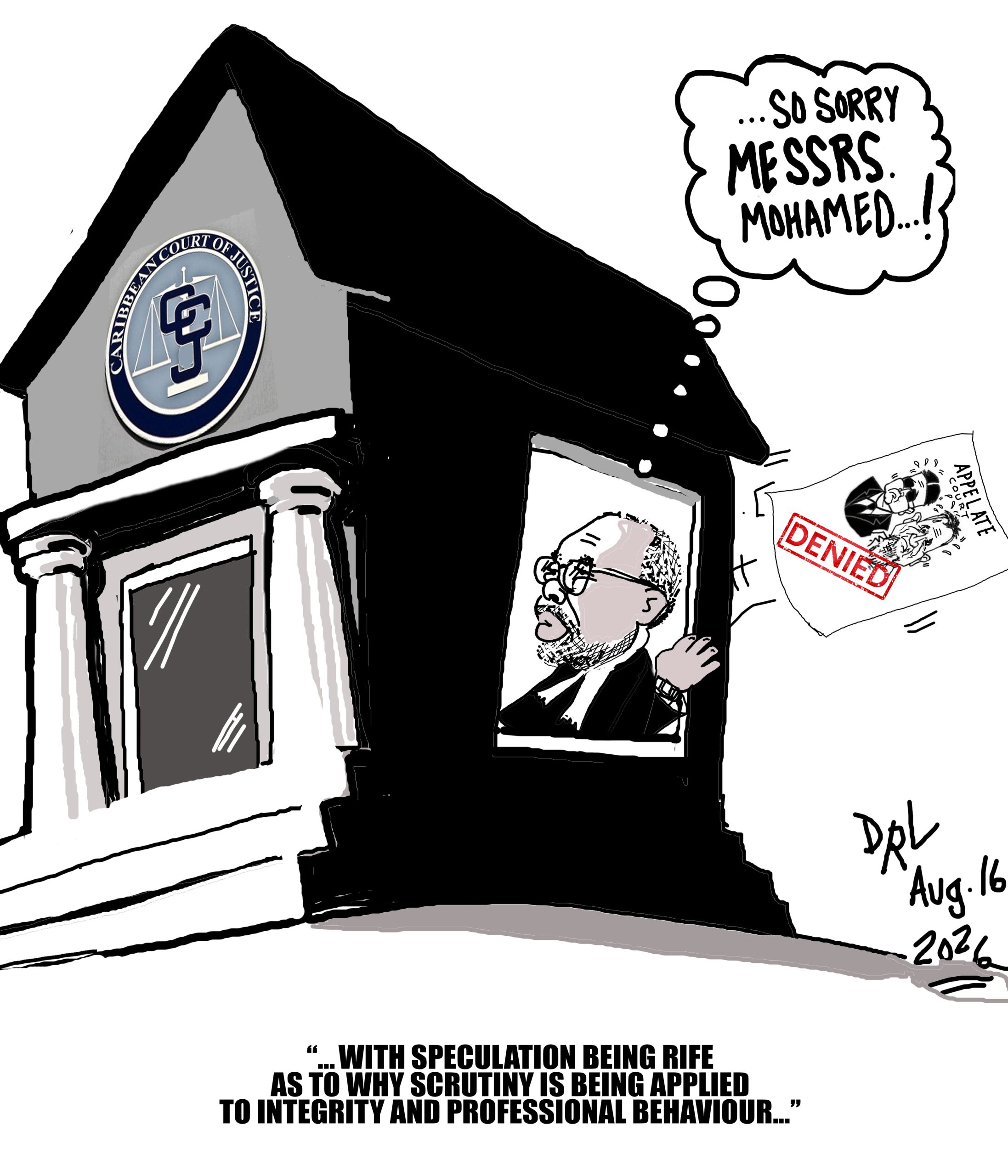
Weekend Cartoon


Having lived outside the country for some time, I have never had to pay a
bribe to anyone, in Government, City, State, Federal to receive any service.
In Guyana, like other 3rd world countries, it is reported as prevalent.
As long as somebody accepts, then somebody will give. Very simple.