Latest update February 8th, 2026 12:40 AM

Sep 14, 2025 Features / Columnists, Ronald Sanders
Kaieteur News – On 10 September, all 32 active member states of the Organization of American States (OAS) signed a joint statement on Haiti. As often happens in diplomacy, not every member state participated in the discussions and negotiations that produced the text. Antigua and Barbuda did. I led our delegation. We argued line by line because, in diplomacy, words decide budgets, mandates, and lives—they must be carefully weighed.
My delegation had four concerns.
First, the UN Security Council resolution proposed by the United States and Panama -to which the joint statement refers – has not yet been adopted. Discussions have been constant in New York, but the text is still not agreed. In plain terms, the United States and Panama are asking the UN Security Council to replace the small, under-resourced Kenya-led mission in Haiti with a larger, UN-backed force – about 5,550 personnel- with the legal authority to detain gang members, secure critical infrastructure (airports, ports, hospitals, schools), and run intelligence-led operations against armed groups for 12 months. The plan also stands up a UN Support Office to handle logistics and reimburse equipment costs, while voluntary contributions to a UN Trust Fund cover personnel reimbursements and other mission needs, keeping costs transparent and shared. This is understandable. The Kenyan-led mission has struggled to deliver sufficient results relative to the costs borne by funders. It cannot continue in this fashion.
Second, replacing the Multinational Security Support mission with any “Gang Suppression Force” risks narrowing the lens to the use of force – what my Deputy Head of Mission, Joy-Dee Davis-Lake, aptly called “urban warfare” – while missing the wider context of Haiti’s economic and social conditions that helped create the gangs. As I said publicly in response to a Miami Herald question, any new UN action cannot be only about suppression. Gangs recruit boys who have nothing to eat and no opportunities to grow into self-sufficient adults; violence grows where institutions are hollow, wages are non-existent, and there is no reason to trust the system in which people live. Yes, security is essential, but it must not be regarded as sufficient.
Third, Haitian ownership must not be a slogan; it is the basis of legitimacy for any transformation in the country. Antigua and Barbuda wanted the Haitian authorities to take clear ownership of the joint statement, and to accept accountability for actions in Haiti, including how funds are used. Without that, international support will remain hesitant and unsure.
Fourth, we wanted to ensure that nothing in the joint statement opened a door for the OAS, as an institution, to participate in the use of force. The OAS Charter provides no such authority. More importantly, the OAS’ value – its credibility as a peace-builder and honest broker – would be undermined if it drifts into kinetic (use-of-force) operations. The OAS role is institution-building, rights, and political accompaniment. It is in the interest of each member state, and of the organisation’s relevance, that it keeps to its role.
Those were our guardrails. Within them, we supported the joint statement for the following reasons.
The statement reaffirms that Haiti must lead and places the United Nations at the centre of security operations, including a support office (UNSOH) and the transition to a stronger force aimed at restoring a safe, stable environment and dismantling gangs. That is the right hierarchy: the UN leads on protection; Haiti leads on sovereignty and responsibility.
The OAS is given a clear role – strengthening institutional and operational capacities through a civil, humanitarian, and human-rights approach. That keeps the organisation where it is most effective: helping the Haitian National Police with non-force enablement and helping the state rebuild the basics of governance.
The text encourages voluntary contributions to the UN Trust Fund for the new force and welcomes complementary support through OAS mechanisms such as SECURE-Haiti for police enablement, consistent with the UN framework. That pairing keeps money flows honest, channels visible, and burdens shared according to capability.
By calling for coordination among the UN, OAS, CARICOM, and Haiti, the statement tries to stop the waste the world has seen when work overlaps with no coordination.
The statement explicitly joins security operations with attention to root causes: weak institutions, corruption, poverty, stark inequalities, and the collapse of education and basic services. That is the difference between beating off gangs for a few months and building lasting peace for the future.
Thankfully, even as final negotiations were concluding on the joint statement, the UN undertook to move $9 million in emergency funds to Haiti, in part to maintain the La Paix Hospital which is the only public hospital still functioning in Port-au-Prince. As Tom Fletcher, the UN’s under-secretary-general for humanitarian affairs, put it: the security track only works alongside a humanitarian track that helps people go home, rebuild livelihoods, and recover dignity. That is precisely the balance we fought to preserve in the OAS text.
So where does this leave us?
It leaves the UN with the responsibility to deliver protection from gang predation and lawlessness—lawfully, accountably, and with the consent of Haiti’s authorities. It leaves the OAS to backstop that effort where its Charter and competence are strongest: institution-building, rights compliance, political accompaniment, and non-force support to the Haitian National Police. It leaves donors with a clear request: fund the Trust Fund so the new force can function, and fund humanitarian operations so society can live a normal life.
And it leaves the UN Security Council, especially the five permanent members, with a simple message: the states closest to Haiti – its neighbours in the OAS – have spoken with unusual unity after serious and attentive discussions by several lead countries. We support a Haitian-led path, a United Nation-led protection mandate, and a comprehensive strategy that treats both the symptoms and the cause of the Haitian crisis. As we conclude in the statement: “Haiti cannot wait. The time for decisive, coordinated action is now.”
(The author is the Ambassador of Antigua and Barbuda to the United States and the OAS, and Dean of the OAS Ambassadors accredited to the OAS. Responses and previous commentaries: www.sirronaldsanders.com)
Subscribe to get the latest posts sent to your email.
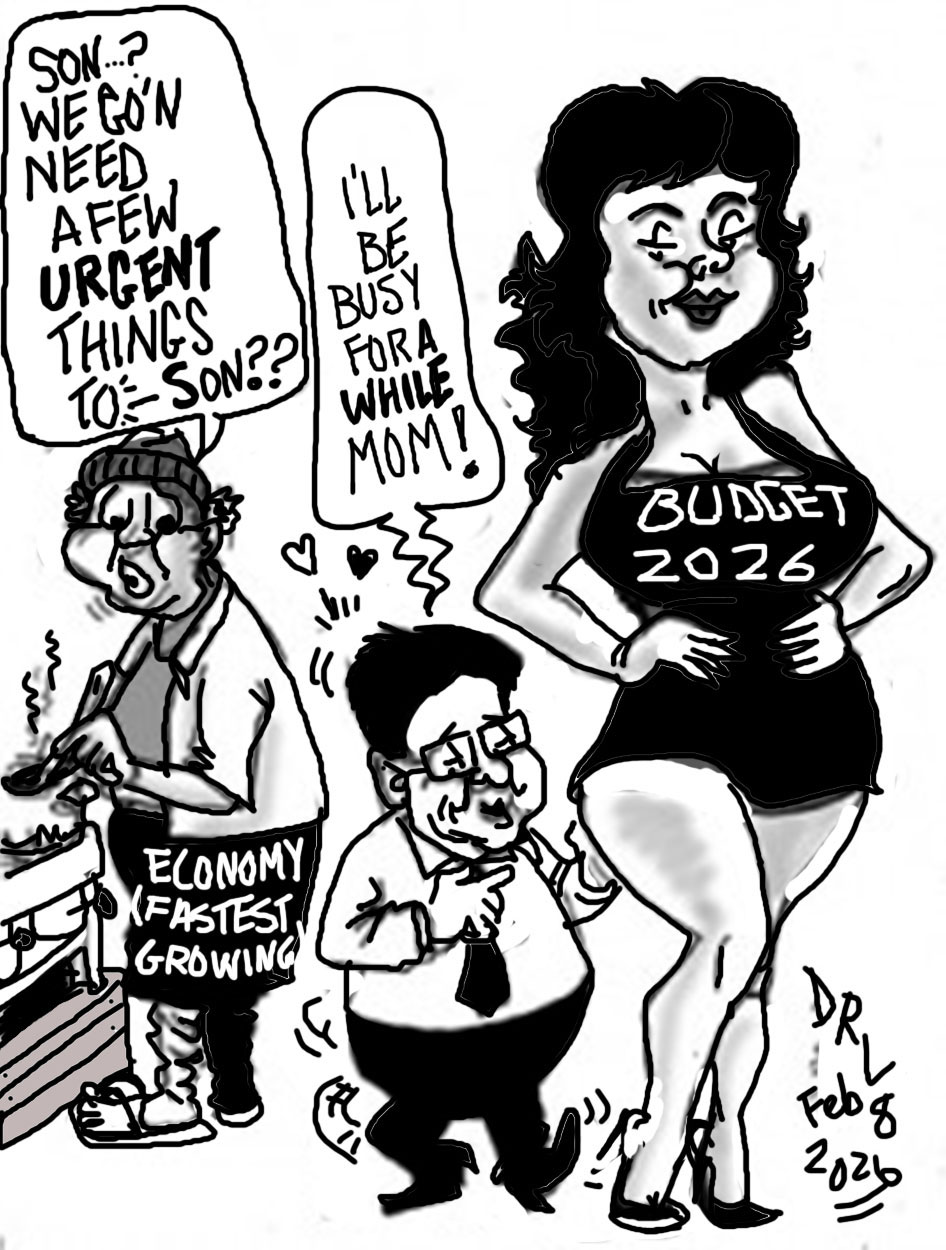
Your children are starving, and you giving away their food to an already fat pussycat.
Feb 08, 2026
(Cricinfo) – Shimron Hetmyer’s explosive half-century carried West Indies to respectability and ultimately victory after a sluggish start to their T20 World Cup opener against Scotland,...Feb 08, 2026
(Kaieteur News) – There was a curious development that attended the maiden address by the Leader of the Opposition in our National Assembly. When the Leader of the Opposition was making his presentation, amid the chorus of heckling, a steady objection was that he was reading his speech. The...Feb 01, 2026
By Sir Ronald Sanders (Kaieteur News) – When the door to migration narrows, the long-standing mismatch between education and economic absorption is no longer abstract; a country’s true immigration policy becomes domestic — how many jobs it can create, and how quickly it can match people to...Feb 08, 2026
(Kaieteur News) – The PPP Govt says one thing. The 2026 budget is big, bright, beautiful; a bonanza for battered Guyanese. The opposition parties-PNC, WIN, FGM-say the opposite: the 2026 budget is straight from the devil’s workshop, a diabolical brew (a la Rev. Jim Jones) for...Freedom of speech is our core value at Kaieteur News. If the letter/e-mail you sent was not published, and you believe that its contents were not libellous, let us know, please contact us by phone or email.
Feel free to send us your comments and/or criticisms.
Contact: 624-6456; 225-8452; 225-8458; 225-8463; 225-8465; 225-8473 or 225-8491.
Or by Email: glennlall2000@gmail.com / kaieteurnews@yahoo.com