Latest update July 30th, 2026 1:03 AM



Latest News
- Canadian firm pockets US$2.2B on Guyana gold field, country gets nothing
- ‘Indigenous people have suffered under ‘broken’ transport system for decades’ – APA’s Executive Director
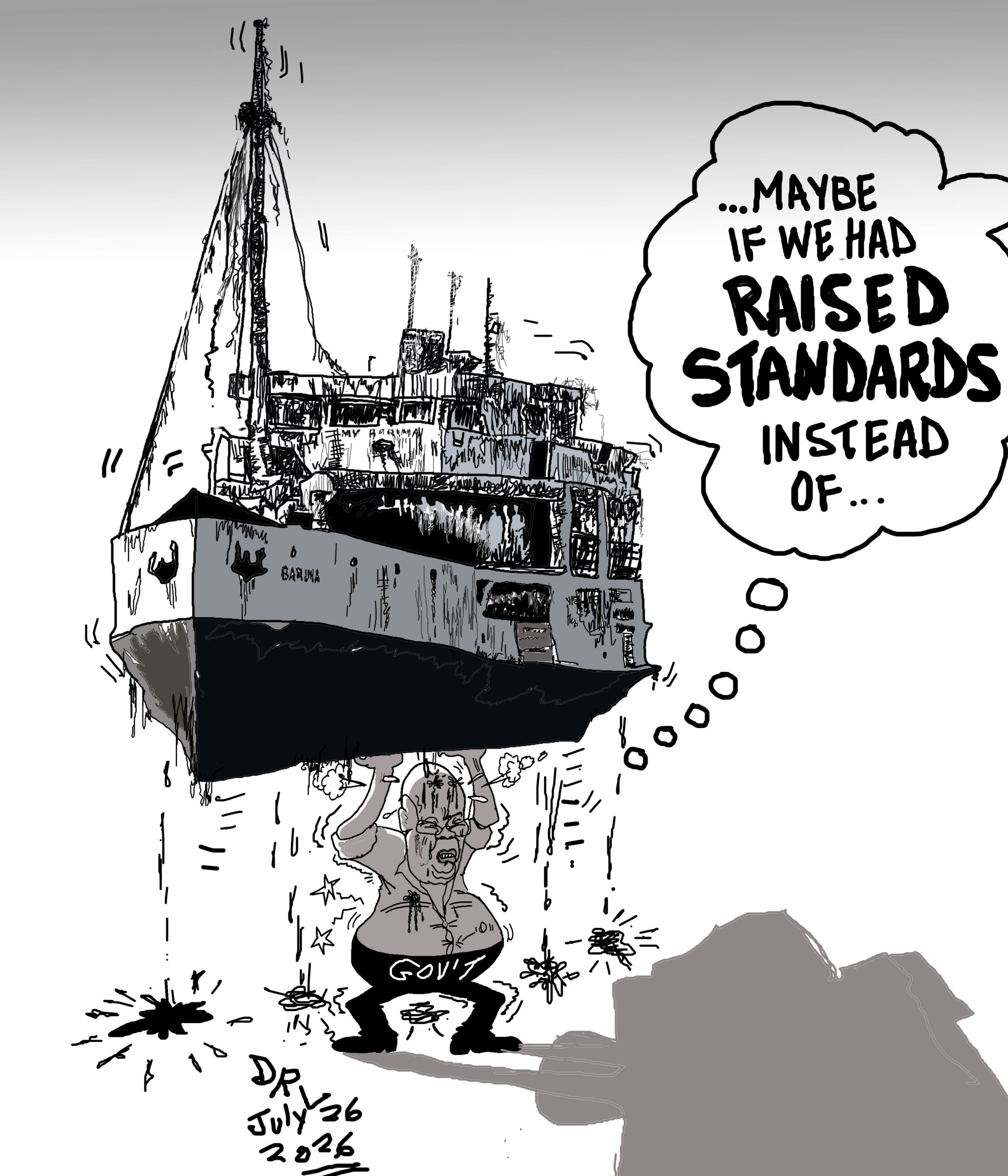
- Protests spread to Den Amstel, Melanie over arrest of MV Barima crew members
- Opposition mobilises lawyers, warns families against signing compensation documents in MV Barima tragedy
- Taxi driver killed after truck collides with car at Goedverwagting
Why global AI integration in the workplace is slower than expected and why Guyana must still push ahead

Karen Abrams, MBA, AA, Doctoral Candidate
By Karen Abrams MBA, AA, Doctoral Candidate
Kaieteur News – As a recent article in The Economist magazine recently observed, “Talk to executives and before long they will rhapsodize about all the wonderful ways in which their business is using artificial intelligence.” JP Morgan boasts over 400 AI use cases. Yum! Brands, which own KFC and Taco Bell, claims AI will soon be the “new operating system of restaurants.” Executives everywhere are painting a future of seamless transformation powered by machine learning and automation.
But behind the boardroom enthusiasm is a slower, messier reality. Despite the promises, meaningful AI adoption across global workplaces has lagged. A 2024 Business Trends and Outlook Survey (BTOS) by the U.S. Census Bureau found that only about 10% of US firms are using AI in a transformative way. UBS, in a recent paper, noted hurdles in enterprise AI adoption. A report from April 2025 discusses how many companies are opting for a “do-it-yourself” approach to AI, building custom tools rather than relying on traditional software vendors. This trend indicates dissatisfaction with generic AI solutions, as enterprises find off-the-shelf products unsuitable for specific use cases, with only $2 billion in AI product sales compared to $22 billion for cloud providers like Azure and AWS.
The slowdown can also be explained in part by economics, integrating AI is not plug-and-play. Many firms are still wrestling with outdated infrastructure, fragmented datasets, and cloud migration challenges. Morgan Stanley notes that “while AI adoption is driving productivity and earnings growth, the pace may be slower than anticipated due to high costs, infrastructure needs, and market euphoria outpacing real-world progress.”
According to the Economist publication, “The optimism around 2025 being “the year of agents”; AI systems performing tasks independently, is already being tempered by what UBS now calls “the year of agent evaluation.”
But the real resistance is more than technical, there’s also a human component to it. Organizational structures, internal politics, and fear are major factors. As The Economist points out, many firms are facing internal power struggles where middle managers, HR departments, and legal teams quietly stall AI implementation. Whether out of self-preservation, regulatory caution, or sheer inertia, change is being delayed on the shop floor even while it’s being celebrated in the boardroom.
This context matters for Guyana, because our challenges and opportunities are not very different. At STEMGuyana, we are actively using AI not only to teach the content knowledge to our jr. (K-12) engineers, but to improve the delivery of lesson content, boost student engagement, and build internal tools that streamline our day to day operations. We’ve already seen real impact, efficiency in some areas has improved by more than 40% and that’s not theoretical, that’s real transformation.
We believe AI can dramatically enhance productivity and reduce operational costs in Guyana’s public and private sectors, especially in education, government services, and customer-facing sectors. The potential to improve service delivery, response time, and data-driven decision-making is enormous. Yet across public and private sectors, we still see hesitation and delay. Some of it is due to fear of job loss. Some of it is due to leadership that hasn’t fully grasped the upside, lack of skilled workers and some due to technical data challenges. In light of our rapidly growing economy, we have no choice but to press on.
Guyana is a country rich in natural resources and human potential. But our future growth depends on more than oil, it depends on how well we harness the tools of the future. AI is one of those tools. If we wait until the perfect conditions appear, we will watch other countries race ahead. But if we take bold steps now, we can lead the region, not just follow.
The irony of automation, as The Economist notes, is that “people often stand in the way.” That may be the global reality, but it doesn’t have to be Guyana’s reality. We have the opportunity to move decisively, to embrace the tools that will drive growth and efficiency across sectors. STEM Guyana is ready to support any such transition. Contact us directly to explore AI-focused professional development, workflow analysis, and strategic planning tailored to your organization’s needs. Let’s move forward, together.
Share this:

Discover more from Kaieteur News
Subscribe to get the latest posts sent to your email.
Similar Articles

Blunt of the day

Sports

Features/Columnists

Sir. Ronald Sanders

The GHK Lall Column

Weekend Cartoon