Latest update August 5th, 2026 1:26 AM



Latest News
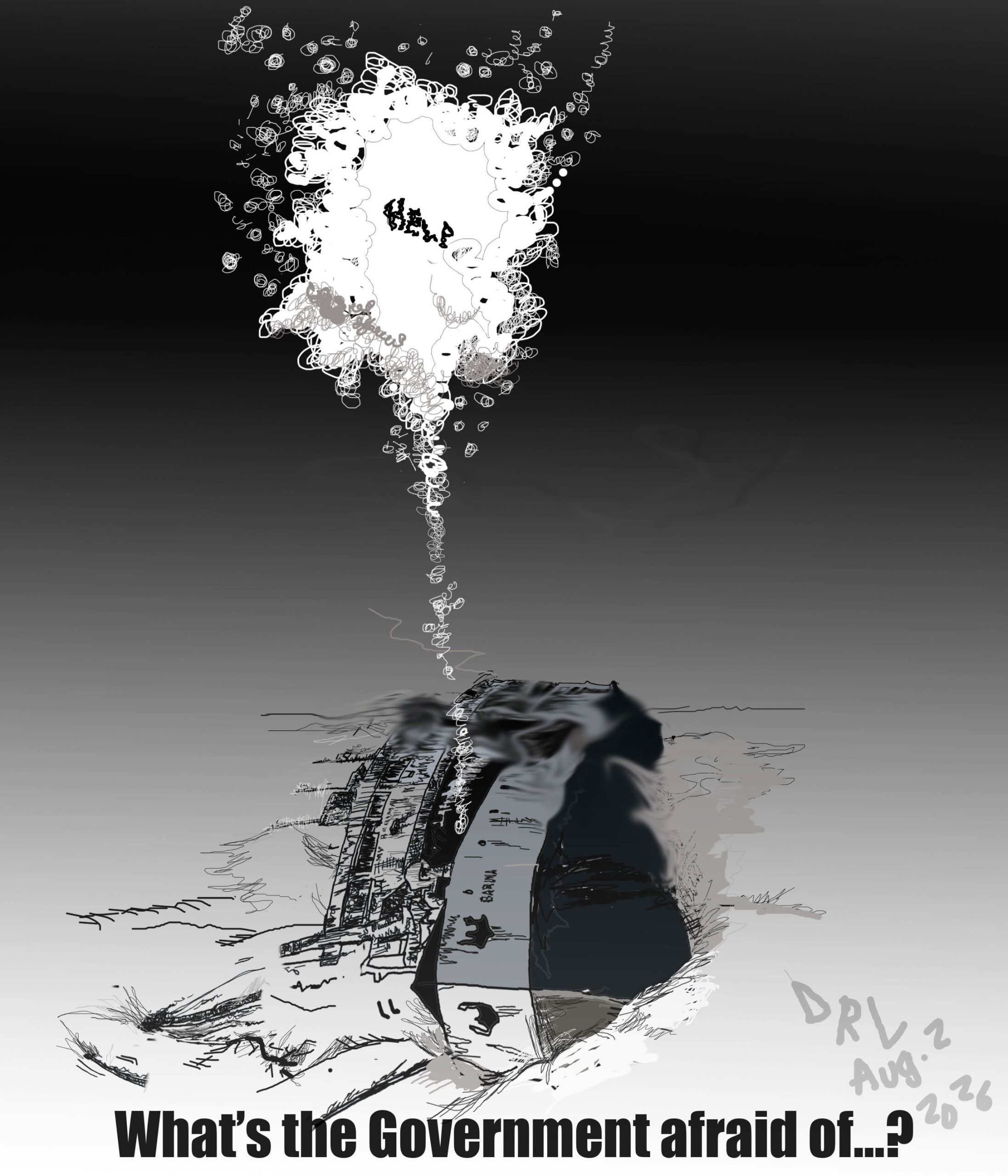
- Govt. secretly invited Dutch firm to raise MV Barima long before issuing tender – well-placed sources
- Guyana still to receive full 50% profits promised by VP Jagdeo
- Jagdeo faces hostile Linden protests
- Trump blasts ExxonMobil, Chevron for making “too much money” during war, says companies should lower prices
- GMSA rails against Govt’s $496 million water bottling plant
Open Letter to observers – Installment 2
Dear Editor,
Kaieteur News – As Guyana prepares for another pivotal General and Regional Elections, it is imperative that we reflect critically on the political manoeuvrings of the past—particularly the emergence and evolution of micro-parties during the 2020 electoral cycle. These include The New Movement, The Citizen’s Initiative, and the Liberty and Justice Party (LJP) and to an extent ANUG, among others. Their sudden rise, calculated messaging, and post-election alignments raise serious questions—not only for Guyanese citizens, but also for regional and international observers tasked with upholding electoral transparency and democratic legitimacy.
These small parties were marketed as independent, civic-minded vehicles of youth engagement, transparency, and political renewal. They promised a break from tribal politics, a fresh approach to governance, and a departure from the legacy of entrenched political forces. However, with the benefit of hindsight, their trajectory tells a different story. Today, the most prominent figures from these movements have been absorbed into the ranks of the People’s Progressive Party/Civic (PPP/C) administration. Some now occupy advisory, diplomatic, and policy roles—despite having once claimed to stand apart from the political establishment.
This shift invites scrutiny. Were these small parties genuine democratic movements? Or were they designed—wittingly or otherwise—to sanitize and rehabilitate the PPP/C at a moment when the party was struggling with domestic skepticism and waning international legitimacy?
Let us recall that in the lead-up to 2020, the PPP/C faced significant reputational damage. From 2011 to 2015, its administration was marred by allegations of corruption, executive overreach, politicization of state institutions, media intimidation, and a deterioration of press freedom. International organizations like Transparency International, Freedom House, and Reporters Without Borders consistently rated Guyana poorly during this period. The controversial 2018 No-Confidence Motion, eventually upheld by the Caribbean Court of Justice (CCJ), further exposed the fragility of our democratic institutions and the hypocrisy of political actors on both sides.
In this environment of heightened suspicion and international scrutiny, the new micro-parties appeared—voicing concern for democracy, but ultimately amplifying PPP/C narratives during the post-election standoff. While the country waited for the final tabulation of votes and the courts intervened, these parties preemptively declared the PPP/C the legitimate winner and condemned calls for audits or recounts—despite being fringe players with minimal electoral support. This mimicry of the PPP/C’s talking points had the effect of manufacturing a perception of multiparty consensus, thereby dulling international criticism and reinforcing the PPP/C’s claim to a moral and democratic mandate.
Today, many of those same actors enjoy appointments, contracts, and proximity to power. Their swift assimilation raises uncomfortable questions: Were these political projects ever truly independent? Were voters duped into believing in a false plurality? Did these movements serve as democratic smoke screens, legitimizing a return to power by a party that had yet to reckon with its own democratic deficits?
These are not conspiratorial musings—they are observations grounded in political patterns and public outcomes. It is the responsibility of Guyanese citizens to probe these matters critically. But it is equally the duty of international election observers—CARICOM, the OAS, the Commonwealth, and others—to reflect on their own roles. Were they misled by the illusion of a diverse, vibrant political ecosystem? Were their final reports influenced by a narrative architected to present a flawed process as democratic triumph?
Guyana cannot afford to repeat the mistakes of the past. As we head into another electoral season, we must demand real transparency, not carefully curated performances. The integrity of our democracy must not be outsourced to public relations or transactional politics. The time for surface-level assessments is over. We urge voters, observers, and civil society alike to ask harder questions—especially of those who shout the loudest in defense of democracy, yet benefit the most when scrutiny fades.
Sincerely,
A.Rampersaud
Share this:

Discover more from Kaieteur News
Subscribe to get the latest posts sent to your email.
Similar Articles

Blunt of the day
Sports
Features/Columnists

Sir. Ronald Sanders

The GHK Lall Column

Weekend Cartoon