Latest update October 8th, 2026 5:52 PM



Latest News
- Security guard shot dead by masked gunman at Chinese Supermarket
- BK wins $1.3B contract to salvage MV Barima
- Exxon to repair gas-to-energy pipeline off Crane
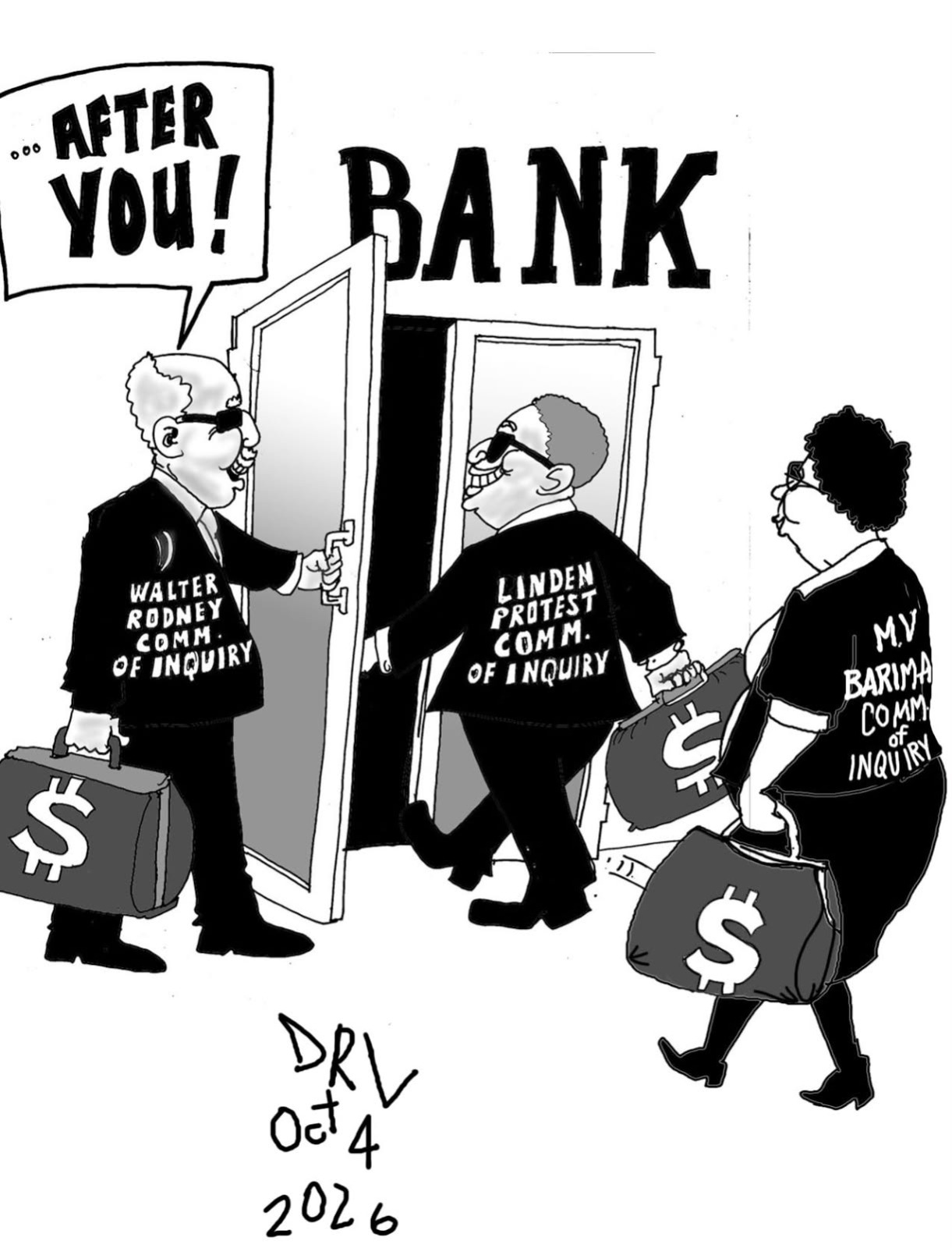
- ‘Who is responsible?’ — Barima COI Chairman vows to follow evidence wherever it leads
- Maduro to face new U.S. charges over alleged torture of Americans, official says
Govt. borrows another US$30M from IDB to boost water supply
Kaieteur News – The Inter-American Development Bank (IDB) has approved a US$30 million (GYD$ 6,274,369,307) conditional Credit Line for Investment Projects (CCLIP) to support Guyana’s efforts to enhance its water and sanitation infrastructure.
The CCLIP’s general objective is to improve the resilience, quality and sustainability of drinking water and sewerage services provided by Guyana Water Incorporated (GWI), the national utility provider, IDB said in a press release.
This programme is expected to benefit approximately 151,560 people by improving access to safe, reliable water services. GWI will also benefit from digital transformation, enabling the adoption of modern technologies and tools that will improve operational management, reduce costs, and increase revenue, the IDB release stated.
The main investments under this phase include the construction of a new water treatment plant at Diamond, East Bank Demerara and approximately 15 kilometers of transmission pipelines and interconnections, which will allow the integration of the new plant with the existing distribution network.
The programme will support the reduction of Non-Revenue Water initiatives which include advanced leak detection and repair, and public awareness campaigns. Additionally, the program will upgrade GWI’s digital infrastructure, including the integration of management information systems, improved metering, and operational efficiency enhancements across the East Bank Demerara, East Coast Demerara, and Cummings Lodge systems. This programme reflects the country’s commitment to delivering climate -resilient infrastructure and access to quality water supply to its citizens.
As part of the new CCLIP, the IDB also approved a Specific Investment Loan (ESP) of US$15.57 million loan to finance improvements in the water and sanitation infrastructure. The US$30.0 million CCLIP has a 25-year repayment term, a 5.5-year grace period, an interest rate based on the Secured Overnight Financing Rate (SOFR), and will benefit from co-financing contribution of US$36.33 million to be financed by the Japan International Cooperation Agency (JICA).
The IDB said over the past five years, Guyana has embarked on a strategic transformation of the water and sanitation sector to increase potable water supply by constructing new water treatment plants, installing transmission mains to improve the quality of service to citizens nationwide, and drilling new wells in both coastal and hinterland communities to extend access to safe water supply. The IDB credit line will support Guyana’s efforts in continuing to upgrade and transform the portable water supply sector.
Back in June this year also the IDB had approved a US$350 million loan to Guyana, which it says underpins the country’s ongoing efforts to modernise and expand its social protection systems. In approving this second and final operation in a programmatic series (the first of which was co-financed with Global Affairs Canada), the IDB said it recognises Guyana’s strong macroeconomic performance and its commitment to inclusive social reform. The loan will support the Ministry of Human Services and Social Security (MHSSS) in enhancing the efficiency and reach of its social safety net, with a focus on digital transformation, inclusion, and empowerment of vulnerable groups. Key components of the programme include:
- Digital Transformation of Social Services: Streamlining and digitalising MHSSS processes to reduce transaction costs and improve service delivery for beneficiaries.
- Enhanced Senior Citizens’ Pension Program: Supported over 82,000 senior citizens, expanded access to electronic payment systems.
- Expanded Public Assistance for Persons with Disabilities: Increasing the coverage of the Public Assistance program, which has already supported more than 6,000 individuals with disabilities.
- Growth of the Learning Lab: Scaling up training programs that equip persons with disabilities with employability skills, adaptive living techniques, and tools for improved quality of life.
- Women’s Economic Empowerment: Expanding the Women’s Innovation and Investment Network (WIIN) Business Clinic to provide women with training in business management, legal literacy, and access to funding.
- Support for Survivors of Gender-Based Violence: Strengthening the Survivors Advocates program and the Counter Trafficking in Persons Unit to provide comprehensive support to survivors.
- National Action Plan Against Human Trafficking: Supporting the development of a coordinated, inter-institutional strategy to combat human trafficking.
Growing debt
Concerns continue to be raised about Guyana’s growing debt. As of December 31, 2024, Guyana’s debt had climbed to nearly US$6 billion, standing at US$5.993 billion. This marks a significant increase from the US$4.5 billion recorded at the end of December 2023. The update was disclosed by the Senior Minister in the Office of the President with responsibility for Finance and Public Service, Dr. Ashni Singh, during his January 2025 Budget speech. Giving the updated figure of Total Public and Publicly Guaranteed (PPG) debt, the minister said, “Guyana’s total public and publicly guaranteed debt amounted to US$5.993 billion at the end of 2024, mainly on account of net inflows from our external and domestic creditors.”
Dr. Singh had explained that government has prioritised responsible management of Guyana’s public debt. He elaborated then that external PPG debt reached US$2.2 billion by the end of 2024, while domestic PPG debt rose to US$3.7 billion. Comparing mid-year figures, external PPG debt stood at US$1.9 billion as of June 2024, and domestic PPG debt was recorded at US$3.1 billion during the same period. This underscores a notable increase in both categories during the latter half of the year. Moreover, he said that over the last four years Guyana’s ratio of total PPG debt to Gross Domestic Product (GDP) dropped by over 20%. The minister said that the debt to GDP ratio was 47.4% at the end of 2020 and by the end of 2024, it had reduced to 24.3%.
Excessive borrowing
Back in January 2023, the IDB had released a report cautioning Latin America and Caribbean (LAC) countries against ‘excessive’ borrowing and urged governments to bring their debts down to more prudent levels. In its report titled ‘Dealing with Debt – Less Risk for More Growth in the Latin America and the Caribbean’, the IDB disclosed at that time that debt has risen and stands at some US$5.8 trillion, which is 117 percent of the Gross Domestic Product (GDP) in the region. “Given the dangers of excessive debt, the current situation in Latin America and the Caribbean is worrisome,” the IDB said. IDB said public debt serves a critical role for countries to pursue public investment projects, implement counter-cyclical policies, and provide support to economies in the face of negative shocks. However, the IDB warned that if public debt becomes too large or is not managed with sufficient caution, interest costs may balloon, growth prospects may suffer, and in the limit, a costly debt crisis may be provoked. According to the report, governments can bring down their debt levels by improving spending efficiency, expanding the tax base, and seeking wider reforms to enhance fiscal balances and boost growth. The IDB said that there are many reasons why public debt levels should be lower than they currently are, highlighting that there are several ways to reduce that debt.
Share this:

Discover more from Kaieteur News
Subscribe to get the latest posts sent to your email.
Similar Articles
Website Hits

Blunt of the day

Sports
Features/Columnists

Sir. Ronald Sanders

The GHK Lall Column

Weekend Cartoon