Latest update October 11th, 2026 10:40 AM



Standardising Energy Contracts: A Legal Imperative for Guyana’s Energy Future
Dear Editor,
Kaieteur News – Ten years after its first oil discovery, Guyana’s energy sector stands at a pivotal crossroads. With world-class oil reserves under active development and a growing commitment to renewable energy and economic diversification, the country is poised to shape its future as a major player in the global energy landscape.
On May 14th, 2025, Vice President Bharrat Jagdeo stated publicly that “there is no gas to supply to anyone,” clarifying that all available natural gas has been allocated for power generation and the forthcoming fertiliser plant. With the Gas-to-Energy project scheduled to come online in 2026, this development underscores the urgent need for Guyana to enhance its legal and regulatory frameworks and standardise its oil, gas, and renewable energy contracts.
The integration of clear, consistent contract standards is no longer a policy aspiration but a necessity, vital to sustaining investor confidence, ensuring project bankability, and achieving Guyana’s long-term development goals.
Contract Clarity Amid Disputes
Recent legal disputes in Guyana’s energy sector highlight the pressing importance of contractual clarity. The government’s ongoing arbitration with the Lindsayca/CH4 consortium over the US$759 million Gas-to-Energy project at Wales illustrates the point. The contractor’s demand for an additional US$50 million due to delays has triggered formal dispute resolution, exposing ambiguities in the project’s contractual framework.
Similarly, the termination of the Corentyne Block licence held by Frontera Energy and CGX Energy, due to unmet appraisal commitments, sparked debate over regulatory enforcement, contract stability, and the protection of investor rights. These cases point to wider concerns involving procurement processes, cost recovery mechanisms, and the consistency of legal obligations within petroleum agreements.
Standardisation: Reducing Risk and Fostering Growth
The absence of a standardised contractual framework presents real risks. Without uniformity, parties face inconsistent obligations, prolonged negotiations, and greater exposure to legal uncertainty. Standardisation, however, can reduce these risks by providing legal templates that are fair, balanced, and aligned with international best practices, yet still adaptable to Guyana’s unique legal and policy environment.
Essential elements such as stabilization clauses, dispute resolution mechanisms, tariff-setting methodologies, and local content provisions should be embedded in model contracts. These serve to promote transparency, expedite project timelines, and create a level playing field for all stakeholders.
Strategic Contract Design for Energy Transition
Well-drafted standard contracts can incorporate a range of provisions essential for energy transition success:
*Force majeure clauses: Shield investors from liability due to unforeseen disruptions, including political or environmental events.
*Phased transition terms: Allow oil and gas infrastructure to be gradually repurposed for renewable energy use, lowering decommissioning costs.
*Technology transfer clauses: Promote local capacity-building and innovation.
*Assignment provisions: Facilitate investment by allowing clean-tech operators to enter existing oil and gas ventures.
*Local content requirements: Ensure economic benefits are retained domestically while maintaining investor flexibility.
Conclusion: Legal Reform for Energy Security
The standardisation of oil and gas contracts is no longer optional, it is imperative. As Guyana seeks to transform its natural gas reserves into economic opportunity and scale its renewable energy portfolio, legal and regulatory reforms must keep pace. Standardised contracts are the cornerstone of a transparent, predictable, and internationally credible investment environment. They help balance flexibility with legal certainty and ensure that sustainability and commercial viability go hand in hand.
By embedding key legal provisions into national model contracts and updating its legislative framework, Guyana can navigate the complexities of the global energy transition with confidence, solidifying its position as a regional leader in both fossil fuel and renewable energy development
Kind regards,
Vanna Jankiepersad
Attorney-at-Law
Trinidad and Tobago
Share this:

Discover more from Kaieteur News
Subscribe to get the latest posts sent to your email.
Similar Articles
Website Hits

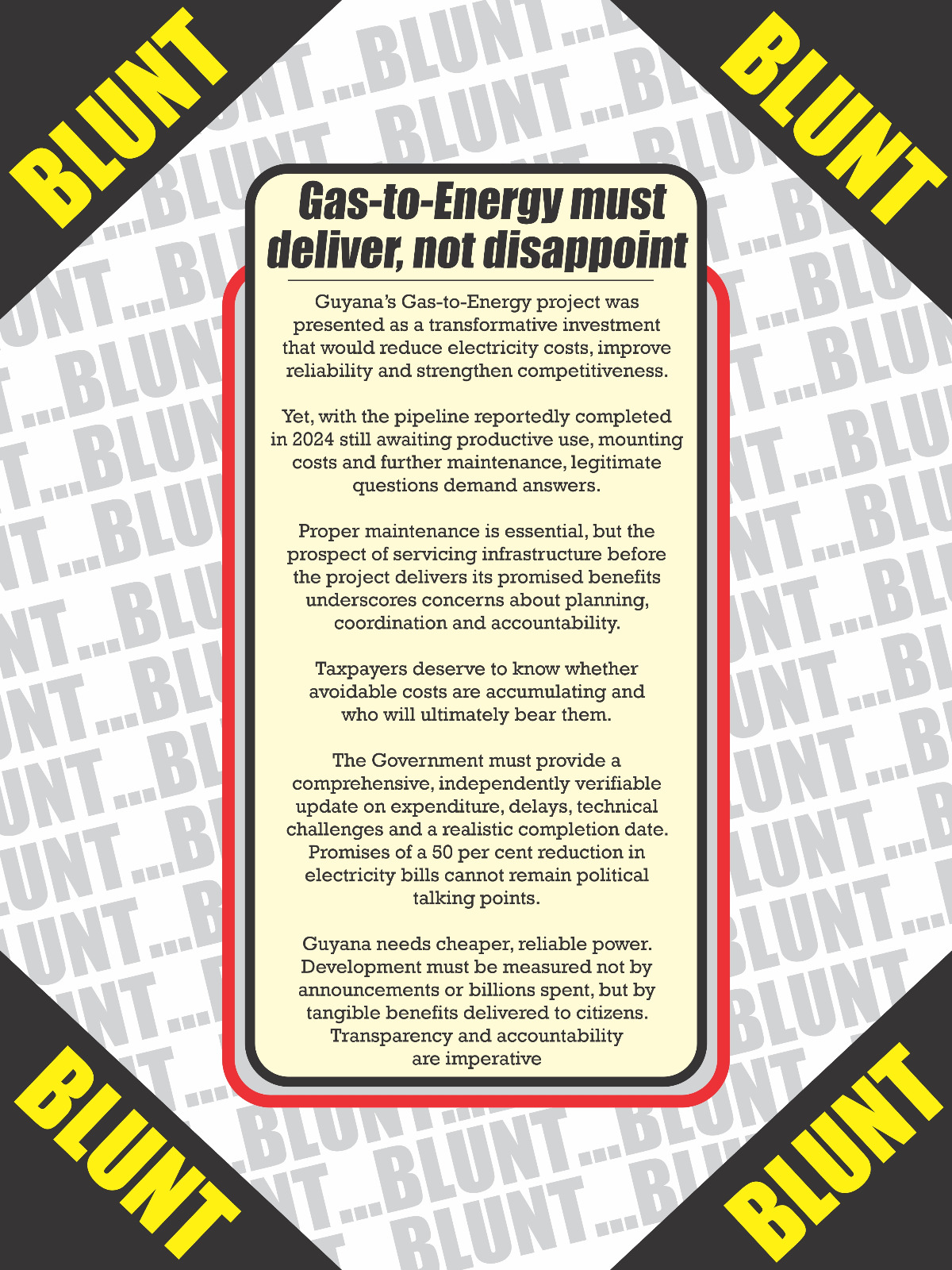
Blunt of the day
Sports

Features/Columnists

Sir. Ronald Sanders

The GHK Lall Column

Weekend Cartoon



