Latest update September 23rd, 2026 10:25 AM


Latest News
- Exxon boasts of US$55B Guyana payday
- GRA raked in $160.5B in taxes during first half of 2026 – Mid-Year Report
- Trump tells UN General Assembly he could ‘annihilate’ Iran but expects deal after midterms
- Narine admits failing to act on evidence of Mohamed’s alleged involvement in six execution-style killings
- Ram questions $89.9B housing spending
A lonely bed, a cold slab
Peeping Tom…
Kaieteur News- Yesterday, the news feed carried another story. Patients—many of them elderly—have been discharged from the Georgetown Public Hospital, but no one has come to take them home. They sit there, waiting. Hours become days. No phone call. No familiar face. Just silence.
Last year, it was the dead. Twenty-six unclaimed bodies lay in the hospital mortuary. Now, it is the living. The pattern is unmistakable. We are not only abandoning our relatives when they die—we are abandoning them while they are still breathing.
It is a heartbreaking truth. And a damning one.
These are not isolated cases. They speak to something deeper. A shift. A withering. Something hollow has opened up at the heart of our society.
Last November, I wrote about those 26 unclaimed bodies. The hospital staff had to wait weeks, even months, for someone to come. No one did. These were people who once laughed, worked, gave love, gave life. And when their time came, they were left behind. As if they no longer mattered. As if they were forgotten, inconvenient.
It is easy to blame the government for everything. It is easy to say the system failed. But in this case, the failure is more personal. These abandoned men and women had families. Children. Siblings. Nieces. Neighbours. Somewhere, someone knew them.
And still, they were left alone.
This isn’t a failure of the State. It is a failure of spirit. A failure of duty. It is a collapse of basic human decency. A breakdown in the sacred bonds that once held families together.
Yes, times are hard. Yes, not everyone has the means to care for the elderly or the infirm. But abandonment is not about poverty. It is about priority.
We say we want to build a modern society. One with big buildings and tall highways and sprawling malls. But what is the use of all that concrete and steel if we are poor in the things that matter most—our values, our compassion, our care for the vulnerable?
What kind of society allows us to forget our own?
There was a time—not so long ago—when a sick relative in the hospital would bring the whole family rushing in. A pot of soup. A clean change of clothes. A long night on an uncomfortable bench. We did it because it was right. Because they once took care of us. Because we loved them.
That instinct is fading.
The sick are being left behind like unwanted parcels. The elderly are being spoken of in terms of “burden” and “expense.” And when they die, they lie on cold slabs in a mortuary, waiting for someone who may never come.
What are we becoming?
Maybe it’s the rush of modern life. Maybe it’s selfishness. Maybe it’s that people don’t know how to care anymore. But whatever the reason, we cannot accept this as normal.
A society is judged not by how fast its internet is. But by whether it shows dignity to the dying. By whether it remembers its old people. By whether it holds the hand of those who cannot walk on their own.
Some things can’t be measured in dollars. Compassion is one of them.
And no, this isn’t just about new hospitals or better elderly homes. Those things help. But at the core of this problem is something deeper: our own hearts.
We must relearn how to care.
We must teach our children that when someone is old, they are not less—they are more. They are more precious because time is short. More deserving of attention, not less.
We must remember that when someone is ill, they are not a nuisance—they are a responsibility. One we must carry not out of obligation, but out of love.
No hospital should have to care for a patient who is healthy enough to go home, but who has no one willing to come. No mortuary should hold dozens of souls waiting for one final act of kindness.
If we do not change course, there will be more empty chairs at hospital bedsides. More names on death records with no visitors. And we will look around one day and realize that, in becoming a richer country, we have become a colder one.
It is not too late. But it soon will be.
Let us not be remembered as the generation that turned its back. Let us be remembered as the one that turned back—to pick up the forgotten, the sick, the frail, and to bring them home.
Because if we lose our compassion, we have lost everything.
(The views expressed in this article are those of the author and do not necessarily reflect the opinions of this newspaper.)
Share this:

Discover more from Kaieteur News
Subscribe to get the latest posts sent to your email.
Similar Articles
One thought on “A lonely bed, a cold slab”
Website Hits

Blunt of the day
Sports

Features/Columnists

Sir. Ronald Sanders

The GHK Lall Column

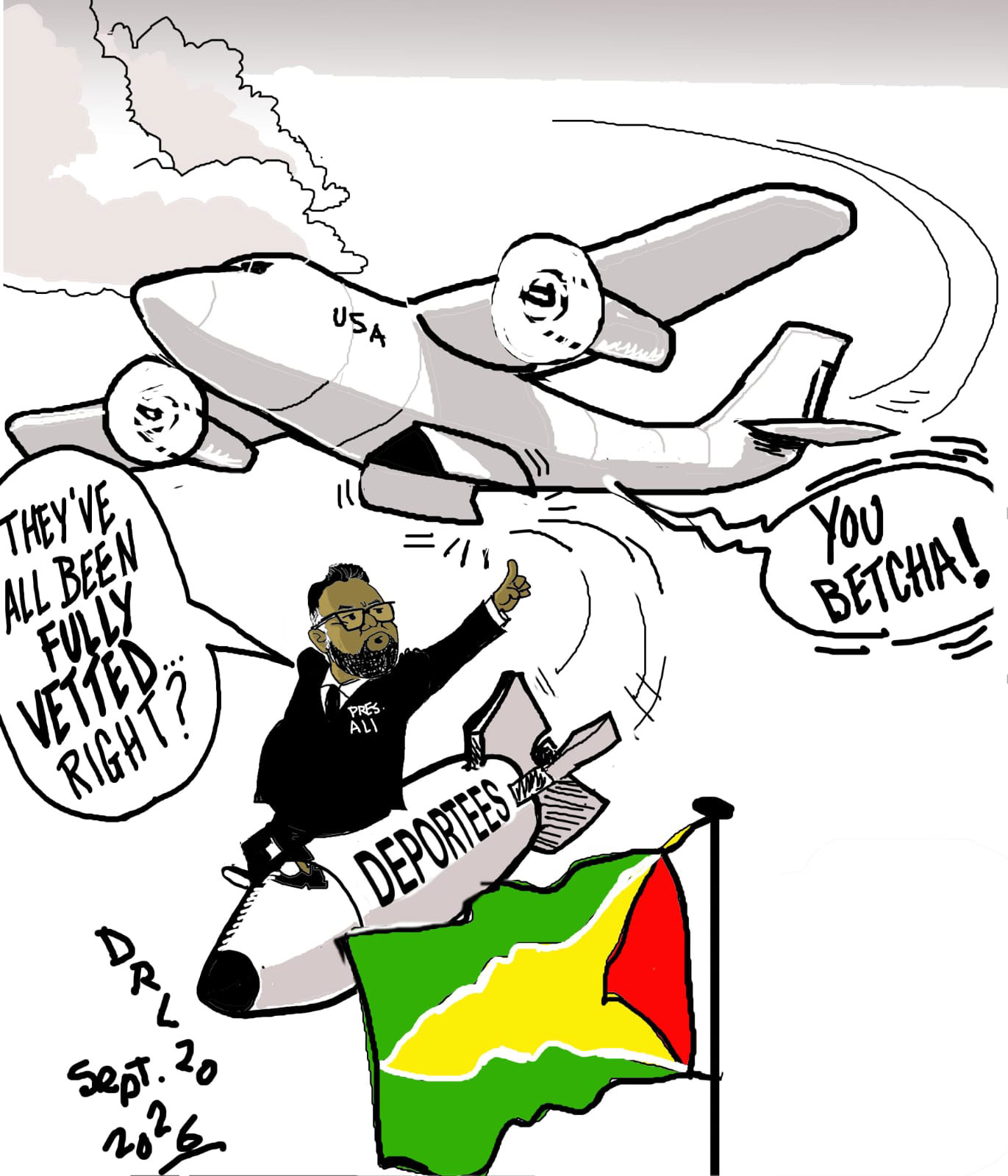
Weekend Cartoon


KUDOS for this heart rendering lecture.
It’s not Compassion.
Perhaps, it’s the means taking care of elderly.
IT IS TOTAL SELFISHNESS !
Guyana is not America, though they are trying to be.
They lacked “homes” for the aged.
The Dharmshala could only accommodate a few, not everyone.
As a youngster, I saw how some were taken care at the Dharmshala
by the Canje Bridge. It was a dilapidated building back in the 1950’s.
Not now though.