Latest update March 28th, 2026 12:30 AM

Oct 23, 2024 Peeping Tom
Kaieteur News – The Guyana Human Rights Association (GHRA), in its recent appeal for an overhaul of the Guyana Police Force, has crafted a critique so sweeping that one might reasonably wonder whether they hope to reform the Force or simply obliterate it.
There is, of course, a tendency in such calls for change to lay the blame not at the feet of individual officers—an absolution that seems almost too eager—but rather upon an amorphous “system” that has, for decades, been accused of failure.
The Guyana Human Rights Association (GHRA) is calling for a comprehensive overhaul of the Guyana Police Force, arguing that the organisation suffers from deep-seated systemic issues that cannot be fixed by addressing individual officers or political parties. The GHRA believes the Police Force is outdated and dysfunctional, and it advocates for the creation of a “Guyana Police Service” through a national conversation or commission on democratic policing. This reform would focus on community-based policing and improving accountability, transparency, and legal and ethical standards within the police force.
The GHRA also points to specific concerns, such as the controversy over confirming the present Acting Police Commissioner, despite his being over the retirement age, and the troubling money-laundering probe involving a senior officer. Additionally, the organization highlights issues like the retirement age, perks enjoyed by senior officers, and the acceptance of gifts from businessmen as indicative of deeper institutional dysfunction. The GHRA calls for the development of a comprehensive reform package to address these challenges, arguing that existing oversight bodies like the Police Complaints Authority and Police Service Commission are insufficient for real accountability.
In true reformer’s fashion, the GHRA proposes a “national conversation” about the transition from “Police Force” to “Police Service”—a semantic sleight of hand that may appease those who believe that renaming things is the same as fixing them. One is reminded of the bureaucratic penchant for equating labels with progress: perhaps a mere title change will suffice to convert a force marred by corruption and dysfunction into a shining pillar of accountability and integrity. If only.
To be fair, the GHRA does point to troubling specifics. These specifics underscore the broader dysfunction, but what does the GHRA offer in response? A suggestion for the creation of yet another “comprehensive reform programme,” which, in bureaucratic parlance, is generally synonymous with more committees, more meetings, and more paper-shuffling, none of which guarantees that the Police Force will be any more accountable than it is today. They call for community-based policing as though this nostrum—once a revolutionary idea in the 1980s—has not itself become a kind of ritualistic chant in police reform circles, to be invoked in the hope that it might do some good, even when the cultural foundations necessary for its success remain elusive.
And, as if to preempt criticism, the GHRA insists that the “pervasive dysfunctionality” of the Guyana Police Force cannot be ascribed to this or that political party. It is the system itself, we are told, that is beyond salvation. But this diagnosis, though sweeping, suffers from a certain vagueness: if no one is to blame, is anyone responsible?
Previous attempts at police reform in Guyana have been marked by half-hearted measures and superficial changes that failed to address the underlying dysfunctions within the Force. Past reform programmes have been marred by political interference, inconsistent leadership, and an unwillingness to follow through with the structural changes necessary for lasting transformation. The Force remains, in many ways, as ineffective and mistrusted as ever, with the public left frustrated by the repeated cycles of unfulfilled promises of reform.
Externally, while countries and international agencies have provided support for Guyana’s police reform efforts, their priorities often lie elsewhere. The focus of these foreign partners has largely been on issues like narcotics suppression and transnational crime, driven by self-interest rather than a genuine commitment to systemic change. The emphasis on stemming drug trafficking and organized crime overlooks the broader problems plaguing the Police Force—problems like accountability, abuse of power, and poor community relations. As a result, international aid for policing has often been limited to training in specific areas or the provision of equipment, rather than supporting comprehensive reform. This selective engagement does little to improve the day-to-day functioning of the Force or restore public trust in law enforcement, leaving the root causes of dysfunction unaddressed.
In the end, the GHRA’s critique—like so many well-meaning reformist proposals—seems to want everything without committing to anything. A national conversation is certainly pleasant, as is the notion of “transformation,” but unless these lofty ideals are tethered to practical, enforceable changes, they will remain what they are: aspirations written in the clouds. After all, changing a “Force” to a “Service” may look good on paper, but it will take more than words to transform Guyana’s police.
(The views expressed in this article are those of the author and do not necessarily reflect the opinions of this newspaper.)
Subscribe to get the latest posts sent to your email.
Your children are starving, and you giving away their food to an already fat pussycat.
Mar 28, 2026
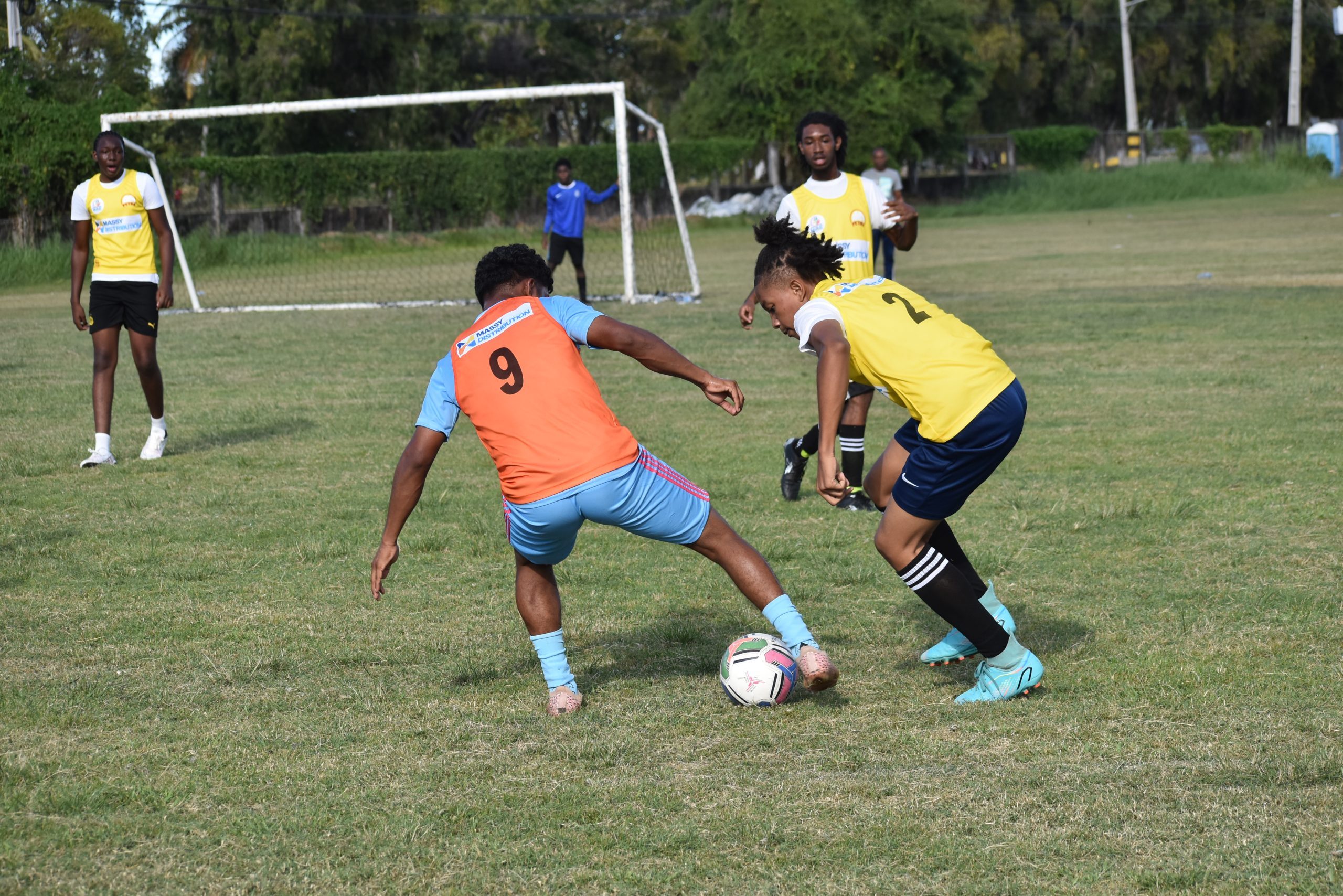
– Massy Distribution Schools U18 Football kick off round 2 action today Kaieteur Sports – The race for knockout qualification sharpens today as round two of the 12th Annual Massy...Mar 28, 2026
(Kaieteur News) – Vice President Bharrat Jagdeo arrived at the 124th Special Meeting of the Council for Trade and Economic Development (COTED) brandishing what he seemed to believe was a cudgel of hard truth: the Caribbean must move “from rhetoric to realism.” One almost admires his...Mar 22, 2026
By Sir Ronald Sanders (Kaieteur News) – The war in Iran is already at Caribbean doors. The attacks in Iran and the Gulf are being justified by some on the grounds that Iran’s record on terrorism, nuclear ambition, and regional meddling leaves the “free world” with no choice but to act...Mar 28, 2026
Hard Truths by GHK Lall (Kaieteur News) – The father-son Mohamed team heads to the CCJ. It’s honored as the apex court. Though impressive sounding, and deserving that loftiness, here’s something more visceral. Last Chance Chambers. Lose there, and it’s finished. Handcuffs...Freedom of speech is our core value at Kaieteur News. If the letter/e-mail you sent was not published, and you believe that its contents were not libellous, let us know, please contact us by phone or email.
Feel free to send us your comments and/or criticisms.
Contact: 624-6456; 225-8452; 225-8458; 225-8463; 225-8465; 225-8473 or 225-8491.
Or by Email: glennlall2000@gmail.com / kaieteurnews@yahoo.com