Latest update August 11th, 2026 1:10 AM



Latest News
- CCJ under pressure as judges’ leaked emails raise questions over independence
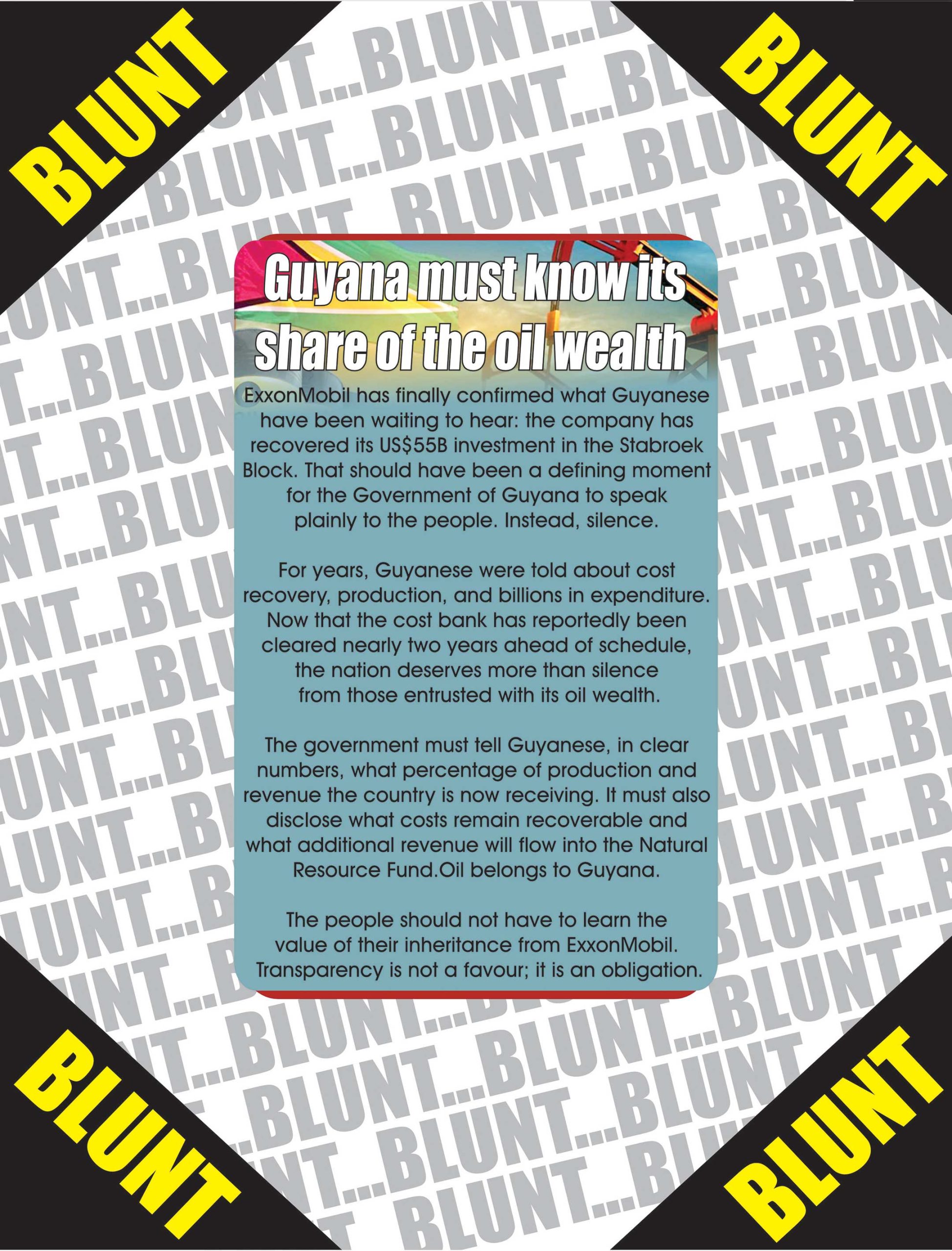
- Guyana must now receive its 50% profit in Exxon deal
- Israel rejects Trump’s 15-point plan for Gaza, stoking tensions with U.S.
- ‘Hands off the Kurupung’ – Region 7 Vice-Chair warns EPA against approving uranium drilling
- Canje businessman killed after struck by car driven by Dr. Ramayya
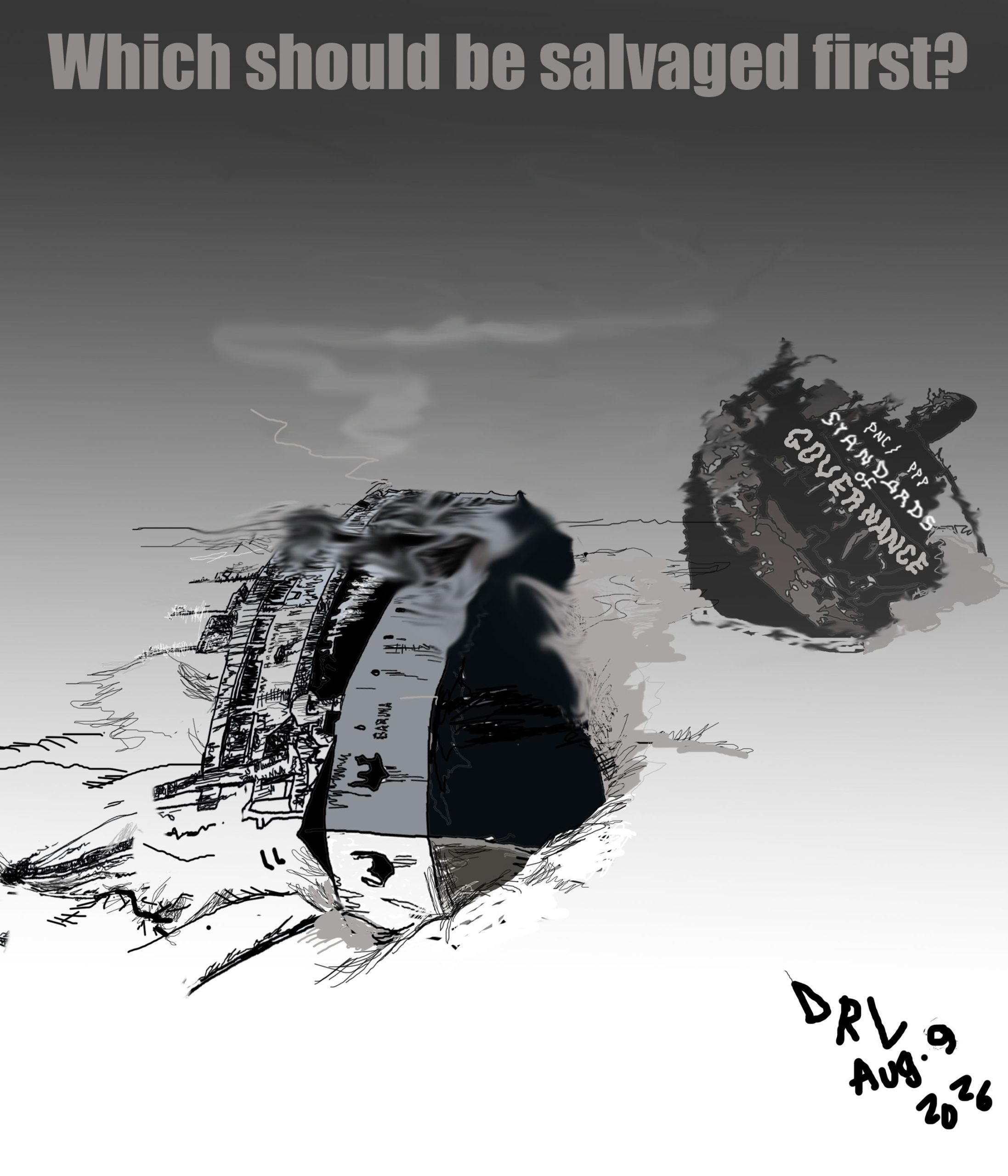
Minimising regulatory capture
Kaieteur News – The Commonwealth Secretariat’s Ocean and Natural Resources Advisory Division (ONRA) has done Guyana a huge favor. A handbook has been prepared, and it warns about the condition of ‘regulatory capture.’ Simply put, regulatory capture occurs when the institutions of the State that are in place to oversee a sector is improperly influenced by those that they should be tightly regulating. A good way to think of this is of the tail wagging the dog.
One example is where an official labor agency given the mandate to protect workers is more attuned (at home) with businesses to be watched, regulated, and held accountable. Relative to oil companies, and others engaged in resource exploration and extraction, proper regulation by host countries is of paramount importance, so that the wealth of a nation is consistently managed with the most expert, ethical, and credible standards. When the opposite prevails, the inevitable result is that the citizens who depend on their wealth to lift them up lose.
The Commonwealth’s ONRA handbook focuses on Field Development Plans (FDP), and it emphasizes how much needs to be known, about managing the environmental risks, and what is involved in the development of an oilfield, among other issues of considerable consequence. The handbook noted that one FDP can be bigger than the economy of a host country, which has relevance for Guyana. There have been FDPs for projects that are as much as US$10 and US$12 billion. When the size of any of the recent annual record-breaking national budgets is considered, the guidance of the Commonwealth’s ONRA takes on additional importance.
“It is therefore of paramount importance that the government is able to review these plans to ensure that the economic, social and environmental issues are effectively addressed.”To review properly means that the government must have the right level of expertise in place, with the skilled regulators selected having the fullest understanding of their roles, and with those official presences possessing the proper frame of mind to match. In other words, the interests of a country and its citizens will be served best when those are locked in place. If there is less than that, then both country and people will pay a hard price. Looking again at what ONRA recommends be carefully addressed, clearly a huge swath of territory is covered, viz-a-viz., “economic, social and environmental issues.” Any one of those can make or break a country.
The threat, according to ONRA, is that lack of expertise to conduct comprehensive reviews of an FDP can be costly. We fully agree, and this is even more glaring in the instance of Guyana, where the constant lament is of lack of skills, among other vital components. If and when we do not have those skills, then we are going through the motions and pretending to know what we are looking at, what we are doing. When there is recollection of the highly compressed times that it had taken Guyana to review FDPs, there is scant confidence that our regulators are on top of their game in the crucial oil sector. Knowledgeable people in the oil and gas business have counseled Guyana that FDPs do not take a fraction of the time to review and approve, as has been the case here.
Instead, a careful and authoritative review requires multiples of the months in which they were completed. The Government of Guyana and the main local regulatory body over the oil sector, the Environmental Protection Agency, have danced around those warnings, and dismissed them as meaning nothing.
Another cautionary note from the Commonwealth’s ONRA is how corruption could lead to regulatory capture. When companies pay to play in the local theater, then there is another layer of corruption that is added to the many already present. Further, there is the acute concern in Guyana that corrupt politicians have spread their powerful toxic tentacles into local regulatory agencies, which heavily influence their decisions. This leaves citizens with an appreciation of how the bodies that have been established to protect them have gone the other way. This has been the regulatory reality of Guyana, and though the ONRA’s handbook has much value, it is likely to be only given lip service here.
Share this:

Discover more from Kaieteur News
Subscribe to get the latest posts sent to your email.
Similar Articles

Blunt of the day
Sports

Features/Columnists

Sir. Ronald Sanders

The GHK Lall Column

Weekend Cartoon