Latest update October 4th, 2026 10:35 AM


Latest News
- Controversial U.S. company in running for Amaila hydro project
- 40 citizens, 4 organisations appeal EPA’s no-EIA decision on Kurupung uranium project
- Israeli air attack on Gaza City apartment kills at least five
- CANU finds uncustomed alcohol at Windsor Estates property
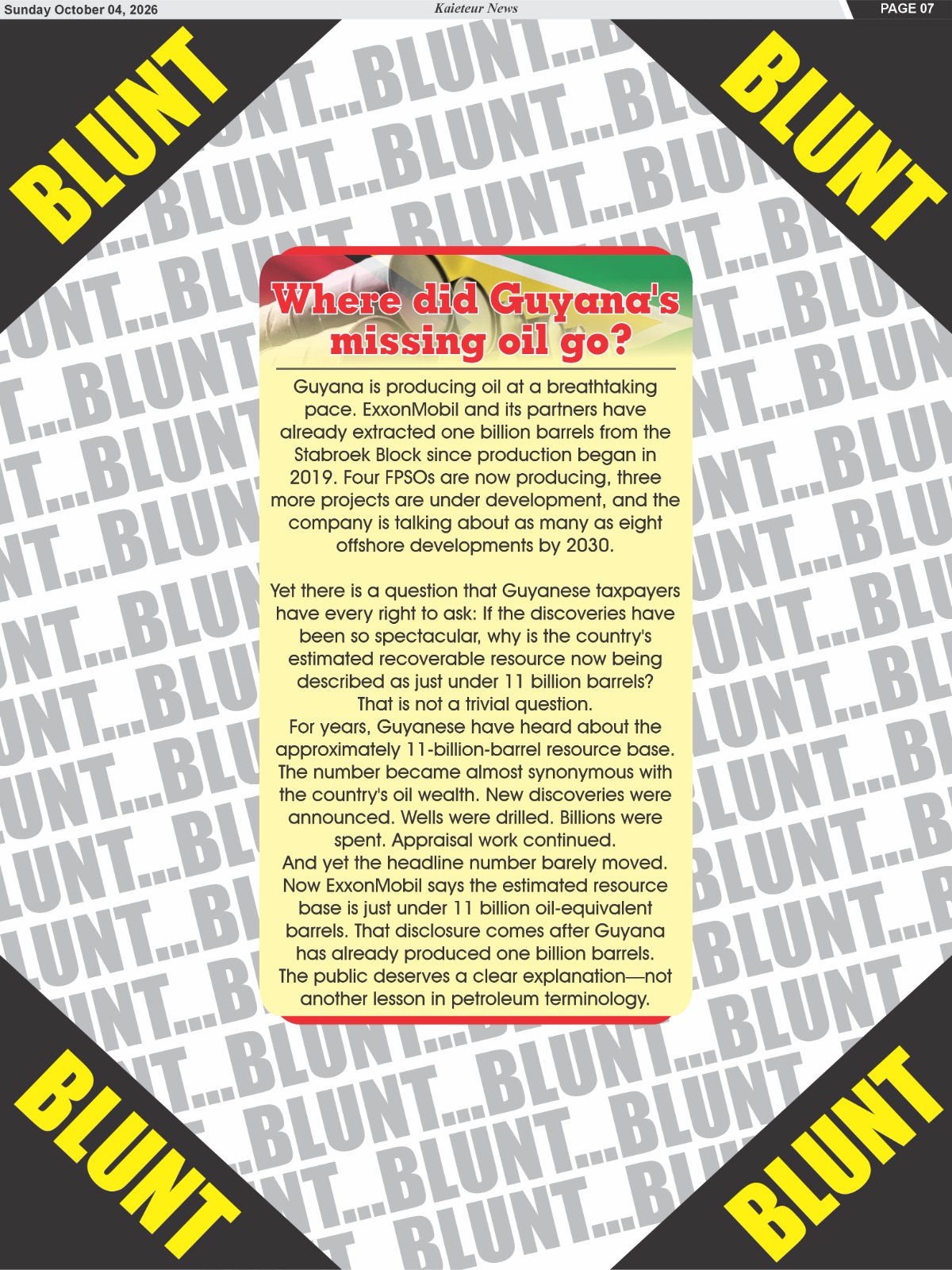
- Govt. still reviewing Exxon’s 8th Stabroek project
What’s the Difference between a Cyclone, Hurricane and Typhoon?
Any of these terms you use has more to do with where in the world you live than anything else.
(Reader’s Digest) A storm by any other name… is still a storm? Yes, a hurricane is the same as a typhoon, which is also the same as a cyclone but not necessarily the same as a bomb cyclone. So, typhoon vs. hurricane vs. cyclone; what’s the difference?

Cyclone
Not much, except their names, though those names do depend on where a storm originates. A “hurricane” occurs over the North Atlantic or over the central or eastern North Pacific oceans—in places like Florida, the Caribbean, Texas and Hawaii. Forming over the western North Pacific, in East Asian countries like Japan and Korea? That’s a “typhoon.” Both hurricanes and typhoons are tropical cyclones—and “cyclone” is what they’re called when they occur in other places, such as over the Indian Ocean.
What is a tropical cyclone?
A cyclone starts out over tropical or semitropical waters as what National Oceanic and Atmospheric Administration (NOAA) calls a “rotating” and “organized” series of clouds and thunderstorms. (In the Northern hemisphere they all spin counterclockwise.) When it first gets going, it’s called a “tropical depression.” As it picks up speed, it gets upgraded to a “tropical storm”—it needs to have winds of at least 39 miles per hour to earn this designation. And when sustained winds of 74 miles per hour are reached, the storm has intensified, or “matured,” to the point where we now refer to it as a hurricane, a typhoon or an intensified tropical cyclone.
What’s the difference between a hurricane and typhoon?
Hurricane vs. typhoon, how do they compare? Besides occurring in different parts of the world—hurricanes happen in the North Atlantic or over the central/eastern North Pacific while typhoons occur over the western North Pacific and East Asia—they also vary in intensity. How that intensity is factored depends on who’s doing the factoring. In the United States, we rate hurricanes on a scale of 1 to 5, using the Saffir-Simpson Scale that’s based on maximum wind speed: Category 1 has winds between 74 and 95 miles an hour; Category 2, between 96 and 110 mph; Category 3, between 111 and 129 mph; Category 4, between 130 and 156 mph; and Category 5, 157 mph ad above. However, the World Meteorological Organization gives strong typhoons, very strong typhoons, and violent typhoons a Class 5 designation, with wind speeds ranging from 74 miles an hour to 119-plus miles an hour.
What’s the difference between a cyclone and a hurricane?
Like hurricanes and typhoons, cyclones and hurricanes are not exactly the same. Hurricanes are designated as such “when they develop over the North Atlantic, central North Pacific and eastern North Pacific” according to National Geographic. Meanwhile, when rotating storms form “over the South Pacific and Indian Ocean” they are called cyclones. The storms also differ in the times of the year they peak. Hurricane season is in full swing from mid-August to late October while cyclone season can peak any time “around May and November.” However, in terms of impact, the two are extremely similar and tend to wreak havoc no matter the location.
Why the different names?
Cyclone is generic, and the word meteorologists use to speak generally of these storms. The Online Etymology Dictionary dates its origins to 1848 when it was presumably used first to describe an intense storm that happened over India in 1789; it comes, loosely, from the Greek word kyklon, “moving in a circle, whirling around.” The word hurricane’s origins in the Americas date to the arrival of the Spanish here in the 15th and 16th centuries; the Spanish word for hurricane is huracán. According to Gawker, “‘Typhoon’ entered the English language when explorers interacted with residents of southwest and southern Asia [and] comes from tufan, which means ‘big cyclonic storm’ in Arabic, Persian, and Hindi.”
No matter what you call these intense storms, they bring strong winds, lots of rain and flooding. And no matter where in the world you are, if you live in a region that experiences cyclones (or hurricanes or typhoons), the largest and most intense of those storms are becoming more and more likely due to climate change, a recent study found. Typhoon vs. hurricane vs. cyclone, no matter what we call them or where we experience them, we’re in for a wild future.
Share this:

Discover more from Kaieteur News
Subscribe to get the latest posts sent to your email.
Similar Articles
Website Hits

Blunt of the day
Sports

Features/Columnists

Sir. Ronald Sanders

The GHK Lall Column

Weekend Cartoon