Latest update July 31st, 2026 12:35 AM



Latest News
- Bloomberg reports: Oil curse hanging over Guyana’s head
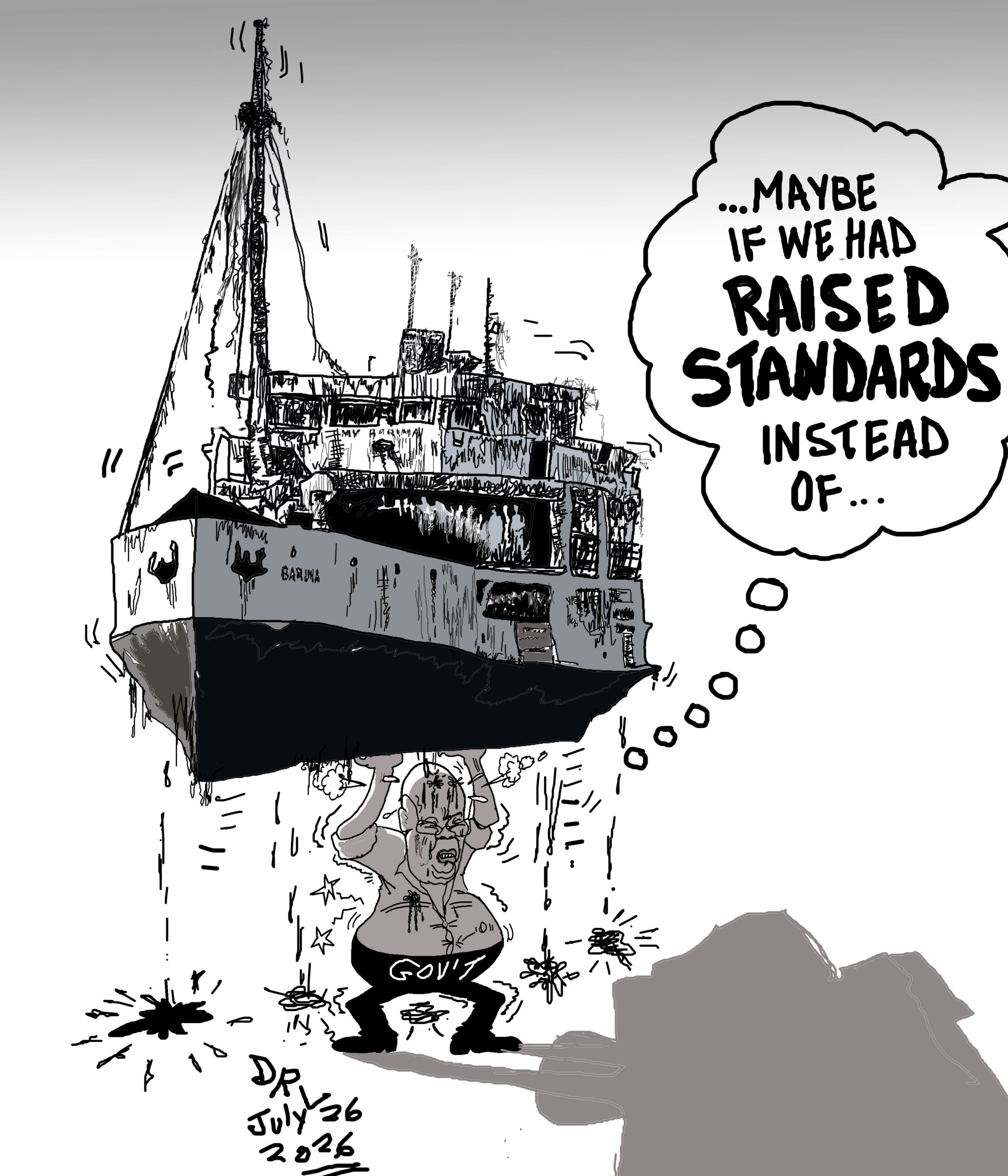
- ‘You can’t have both’ …Todd challenges parallel COI, murder prosecution of MV Barima crew
- Pres. Ali dodges media
- ‘Seaworthiness of MV Barima was MARAD’s responsibility, not charged crew’s’ – Dr. Todd
- ExxonMobil to conclude another exploration well next month
Int’l tax agency to sharpen GRA’s skills in detecting any scams used by oil operators
By Kiana Wilburg
The Guyana Revenue Authority (GRA) is gearing for a round of meticulous training from the Inter-American Centre of Tax Administration, an international agency that is versed in detecting any petroleum scheme used by oil operators.
This was confirmed recently with GRA’s Commissioner General, Godfrey Statia.
Kaieteur News understands that the Centre will provide GRA with a general overview of the oil and gas industry, information on tax regimes and tax models. As it relates to tax and contractual issues, GRA will be given a crash course in tax and contractual compliance, commodity pricing, ring fencing and transfer pricing.

GRA’s Commissioner General, Godfrey Statia
Other issues to be discussed include: tax administration structure and procedures, tax risk assessment and evaluation and tax audit procedures.
UNDP MAKES APPEAL
A report that was commissioned by the United Nations Development Programme (UNDP) and prepared by Oil and Gas Consultant, Anthony Paul, calls on the government of Guyana to have future oil deals subjected to strict ringfencing provisions.
The ring-fencing arrangement ensures that the government’s revenue from the Stabroek Block is calculated based on each field or well separately. In Guyana’s Production Sharing Agreement (PSA) with ExxonMobil, there are no ring-fencing provisions. This means that costs from one well, whether productive or not, can be carried over to other wells.
Paul in the UNDP report notes that Guyana must guard against this in future contracts. The Local Content Expert also notes that the government must require where there is no prior commitment, a new model licence, asserting that it will be subject to new laws and regulations. He said that government must require signature bonuses, retain equity in all new licences, and seek early or aggressive relinquishment clauses.
WORLD BANK WARNS
Governments which are new to the oil and gas industry are often obsessed with one thing—billions in revenue. With such clouded judgment, issues like adequate ring-fencing provisions quickly fade into the background of nothingness.
More than 80 countries worldwide have not only paid dearly for such a mistake, but the future of their governments and generations to come will be haunted by it.
The painful economic lessons learnt by these nations were adequately summed up by the World Bank in one of its many reports on the sticky issues of oil and gas exploration. In one of its documents, Fiscal Systems for Hydrocarbons, the World Bank explains that ring-fencing is an industry-specific feature. This refers to the demarcation of taxable entities.
The World Bank said that while corporate income tax normally applies at company level in the petroleum sector, the taxable entity is often the contract area or the individual project. When ring fencing applies at contract area or project level, income derived from one area/one project cannot be offset against losses from another area/project. Another type of ring fencing separates upstream from downstream operations. Usually, all costs associated with a given block or license must be recovered from revenue generated within that block: the block is ring fenced.
The World Bank emphasized that the objective of ring fencing is to protect the level of current tax revenue and, to some extent, level the playing field by treating newcomers and existing investors equally. It noted that the disadvantage of ring fencing is that it does not incentivize exploration and investment activities. The Bank stated however, “by allowing costs to cross the fence, the host government may end up subsidizing unsuccessful exploration.” (More in this regard can be read by following this link: (https://openknowledge.worldbank.org/bitstream/handle/10986/6746/409020PAPER0Fi1C0disclosed0Sept0181.pdf?sequence=1).
GRA’S POSITION
Commissioner General of the Guyana Revenue Authority (GRA), Godfrey Statia like many others, firmly believes that adequate ring-provisions are indeed necessary when it comes to the oil and gas sector. In this regard, Statia opined that Guyana must safeguard itself.
The ring fencing provision ensures that USA oil giant, ExxonMobil cannot transfer the expenses incurred at one well to another. In Guyana’s contract with ExxonMobil, the mechanisms to safeguard against this are absent.
GRA’s Commissioner General notes however, that the effects can be minimized with the right regulation, separation provisions and controls and continual audits and reviews. He said that there must be identification and isolation of activities, assets, costs and revenues for each well.
Statia expressed, “Sure, Guyana must be on its guard. The principle (of ring fencing) exists in certain industries in Guyana already and GRA is taking steps to deal with this as it relates to companies which are in the habit of transferring costs as it relates to sister and related companies…”
Share this:

Discover more from Kaieteur News
Subscribe to get the latest posts sent to your email.
Similar Articles

Blunt of the day
Sports

Features/Columnists

Sir. Ronald Sanders

The GHK Lall Column

Weekend Cartoon