Latest update August 13th, 2026 12:03 AM



Latest News
- After 10 days of silence, Govt. confirms Guyana receiving 50% profit share
- Guyana must get more than 50% if country’s profits will be funding new oil projects – MP Andrews
- MV Barima tragedy… Internal records expose months of warnings, request for urgent repairs
- Colombia quake death toll tops 250 as rescuers race to find survivors
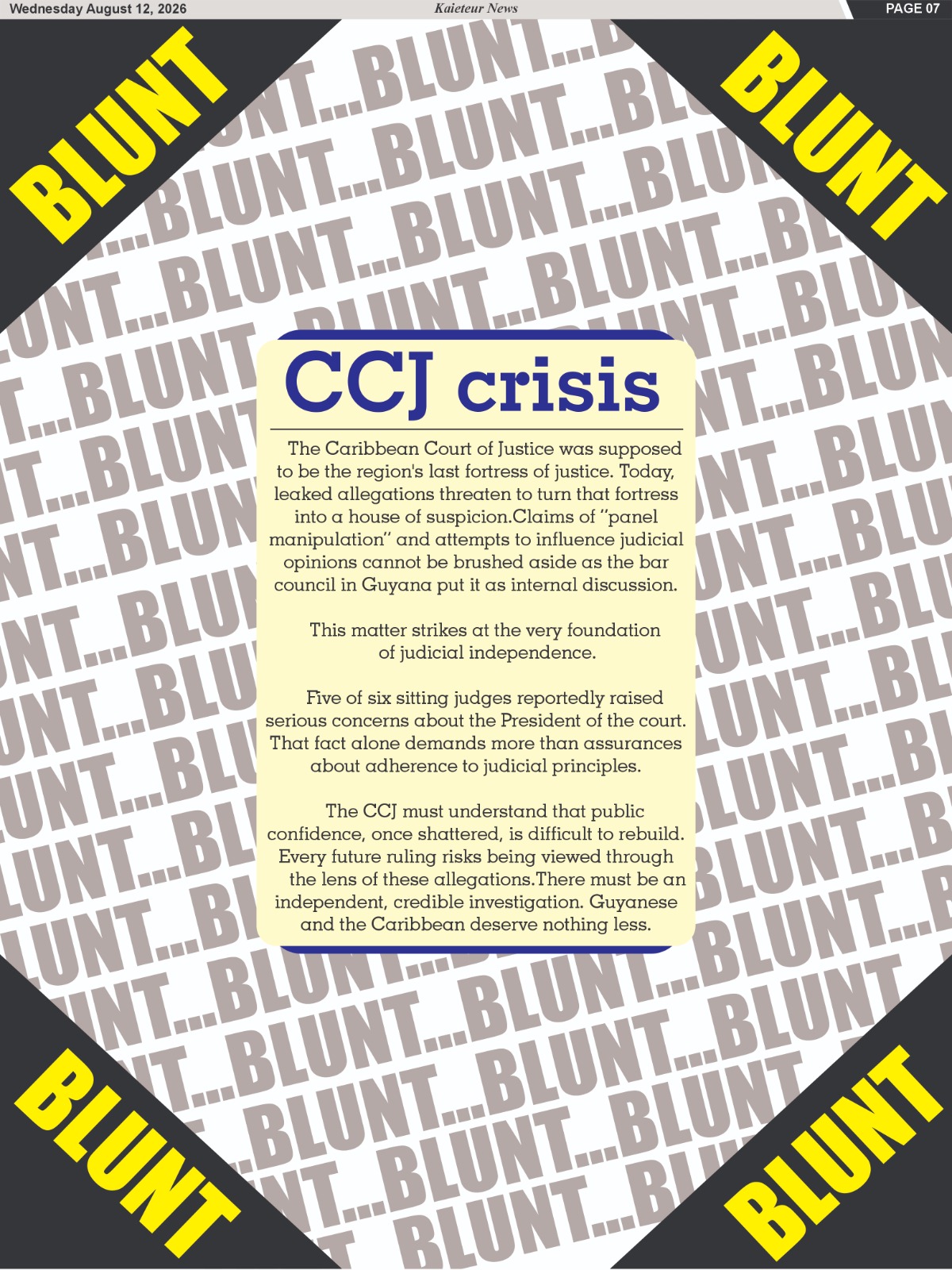
- Caribbean judiciaries rally behind CCJ as internal row erupts
Health Ministry’s Pharmacy Director addresses drugs shortage reporting
“Let’s establish from the onset that there is no country that can achieve 100 percent supply of medicines at any given time. Guyana is no different from the other states,” said Pharmacy Director within the Minister of Public Health, Mr. Oneil Atkins.
Atkins was at the time addressing what he described as ‘media sensationalism’ which, he said, is undermining trust and progress in the health care sector. He appealed for an end to the “rush to judgment mentality on issues in this sensitive sector.”
Atkins’s appeal comes from the backdrop of what, he claimed, is the constant erroneous complaints about shortages and stock-outs of drugs and medical supplies across the public health system of our country.
He said that periodically there will be shortages but not at a level to jeopardize the lives of those seeking medical help in the public healthcare sector.
Early June, there was a comprehensive Canadian report from the C.D. Howe Institute
titled ‘Assessing Canada’s Drug Shortage Problem’on the perennial problem of shortfall of medication in that country.
The C. D. Howe Institute is an independent not-for profit research institute with a mission to raise living standards by fostering economically sound public policies.
The report compiled by medical experts Jessy Donelle, Jacalyn Duffin, Jon Pipitone and Brian White-Guay, argued that since 2010 Canadian patients, physicians and pharmacists “have been wrestling with drug shortages, mainly for generic drugs, which make up around 70 percent of Canadian prescriptions.”
The four experts noted that a solution to the problem remained elusive. They reminded that “a stable supply of a diversity of medicines is necessary to ensure quality of care, keep healthcare costs down and reduce delays or disruptions to access for the entire population.”
The June 2018 report said there are some 1,000 shortages annually, which affected 1,250 products during a recent three-year period. The shortages affected at least 10 percent of all active drugs available in Canada, the report said.
“As a result of shortages, pharmacists and physicians are forced to substitute products or look for alternative treatments with different medications that might not suit fully the intended clinical indication and patient condition,” White-Guay, one of the authors of the report, said.
It is uncertain what is triggering the Canadian drug shortage since there have been no serious efforts to conduct root-cause analyses or to dig into the far-reaching effects of that country’s inability to fulfil its pharmaceutical needs with locally-manufactured active ingredients and finished products.
In Guyana’s pharmaceutical sector, officials still struggle to forecast accurately patients’ needs in the 10 Administrative Regions.
Atkins said quantification is a tedious task and demands “highly specialised skills”. The ability to forecast helps improve estimating the right pharmaceuticals, in the right quantities for a specific procurement period, in a timely and accurate manner. It also helps officials make rational decisions in response to service delivery, budgetary demands, service providers’ competency, institutional capacities and other key attributes in the life or death sector.
When quantification is precise, it ensures uninterrupted availability of appropriate medicines; helps decrease stock-outs and over-stocking, thus minimising wastage and promotes improved cost-effectiveness and boosts clients’ satisfaction level.
Guyana, Atkins said, is making constant efforts to restructure, recreate and rebuild structures in the pharmaceutical supply-chain and medicines use areas. He said the Public Health Ministry is also pursuing capacity-building programmes for those who prescribe medications to citizens in need of medical care.
The society must “consider the hard work that healthcare professionals are doing to ensure Guyana has available, accessible and safe medicines to treat medical conditions,” the Pharmacy Director said.
He said the process of acquiring pharmaceuticals, medicines and medical supplies from the international market is time-consuming. The 10 Regions must list the quantities of named drugs after which there is the tendering process followed by awarding of the contracts. Then the MOPH will place its orders nationally, regionally and internationally to acquire the items. When this is fulfilled, the stocks will be shipped to Guyana.
“This tells us that there will be a time lapse from ordering to the time patients receive their quota of medicines,” Atkins explained. He said the MOPH keeps a ‘buffer stock’ in its system to cater for anticipated delays in the supply process.
In the local arrangement, the 10 Regions have legislative permission to procure limited quantities of drugs and medical supplies to address the gaps between low stock (order level quantity) and when Material Management Unit MMU send supplies, to prevent stock outs.
“They buy just enough until the big stock comes,” Atkins said.
Healthcare executives, particularly Regional Health Officers (RHOs) have been striving diligently to get Guyanese to “trust their efforts to improve the system. Please be patient and reciprocate same, we need a kinder, gentler and healthier society,” Atkins appealed.
He said that fixing the local system is a work in progress and challenged healthcare workers to be more responsible.
“So too must managers be to ensure every link in the chain to have drugs available in the system for the benefit of every citizen.”
What is not beneficial is irresponsible use of the media, which Atkins said puts Guyana on the international watch list.
“When there is a bogus scare, it triggers enhanced surveillance and Guyana will be on international alert. This is not good publicity for us, more so when it is not true. Say the facts but don’t spice it up,” Atkins said referring to a recent media report of a disease outbreak in Barima/Waini (Region One).
A team led by the PAHO/WHO Guyana office spent days in the interior mining area investigating what turned out to be erroneous media claims.
It is irresponsible and uncaring to put Guyana’s image in a negative light globally,” the local pharmacy Director said.
Meanwhile, public sector physicians must explore more counselling opportunities as a strategy to manage patients’ expectations and not succumb to “prescription pressure” which is an international phenomenon. Atkins said over-prescription or needless prescribing does not hold therapeutic benefit nor is it pharmaco-economically sound.
“Be more judicious with your prescription patterns,” he counselled noting that physicians’ preference for certain brand of medications can mean, several other drugs are un-dispensed and sit on shelves and expire.”More rational judgment is needed in some of the Regions in this regard.”
“The Ministry of Public Health and I stand in resolute support with our pharmacists, physicians and other healthcare workers in each region as they continue to deliver required healthcare to the nation.” Atkins said.
He wants the RHOs to use their office to speak to health issues especially when the information being peddled is inaccurate. RHOs are legally authorized to speak on all health issues in the regions and therefore accurate information must be sought from this office.
“I encourage the public and all stakeholders to join me in the fight to prevent unsafe medicines accessing our pharmacy sector and to support structures that are established to protect our citizens health from the use of counterfeit medicines,” said Atkins.
He added, “Let us all keep sensationalism out of healthcare, it does not belong there.”
Share this:

Discover more from Kaieteur News
Subscribe to get the latest posts sent to your email.
Similar Articles

Blunt of the day
Sports

Features/Columnists

Sir. Ronald Sanders

The GHK Lall Column

Weekend Cartoon