Latest update March 28th, 2026 12:30 AM

Mar 28, 2026 News, Peeping Tom
(Kaieteur News) – Vice President Bharrat Jagdeo arrived at the 124th Special Meeting of the Council for Trade and Economic Development (COTED) brandishing what he seemed to believe was a cudgel of hard truth: the Caribbean must move “from rhetoric to realism.” One almost admires his performance—if only because it is the oldest trick in the political handbook: declare an end to empty talk while delivering yet another instalment of it.
The call to abandon rhetoric for realism has the ring of revelation only to those who have not been paying attention for the last three decades. Climate diplomacy, from the early conferences to the sprawling annual pilgrimage of the Conference of the Parties (COP), has been saturated with precisely this refrain. Every statesman rises to the podium insisting that he is the one to cut through illusion. Unfortunately, Jagdeo’s declaration does not pierce the fog; it merely adds another layer of mist, albeit delivered with the practiced impatience of a man eager to sound above the fray.
Nor does his lament that “we are far away from weaning ourselves off fossil fuel” qualify as insight. This is not a rediscovery of some buried truth; it is the foundational premise upon which Net Zero itself is constructed. The entire architecture of global climate policy rests on the recognition that we need to reduce the world’s dependence on fossil fuels. To present this fact now as a corrective to naïve thinking is to rehearse a point so obvious it scarcely deserves mention.
What lends the remark its sharper edge of irony is that Guyana is now a leading producer of fossil fuels while masquerading as a climate champion. The Vice President’s newfound enthusiasm for a “balanced” approach to energy policy reads like a polite euphemism for continued oil and gas extraction.
Indeed, his rejection of the so-called binary between fossil fuels and renewables carries the faint odour of environmental opportunism. The binary is inconvenient precisely because it demands choices, and choices, in turn, demand sacrifice. By dissolving the distinction into a soothing gradient of “balance,” Jagdeo makes room for Guyana’s increasing reliance on natural gas as a “transition fuel”.
Equally curious is Jagdeo’s sudden concern for the fragility of Caribbean tourism economies. One might have expected a note of humility here, given the region’s demonstrated resilience. From hurricanes to pandemics, Caribbean states have repeatedly absorbed shocks that would have flattened less adaptable economies.
The same cannot be said of Guyana’s recovery from flooding. The Guyana Sugar Corporation (GUYSUCO) is still bearing the scars of floods of 2021 which inundated its cultivation. Despite constant investments in pump stations and billion-dollar annual investments in drainage, every time it rains, Black Bush Polder, one of the Guyana’s agricultural baskets, is threatened.
If ever there is a Caribbean economy in need of scrutiny, it is surely Guyana’s own. Despite years of rhetorical commitment to climate resilience—much of it voiced during Jagdeo’s earlier tenure as president—the country remains conspicuously underprepared for environmental shocks. Flooding, coastal erosion, and infrastructural fragility continue to expose the gap between promise and performance. A few hours of rainfall throw citizens into fits of panic out of fear of flooding. One is tempted to ask what became of the grand designs for climate-proofing that once animated Georgetown’s policy circles.
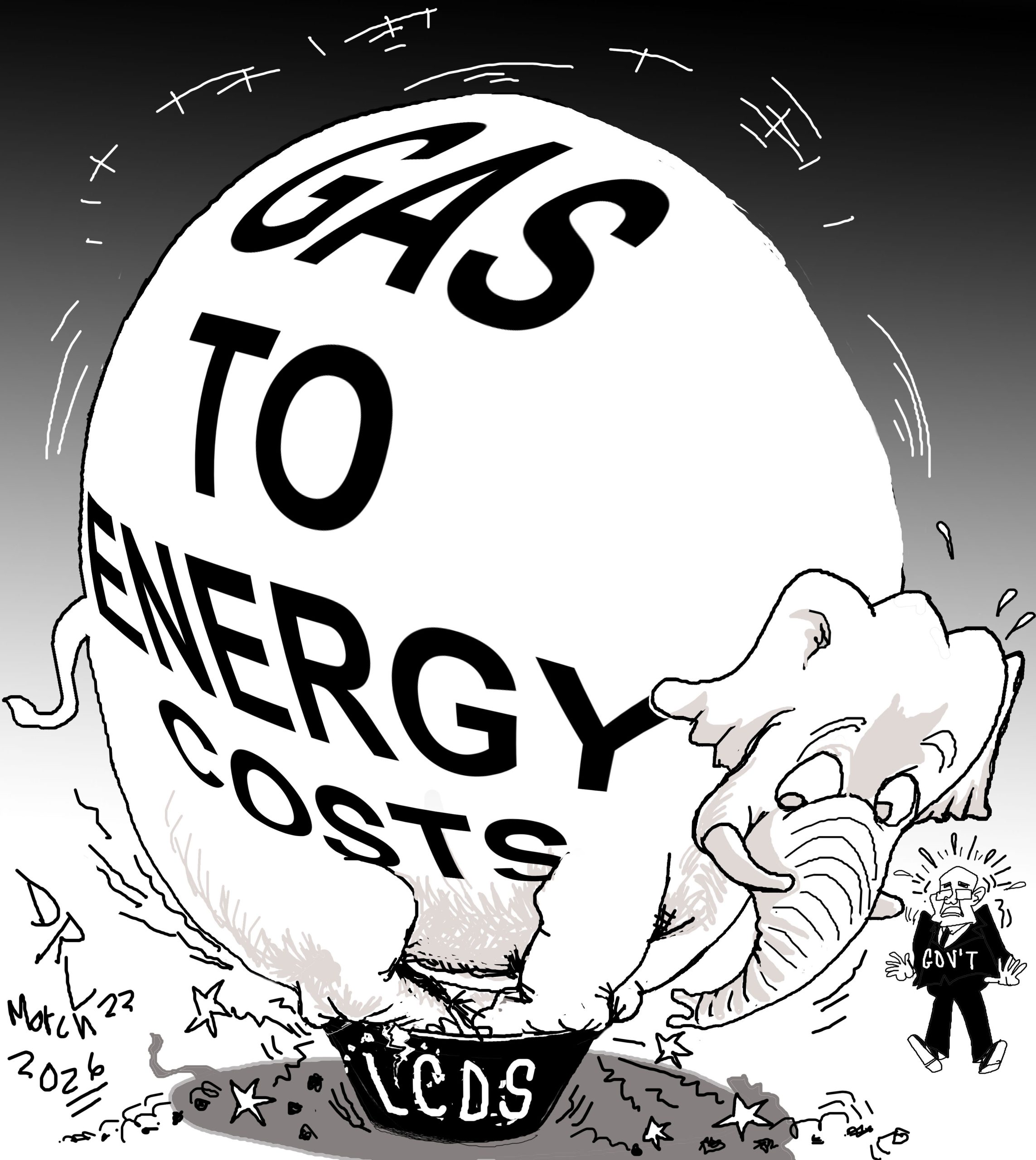
But Guyana’s vulnerability is not merely environmental. It is also structural. With more than 80 percent of its exports tied to fossil fuels, Guyana has tethered its economic future to the volatile fortunes of global oil markets. Oil prices are now rising and yet Guyana, an oil exporter, remains acutely vulnerable to the effects of higher import fuel costs.
Guyana’s dependence on oil amplifies, rather than mitigates, risk—subjecting the country to the twin hazards of climate disruption and price fluctuation. In this context, Jagdeo’s sermon on resilience acquires a distinctly hollow resonance.
His critique of ineffective climate diplomacy, meanwhile, invites an even more pointed recollection. Jagdeo is no stranger to the grand stage of international negotiation; indeed, he was a key participant in the ill-fated Copenhagen Climate Conference 2009, where ambitious appeals for forest conservation and financial transfers dissolved into procedural deadlock and mutual recrimination. It is therefore difficult to take seriously his impatience with “repetitive and ineffective” diplomacy when he has himself been a participant in its most conspicuous failures.
The Caribbean does not lack realism; it suffers, rather, from an excess of leaders who mistake the articulation of problems for their solution. Jagdeo’s speech, for all its impatience with empty words, ultimately adds to their number.
(The views expressed in this article are those of the author and do not necessarily reflect the opinions of this newspaper.)
Subscribe to get the latest posts sent to your email.
Your children are starving, and you giving away their food to an already fat pussycat.
Mar 28, 2026
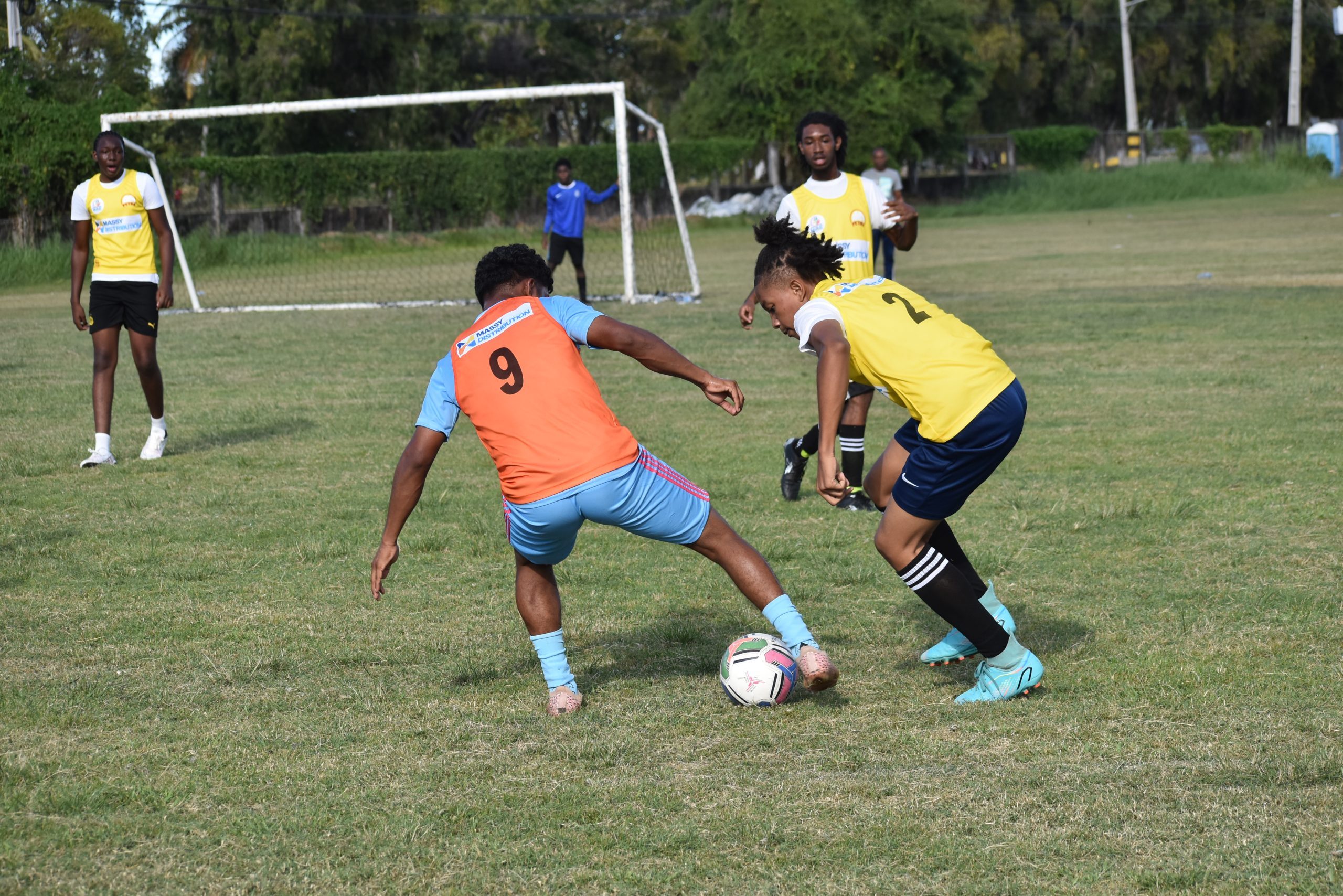
– Massy Distribution Schools U18 Football kick off round 2 action today Kaieteur Sports – The race for knockout qualification sharpens today as round two of the 12th Annual Massy...Mar 28, 2026
(Kaieteur News) – Vice President Bharrat Jagdeo arrived at the 124th Special Meeting of the Council for Trade and Economic Development (COTED) brandishing what he seemed to believe was a cudgel of hard truth: the Caribbean must move “from rhetoric to realism.” One almost admires his...Mar 22, 2026
By Sir Ronald Sanders (Kaieteur News) – The war in Iran is already at Caribbean doors. The attacks in Iran and the Gulf are being justified by some on the grounds that Iran’s record on terrorism, nuclear ambition, and regional meddling leaves the “free world” with no choice but to act...Mar 28, 2026
Hard Truths by GHK Lall (Kaieteur News) – The father-son Mohamed team heads to the CCJ. It’s honored as the apex court. Though impressive sounding, and deserving that loftiness, here’s something more visceral. Last Chance Chambers. Lose there, and it’s finished. Handcuffs...Freedom of speech is our core value at Kaieteur News. If the letter/e-mail you sent was not published, and you believe that its contents were not libellous, let us know, please contact us by phone or email.
Feel free to send us your comments and/or criticisms.
Contact: 624-6456; 225-8452; 225-8458; 225-8463; 225-8465; 225-8473 or 225-8491.
Or by Email: glennlall2000@gmail.com / kaieteurnews@yahoo.com