Latest update July 23rd, 2026 12:30 AM



Latest News
- MV Barima Disaster… Brazil, T&T come to Guyana’s rescue
- Govt. cannot investigate itself! – Amanza Walton
- Billions from oil, no safe passage for hinterland residents – MP Hastings on MV Barima tragedy
- Oil settles up more than 3% to six-week high as Mideast conflict threatens oil transit routes
- Opposition unites in call for Edghill to go
Guyana tells ICJ Venezuela recognised 1899 Arbitral Award as legally binding for decades
(Kaieteur News) – Professor Nilufer Oral, one of the international law professors arguing the Guyana/Venezuela border case at the International Court of Justice (ICJ) told the court on Monday that there is resounding evidence that Venezuela had long accepted the 1899 arbitral award on the boundary as legally binding.
Oral, a leading authority on the law of the sea, director of the Centre for International Law at the National University of Singapore (NUS) and member of the UN International Law Commission told the court that in fact for more than 60 years, Venezuela accepted the 1899 Arbitral Tribunal Award of the land boundary, and never registered any objections.
“The evidence is resoundingly clear that from the very instant when the 1899 award was delivered some 127 years ago, until 1962 Venezuela constantly accepted, recognised, complied with and insisted on strictly following the award. It was well aware of any possible grounds for challenging the award, as much as Venezuela now denies this.”
The lawyer alluded to at least 16 official Venezuela maps spanning the period where the Bolivarian Republic had ratified the award was lawful.
“…The time gap is more than 60 years, 10 times longer Venezuela’s failure to challenge the 1899 award thus produces legal consequences. By 1962, it was too late for Venezuela to make a viable legal challenge on grounds known to it for more than six decades. In its more candid moments, Venezuela itself recognised the weakness of its argument. The same foreign minister who asserted the first formal challenge to the 1899 award in February 1962, Dr. Falcon Briseno wrote that existing jurisprudence would, ‘oppose a situation of this kind,’ namely, a challenge to an award whose validity had already been long accepted.”
She noted too that, Venezuelan officials repeatedly expressed satisfaction and depicted the outcome as a victory, having gained the most valuable part of the disputed territory, the mouth of the Orinoco River.

The Guyana/ Venezuela border case is being heard by the ICJ at The Hague in the Netherlands
The international law professor also produced a map that Venezuela submitted to the United Nations and reflected Guyana as demarcated by the 1899 land boundary award.
“There were no deviations, not a single one throughout this period,” she stated.
The professor emphasised that Venezuela has nevertheless now conjured up a new argument to avoid the legal reality that for over 60 years it has accepted, applied and acquiesced in the 1899 award.
“Venezuela now contends that the 1966 Geneva agreement gave it a new right to challenge the 1899 award it had clearly supported during those decades.
UNSUPPORTED CLAIM
In his argument, British law professor Philippe Sands addressed the 1944 Mallet-Prevost Memorandum on which Venezuela premised its renewed claim to Guyana’s Essequibo territory.
He described the claim as “a concocted fantasy” unsupported by documentary evidence, historical records, diplomatic correspondence, or tribunal archives. “There is not a shred of evidence,” he told the judges.
Sands told the court that the purported statements attributed to Mallet-Prevost must be viewed with caution, noting that they may not have been authored by an impartial observer, but rather by someone with a deep allegiance to Venezuela who had spent years advocating for its territorial claims.
Meanwhile, Paul Reichler, representing Guyana, told the panel of judges that Venezuela’s position collapses under the weight of the historical record. He noted that Venezuela had not only pushed for arbitration with Great Britain, but had also relied heavily on the United States to pressure Britain into agreeing to that process. “Venezuela requested the protection of the United States in order to resist Great Britain’s conduct and reach a peaceful solution to the territorial dispute,” Reichler said, quoting Venezuela’s own pleadings.
Reichler further told the court that in April 1897, Venezuela’s President, Joaquín Crespo, praised the treaty, dismissing any current claims that it had been signed in error.
He noted that Crespo as expressing gratitude to the United States for its role in negotiating the agreement, describing the outcome as an effort “worthy of praise and gratitude” by those familiar with the complexities of the matter.
The treaty was subsequently ratified by the Venezuelan Congress through a legislative decree on April 17, 1897. “None of these facts—none of them—are or can legitimately be disputed,” Reichler emphasised.
He argued that Venezuela cannot now claim it was excluded, deceived, or coerced into a treaty that it actively sought and later celebrated. “It was not until 1963, 66 years after it ratified the treaty, that Venezuela first began to find fault with it,” he told the court.
Reichler also rejected Venezuela’s assertion that the treaty was negotiated “behind its back” by the United States and Great Britain. “The bottom line, Mr. President, is that Venezuela cannot come up with any basis—any legitimate basis whatsoever—for invalidating the 1897 treaty, or for invalidating the 1899 arbitral award on the basis of an allegedly invalid compromise,” he said.
He further dismissed Venezuela’s claim that it had been coerced into signing the treaty, noting that Venezuela’s own president at the time described the agreement as having been presented with “no coercive intent” and with full respect for Venezuela’s sovereignty. “How can they say they were coerced?” Reichler asked.
Providing historical context, Reichler reiterated that Venezuela had “accepted, respected, and complied” with the 1899 arbitral award for more than 60 years before formally challenging its validity in a letter to the United Nations Secretary-General in 1962. He noted that even then, Venezuela maintained that the 1897 treaty itself remained valid.
“Mr. President, the evidence you have now seen from the contemporaneous documentary record thoroughly defeats Venezuela’s challenge to the 1897 treaty—that it was somehow negotiated behind its back, without the involvement of its representatives, and without regard for its interests,” the lawyer for Guyana concluded.
VENEZEULA’S FLAGRANT DEFIANCE
In his submission, British barrister, Edward Craven told the ICJ that Guyana is seeking sanctions against Venezuela for breaching the court’s December 2023 provisional measures order. That order required Venezuela to refrain from taking any action that would alter the status quo in the disputed territory.
Craven explained that Venezuela disregarded this directive by proceeding with a consultative referendum aimed at effectively annexing the Essequibo region. According to him, the referendum sought to amend Venezuela’s constitution to incorporate the territory, register Guyanese residents to vote in Venezuelan elections, and designate the area as a defence zone.
He argued that, as a consequence of these violations, the court should require Venezuela to revoke all laws, decrees, and domestic measures adopted in breach of its order.
This includes any legislation asserting sovereignty over Guyana’s territory and actions extending Venezuelan legislative, “These measures are requested because Venezuela is under the obligation by way of reparation for its breaches of the provisional measures, to reestablish the situation which would, in all probability, have existed if those breaches had not been committed,” Craven reasoned.
He emphasised to the court that Venezuela has openly defied its authority. He pointed out that less than 48 hours before the hearings, Caracas issued a statement reaffirming that it does not recognise the court’s jurisdiction and would not be bound by its rulings.
Describing a pattern of escalating non-compliance, Craven noted that despite the ICJ’s unanimous order on December 1, 2023, Venezuela proceeded with the referendum just two days later and subsequently announced the creation of a so-called “state of Guyana Essequiba.”
“These borders are binding and create international legal obligations for Venezuela,” Craven said, adding that the Court’s orders had clearly been violated and require appropriate remedies. He maintained that reversing these actions is a logical legal consequence and would not be difficult or burdensome for Venezuela to implement.
Besides the legal team, Guyana’s delegation at the ICJ hearings includes Foreign Affairs Minister Hugh Todd, Attorney General Anil Nandlall, Agent to the Court Carl Greenidge, and Director of Frontiers Donnette Streete.
Share this:

Discover more from Kaieteur News
Subscribe to get the latest posts sent to your email.
Similar Articles

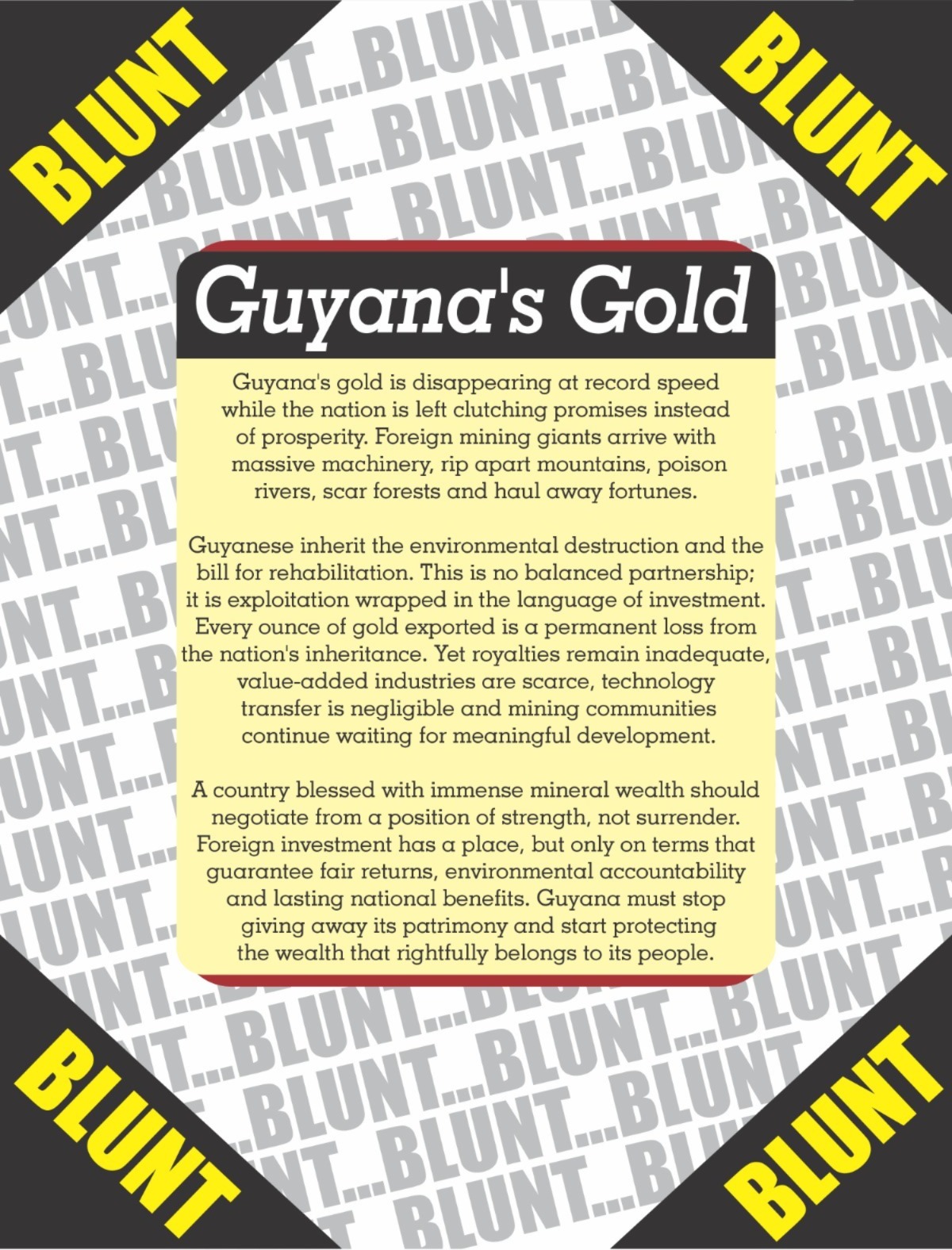
Blunt of the day
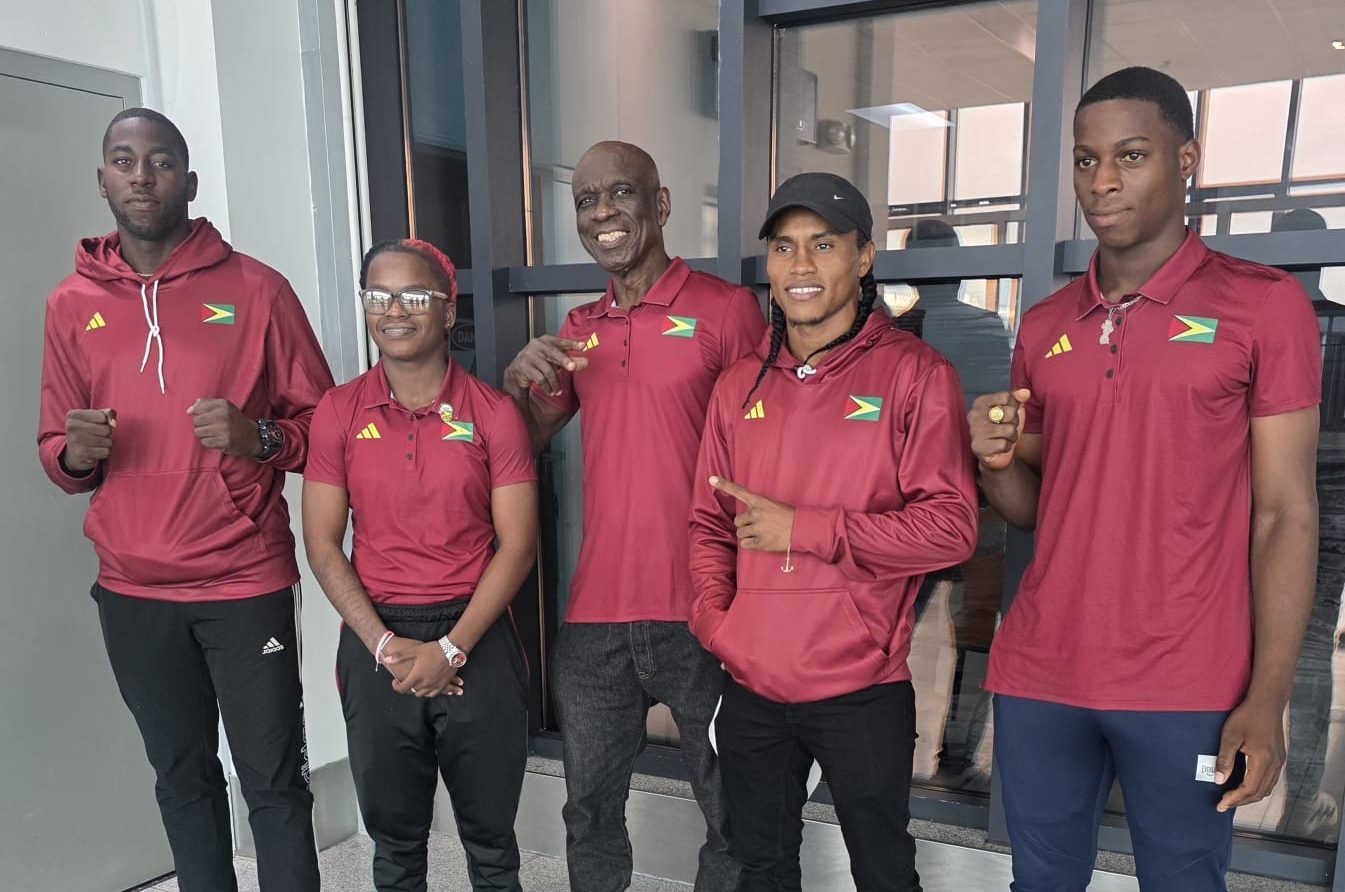
Sports
Features/Columnists

Sir. Ronald Sanders

The GHK Lall Column

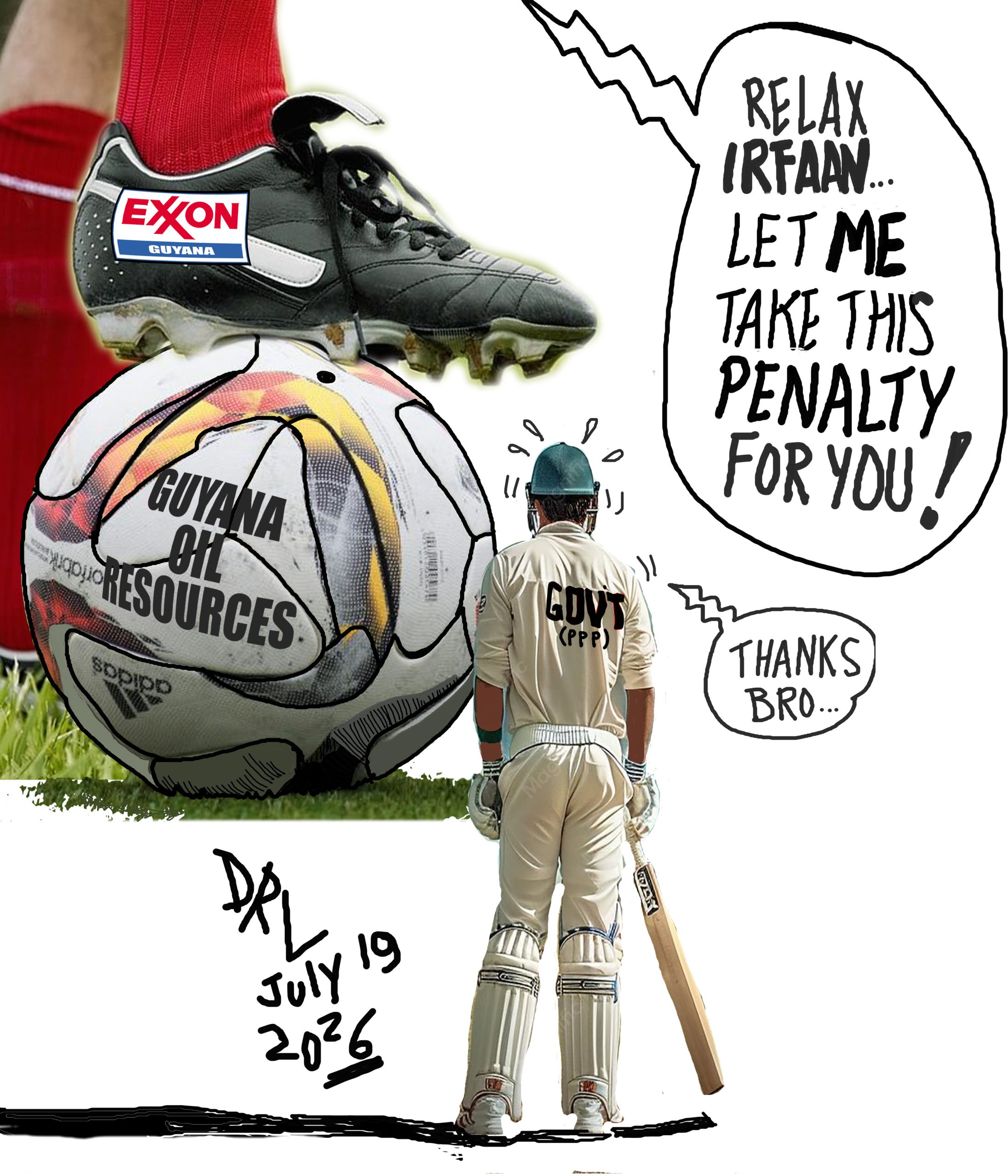
Weekend Cartoon