Latest update July 23rd, 2026 12:30 AM



Latest News
- MV Barima Disaster… Brazil, T&T come to Guyana’s rescue
- Govt. cannot investigate itself! – Amanza Walton
- Billions from oil, no safe passage for hinterland residents – MP Hastings on MV Barima tragedy
- Oil settles up more than 3% to six-week high as Mideast conflict threatens oil transit routes
- Opposition unites in call for Edghill to go
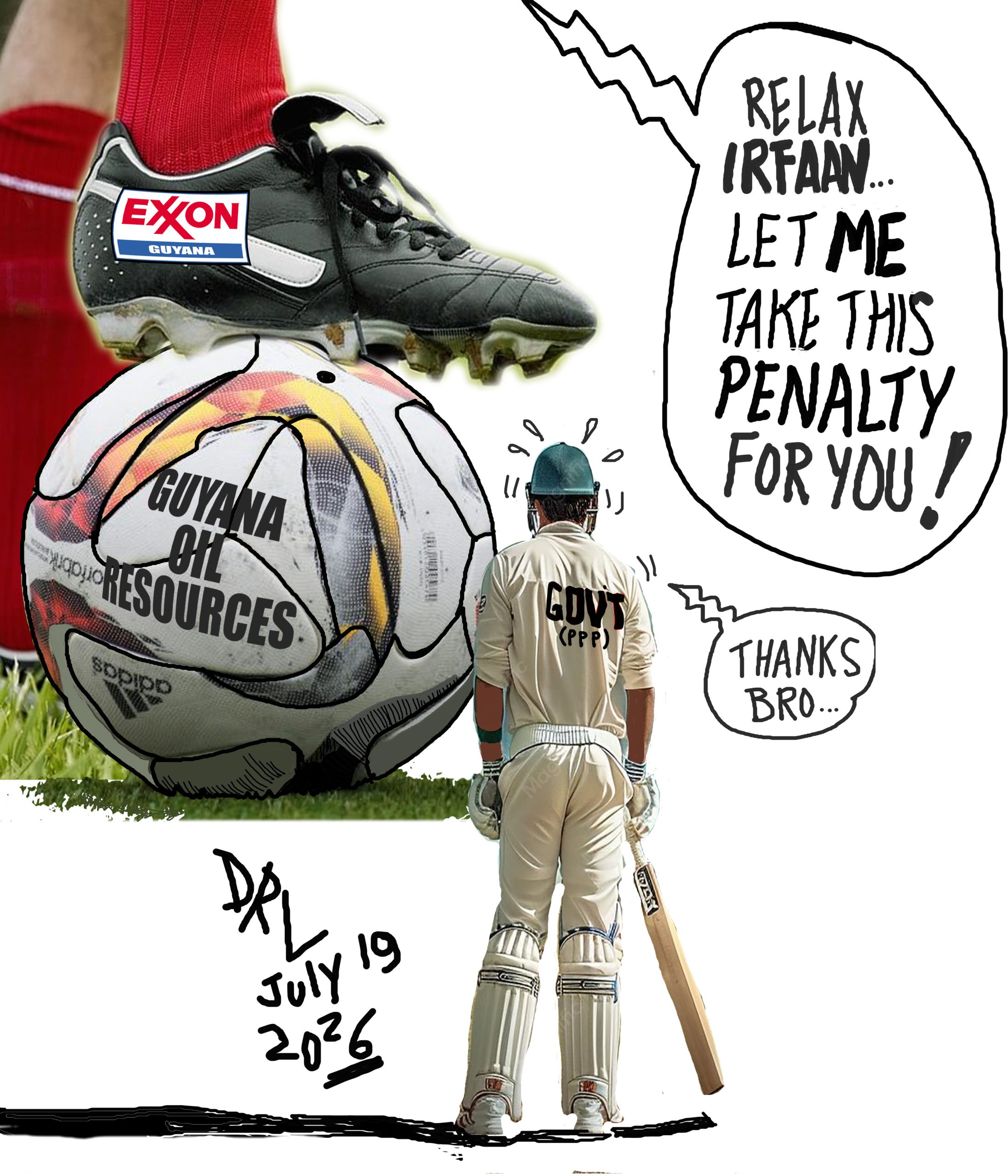
EPA fails to say what mechanisms in place to verify Exxon’s offshore waste discharge
…says answers would be provided at the end of 60-day period
(Kaieteur News) – The Environmental Protection Agency (EPA) on Tuesday could not state the mechanisms that are currently in place to independently verify that the offshore discharges by ExxonMobil into the ocean meet required international standards.
Exxon currently has four Floating Production Storage and Offloading vessels (FPSOs) that produce oil in the Stabroek Block. These vessels generate and offload hundreds of thousands of barrels of waste daily into the ocean. Guyana’s ability to independently verify the quality of these discharges has been a burning concern for citizens, particularly those with keen interest in the environment.
During a public consultation for the company’s eight proposed project, Longtail, held at the Umana Yana in Georgetown, this newspaper raised questions about the safeguards in place to ensure that the information provided by the company, with regards to discharge of waste, is accurate.

Agents of Acorn International, the consultant hired by Exxon, engages the public at the environmental desk on concerns they had, regarding the project.
While responding to an inquiry from a member of the public at the environmental desk, Exxon’s consultant, Acorn International assured that offshore waste is treated before it is dumped overboard. Further, it was explained that some waste is required to be transported onshore for treatment before it is dumped.
“Anything that is discharged into the environment has been treated safely to Guyanese EPA thresholds. Anything that is not deemed in accordance with those thresholds are stored onboard the FPSO and taken off of the FPSO, essentially offloaded to be further treated onshore,” an Acorn official explained at the environmental desk.
Consequently, Kaieteur News asked about the systems in place to ensure the discharged waste meets the required standards.
At that point, an officer attached to the EPA, was summoned. He only stated his name as Michael and explained to the public that the meetings were held so that questions could be raised and addressed by the end of the 60-days period which is currently ongoing and concludes on May 20.
Students at the venue were in deep shock at the response provided and told this newspaper in a subsequent interview that the EPA seems to be “putting cat to watch milk” by allowing Exxon to discharge waste into Guyana’s waters without ensuring best practices are followed. “It doesn’t seem like if they have anything in place to ensure they treat this waste because he couldn’t answer the question,” the student said.
The public consultations hosted by Exxon, its consultant and the EPA have often been described as a “farce” held merely to tick legal boxes on the journey to acquire a new Permit. This is particularly so since numerous questions have been unanswered during these sessions that are intended to provide the public with assurance that these developments will be conducted in accordance with international standards to safeguard the country and its environment.
In a statement issued by the regulator in 2023, some three years ago, the EPA assured that it would never allow any discharges that could be described as “hot, greasy water” from ever occurring in Guyanese waters. In response to an article published by this newspaper, the EPA explained, “We use continuous independent satellite monitoring to detect even the slightest oil sheen on the waters and thermal imaging to detect every gas flaring. We ensure that our standards are being met every day.”
The regulator outlined that Produced Formation Water (PFW), sometimes called Produced Water (PW) is water trapped in underground formations that is brought to the surface during oil and gas extraction. This water contains components such as salts dissolved from the formation, oil, inorganic and organic compounds, naturally occurring radioactive materials (NORM) and chemical additives from well drilling. Produced water is also usually very hot and can be deadly to marine species, making treatment crucially important to the environment.
To this end, EPA explained that the discharges are made into the ocean after the treatment to meet strict discharge quality requirements.
In addition to the satellite technology being used to monitor these discharges, the Head of the agency, Kemraj Parsram said it also “receives live feed” of produced water releases from the FPSOs which are monitored constantly. While this is not an independent measure to verify standards are met, the EPA said independent sampling of water quality is also conducted.
He was keen to note that despite this close oversight, the agency is committed to increasing its monitoring of discharges from the FPSOs and developing an independent review of the monitoring data with the help of international experts.
Share this:

Discover more from Kaieteur News
Subscribe to get the latest posts sent to your email.
Similar Articles

Blunt of the day
Sports

Features/Columnists

Sir. Ronald Sanders

The GHK Lall Column

Weekend Cartoon