Latest update July 23rd, 2026 12:30 AM



Latest News
- MV Barima Disaster… Brazil, T&T come to Guyana’s rescue
- Govt. cannot investigate itself! – Amanza Walton
- Billions from oil, no safe passage for hinterland residents – MP Hastings on MV Barima tragedy
- Oil settles up more than 3% to six-week high as Mideast conflict threatens oil transit routes
- Opposition unites in call for Edghill to go
FAO warns of severe global food security risks from disruption to Strait of Hormuz trade corridor
New York / Rome — The Chief Economist of the Food and Agriculture Organisation of the United Nations (FAO), Máximo Torero, warned that the ongoing disruption to the Strait of Hormuz trade corridor is triggering one of the most severe shocks to global commodity flows in recent years, with significant implications for food security, agricultural production, and global markets.
Speaking at a United Nations daily press briefing, Torero highlighted that tanker traffic through the Strait of Hormuz has collapsed by more than 90 percent within days of the escalation. The vital artery for global trade typically carries around 20 million barrels of oil per day—approximately 35 percent of global crude oil flows—alongside one-fifth of global liquefied natural gas (LNG) and up to 30 percent of internationally traded fertilisers.
“This is not only an energy shock. It is a systematic shock affecting agri-food systems globally,” Torero said. He emphasised that the Gulf region accounts for nearly half of global sulfur trade, a critical input used to produce sulfuric acid for processing phosphate rock into fertilisers. Disruptions to sulfur supply risk fracturing global phosphate fertiliser production, including in major producing countries.

Disruptions to a critical global trade corridor are triggering interconnected shocks across energy, fertiliser, and agri-food systems.
Shipping constraints have been compounded by surging insurance costs. Following the expansion of high-risk zones in early March, war-risk insurance premiums rose from 0.25 percent to as high as 10 percent of vessel value, with coverage now resetting every seven days. Even in the event of de-escalation, normal shipping conditions may take months to resume, Torero warned.
Rising input costs and risks to agricultural production
The Chief Economist pointed out that the disruptions are already translating into higher costs for farmers worldwide. Fertiliser prices have risen sharply, with Middle East granular urea increasing by 19 percent in the first week of March, while Egyptian urea prices surged by 28 percent. Given that natural gas is the primary feedstock for nitrogen fertilisers, elevated energy prices are expected to sustain upward pressure on fertiliser costs. FAO projections indicate that global fertiliser prices could average 15 to 20 percent higher in the first half of 2026 if the crisis persists.
“Farmers are facing a dual cost shock: they have more expensive fertilisers alongside rising fuel costs affecting the entire agricultural value chain, including irrigation and transport,” Torero said. In response, many producers are likely to reduce fertiliser application or shift toward less input-intensive crops, he added. Since fertiliser use follows a nonlinear yield response, even modest reductions can result in disproportionately large declines in crop yields, particularly in regions where baseline usage is already low.
Duration of disruption will be decisive
During the briefing, Torero stressed that the duration of the crisis will determine the scale of its global impact. In the case of a short-term disruption of up to one month, impacts are expected to remain contained. Global food stocks are currently sufficient, and markets could stabilise within approximately three months. The FAO Food Price Index remains about 21 percent below its March 2022 peak.
If the disruption persists for three months or longer, risks escalate significantly, affecting global planting decisions for 2026 and beyond. Under a medium-term disruption scenario, FAO anticipates reduced yields for fertiliser-intensive crops such as wheat, rice, and maize, crop substitution toward nitrogen-fixing crops such as soybeans, and increased competition from biofuel production as higher oil prices stimulate demand for agricultural feedstocks.
Impacts across countries
Torero underscored that the effects of the crisis will vary depending on crop cycles and import dependencies. Countries currently most vulnerable include:
- Sri Lanka, where the Maha rice harvest is underway
- Bangladesh, currently in its critical Boro rice season
- India, facing reduced domestic fertiliser production ahead of the Kharif season
- Egypt, highly exposed due to reliance on wheat imports
- Sudan, already facing acute food insecurity
- In Sub-Saharan Africa, Somalia, Kenya, Tanzania, and Mozambique are particularly exposed due to high dependence on fertiliser imports.
Major agricultural exporters such as Brazil may also face production impacts, with potential spillovers into global markets. Torero also highlighted two critical secondary risks: potential declines in income flows from Gulf economies could affect millions of households in developing countries relying on remittances, and export restrictions could further tighten global supply and exacerbate price volatility.
Policy recommendations
Torero called for urgent, coordinated international action.
In the short term, it is critical to establish alternative trade corridors, provide emergency financial support to import-dependent countries, and ensure farmers have access to credit.
In the medium term, countries need to diversify fertiliser import sources, strengthen regional reserves, and avoid export restrictions. In the long term, FAO recommends investing in sustainable, input-efficient agriculture, scaling alternative fertiliser technologies such as green ammonia, and treating food systems as strategic infrastructure.
Share this:

Discover more from Kaieteur News
Subscribe to get the latest posts sent to your email.
Similar Articles

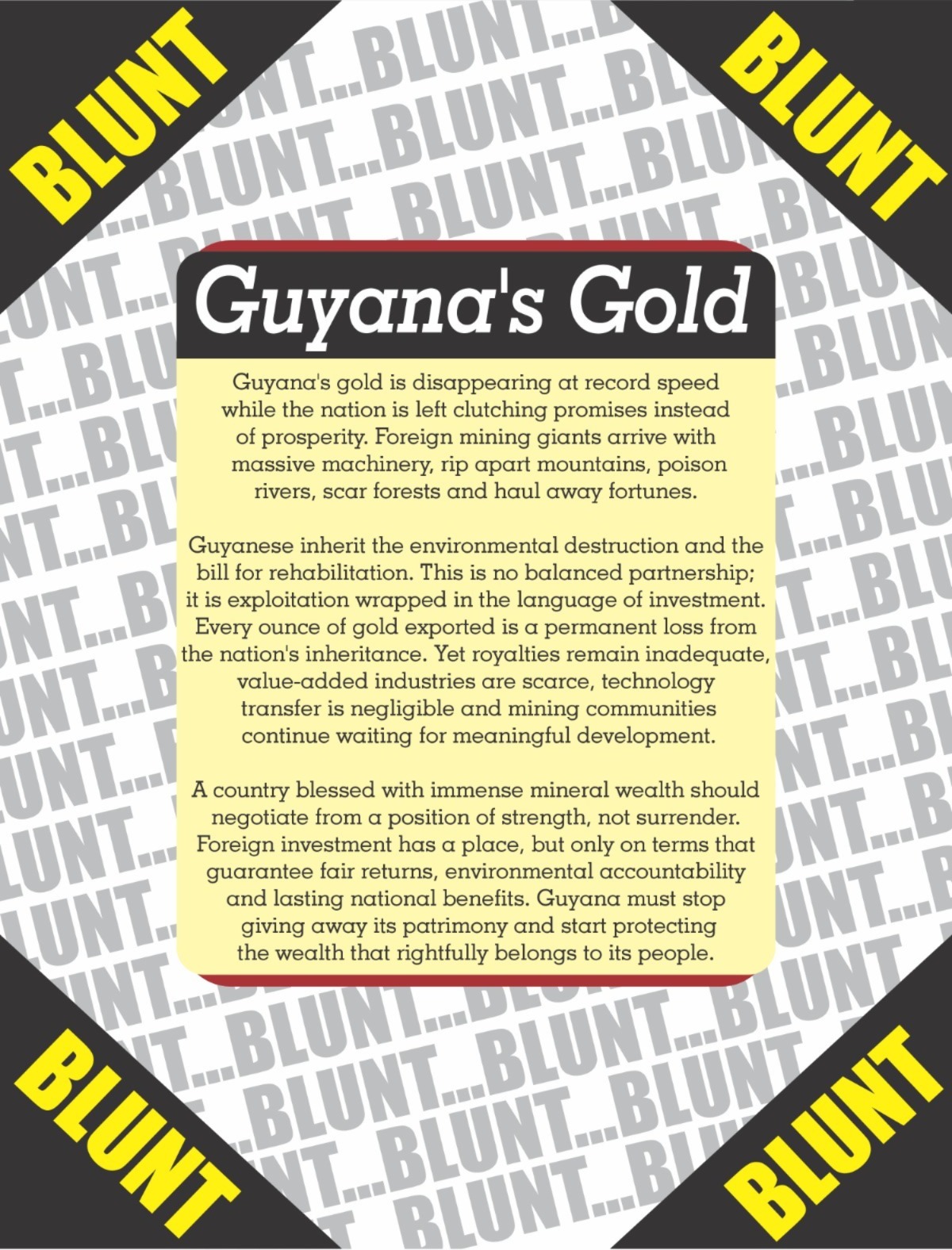
Blunt of the day
Sports

Features/Columnists

Sir. Ronald Sanders

The GHK Lall Column

Weekend Cartoon