Latest update October 8th, 2026 10:30 AM



Latest News
- BK wins $1.3B contract to salvage MV Barima
- Exxon to repair gas-to-energy pipeline off Crane
- ‘Who is responsible?’ — Barima COI Chairman vows to follow evidence wherever it leads
- Maduro to face new U.S. charges over alleged torture of Americans, official says
- President Ali blasts visa barriers, says Caribbean cannot build tourism with ‘stone age’ system
Guyana and Cuba
(Kaieteur News) – President Irfaan Ali has signalled what appears to be a careful recalibration of Guyana’s position on Cuba. Speaking during an interview with Fox News on the sidelines of the Shield of the Americas Summit in Doral, Florida, the Head of State acknowledged that the current situation in Cuba cannot remain unchanged. At the same time, he emphasised that any transformation must occur “gradually and through dialogue.”
That formulation reflects the delicate diplomatic terrain Caribbean governments now find themselves navigating. Cuba’s political and economic circumstances have been the subject of intense international debate for decades. Yet for countries within the Caribbean, the issue has never been purely ideological. It has always been practical, historical and deeply human.
Guyana’s relationship with Cuba stretches back to 1972 when diplomatic relations were formally established. Since then, cooperation between the two countries has been extensive, particularly in education and health. For decades, Cuban medical professionals have served in Guyana, often in remote and riverine communities where shortages of doctors and specialists persist. Their presence has been widely acknowledged as an important pillar of public health across the region.
This history of cooperation explains why developments surrounding the Cuban medical programme have generated strong reactions locally and regionally. Guyana recently terminated its longstanding bilateral arrangement with the Cuban Medical Brigade and instead opted to hire Cuban medical personnel directly under local labour arrangements. The government has insisted that the new system complies with national labour laws and ensures that the professionals are compensated in a manner similar to other medical staff.
Yet the timing of the decision has inevitably drawn scrutiny. The United States has increased pressure on countries participating in Cuban medical programmes, arguing that the arrangements may amount to forced labour. Washington has warned that nations involved in such programmes could face visa restrictions or other repercussions.
Guyana has maintained that its decision was not made under pressure. Nevertheless, the broader geopolitical context cannot be ignored. Small states frequently find themselves balancing relationships with larger powers while also safeguarding long-standing regional partnerships.
President Ali’s remarks about Cuba’s future must therefore be understood within this wider diplomatic landscape. In his comments, he acknowledged that leaders within the CARICOM have recently held discussions on Cuba’s situation and that United States Secretary of State Marco Rubio was engaged in those conversations.
According to the President, regional leaders agreed that “the status quo cannot remain unchanged.” But he was careful to emphasise that any transformation must occur through engagement rather than imposition. “There must be dialogue,” he said, adding that changes should lead to “better conditions for the people of Cuba… a society in which the rule of law, in which democracy, in which freedom is celebrated.” Those are reasonable aspirations. Few would argue against improvements in living standards, greater freedoms or stronger institutions anywhere in the world. However, the path toward such outcomes must be approached with sensitivity to history, sovereignty and the realities faced by ordinary Cubans.
For decades, Caribbean nations have consistently called for the lifting of the United States economic embargo against Cuba. That position has been grounded in the belief that broad economic sanctions ultimately hurt ordinary citizens far more than governments.
Indeed, concerns about worsening conditions on the island have recently been raised by several former Caribbean leaders. In a public statement, former heads of government from across the region warned of what they described as a “deepening humanitarian crisis” in Cuba. They criticised measures that they say amount to economic warfare and warned that such policies risk inflicting “unconscionable suffering” on the Cuban people.
This context reinforces why dialogue remains the preferred approach for Caribbean states. Coercion rarely produces stable outcomes, and external pressure often strengthens the very forces it seeks to weaken. At the same time, Caribbean governments must also remain attentive to legitimate concerns about governance, human rights and economic reform within Cuba. Supporting dialogue does not mean ignoring the aspirations of Cuban citizens for improved living standards and greater opportunity.
The region’s challenge, therefore, is to maintain its long-standing principles while navigating an increasingly complex international environment. Caribbean states have historically prized independence in foreign policy decision-making. Preserving that independence requires careful diplomacy and consistent adherence to regional values.
President Ali’s remarks suggest an attempt to strike that balance. By acknowledging the need for change while emphasising gradual reform and dialogue, he has articulated a position that resonates with the Caribbean’s traditional approach to sensitive international issues. Whether this balance can be maintained will depend on developments in the months ahead. What is clear, however, is that Guyana and the wider Caribbean must ensure that its decisions continue to reflect both regional solidarity and the broader interests of its people. In matters such as these, diplomacy is rarely simple. But measured voices and principled engagement remain the region’s most reliable tools.
Share this:

Discover more from Kaieteur News
Subscribe to get the latest posts sent to your email.
Similar Articles
One thought on “Guyana and Cuba”
Website Hits

Blunt of the day

Sports
Features/Columnists

Sir. Ronald Sanders

The GHK Lall Column

Weekend Cartoon
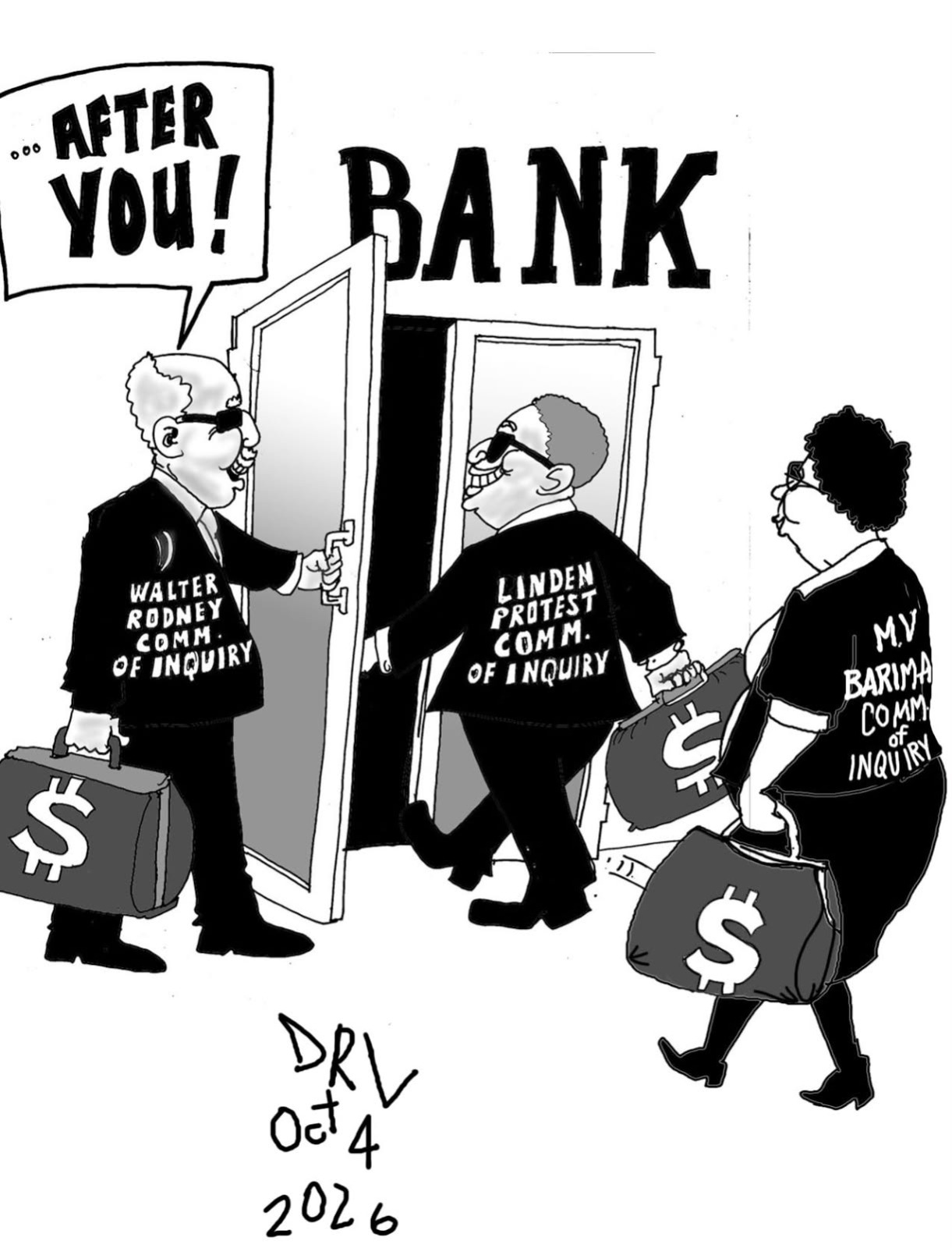


From where is Guyana going to get DOCTORS to fill all those New Hospitals ?
CUBAN doctors have gone.
Someone, maybe two, have pressured Irfan Ali to get rid of the doctors ?