Latest update March 5th, 2026 6:30 PM

Mar 05, 2026 Features / Columnists, Peeping Tom
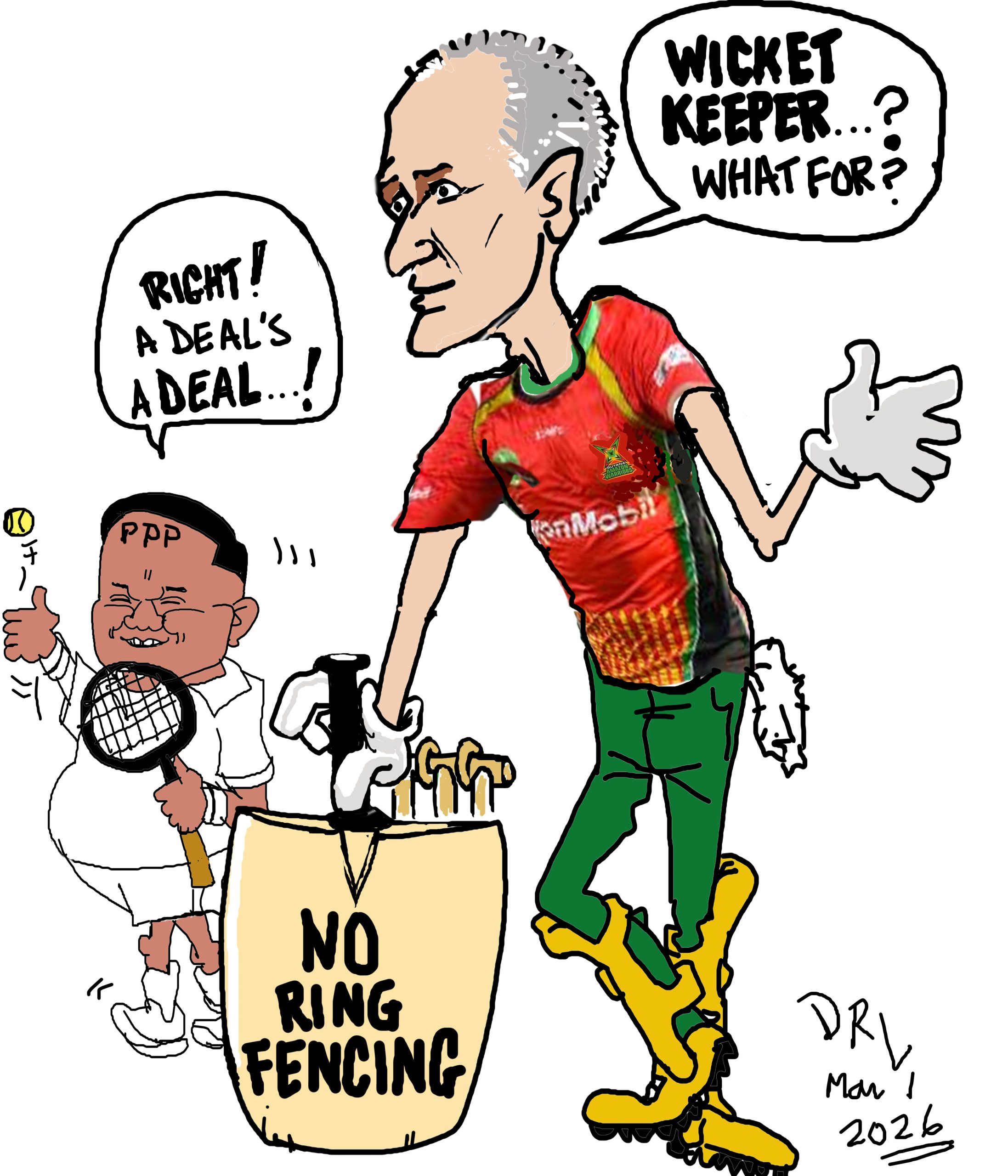
(Kaieteur News) – In Guyana, governments fall not always because they are defeated by grand ideas, but because they are eroded by small familiar weaknesses. In the case of the People’s Progressive Party/Civic (PPPC) corruption has long been spoken of not as an aberration, but as an affliction. It is the party’s recurring vulnerability, its unhealed wound.
In 2011, the party was reduced to a minority in the National Assembly. The electorate had grown weary. There was no great ideological revolt; there was fatigue. Fatigue with stories of procurement irregularities, favoured contractors, and the controversial financial models associated with certain projects. The voter, in small countries, does not require a manifesto to sense decay. He requires only the evidence of his own eyes — the mansion rising too quickly, the contract awarded too smoothly, and the privatizations done scandalously.
By 2015, that fatigue crystallised into rejection. The APNU+AFC coalition was formed and the opposition found in David Granger a candidate who was presented as a man of probity integrity and decency. He was the perfect candidate to contest against a PPPC government that has been smeared with the brush of corruption. And so the PPP was displaced.
Yet Guyanese politics is not a morality play with permanent exiles. In 2020, the People’s Progressive Party/Civic returned to office. Oil wealth had transformed the national imagination. The electorate, pragmatic as ever, calculated anew. But the old whispers did not disappear. They returned, as they often do, with greater force in times of greater money.
It is in this present moment that the We Invest in Nationhood party — WIN — has sought to position itself as accuser-in-chief. Its leader has made serious allegations against officials within the government, invoking corruption not as rumour but as systemic practice.
People in the streets are talking quietly about the allegations of enrichment by government officials. But the electorate is divided and there will be just as many persons willing to defend as to accuse.
The presidential candidate associated with WIN is subject to sanctions imposed by the United States government. WIN’s moral posture is complicated by these sanctions. This is the difficulty. When allegations can be pointed also at the accuser, a problem arises.
One of the options open to the opposition is to lobby the Americans to impose sanctions on corrupt government officials, under the much-invoked Magnitsky Act under which certain Guyanese have been sanctioned. The Global Magnitsky Human Rights Accountability Act is imagined as an external cleansing force — a deus ex machina that will descend upon the corrupt public officials in other countries outside the United States and freeze their assets.
It would be unusual for the recent allegations against government officials to have escaped notice by the local US Embassy. Indeed, it is plausible that the United States already possesses extensive intelligence regarding political actors within the PPPC. Great powers collect information as a matter of routine. But possession of intelligence is not equivalent to public sanction. Information can be used as leverage to extract benefits for US companies. Also, it would not be surprising for imperial power to use such intelligence to blackmail governments.
American sanctions are not instruments of local political ambition. They are tools of American foreign policy. To suppose that an opposition party in Guyana can successfully lobby Washington to impose sanctions on corrupt government officials is to misunderstand the hierarchy of interests. The United States acts not from sentiment but from calculation. Guyana, newly oil-rich and strategically situated, occupies a space of growing importance. Stability, predictability, and access to energy resources may weigh more heavily than the internal rivalries of Georgetown.
Thus, the opposition faces a dilemma. It may continue to speak of corruption. And perhaps it must, for corruption is no trivial matter in a state now managing oil revenues. But to hinge its strategy on American sanctions is to gamble on forces beyond its control. Lobbying Washington is not the same as persuading Guyanese voters. The latter is arduous but sovereign; the former is speculative.
Corruption may indeed remain the Achilles Heel of the People’s Progressive Party/Civic. History suggests that unaddressed weaknesses eventually reassert themselves. Yet the remedy for such weakness lies primarily within the polity.
The hope that salvation will arrive stamped with the seal of the United States Treasury is, perhaps, another expression of our old dependency: the belief that justice must come from elsewhere. In the end, no Magnitsky designation can substitute for domestic political courage. And it is doubtful that the opposition, divided and encumbered by its own contradictions, can summon Washington to do what it has not yet persuaded Guyana to demand for itself.
(The views expressed in this article are those of the author and do not necessarily reflect the opinions of this newspaper.)
Subscribe to get the latest posts sent to your email.
Your children are starving, and you giving away their food to an already fat pussycat.
Mar 05, 2026
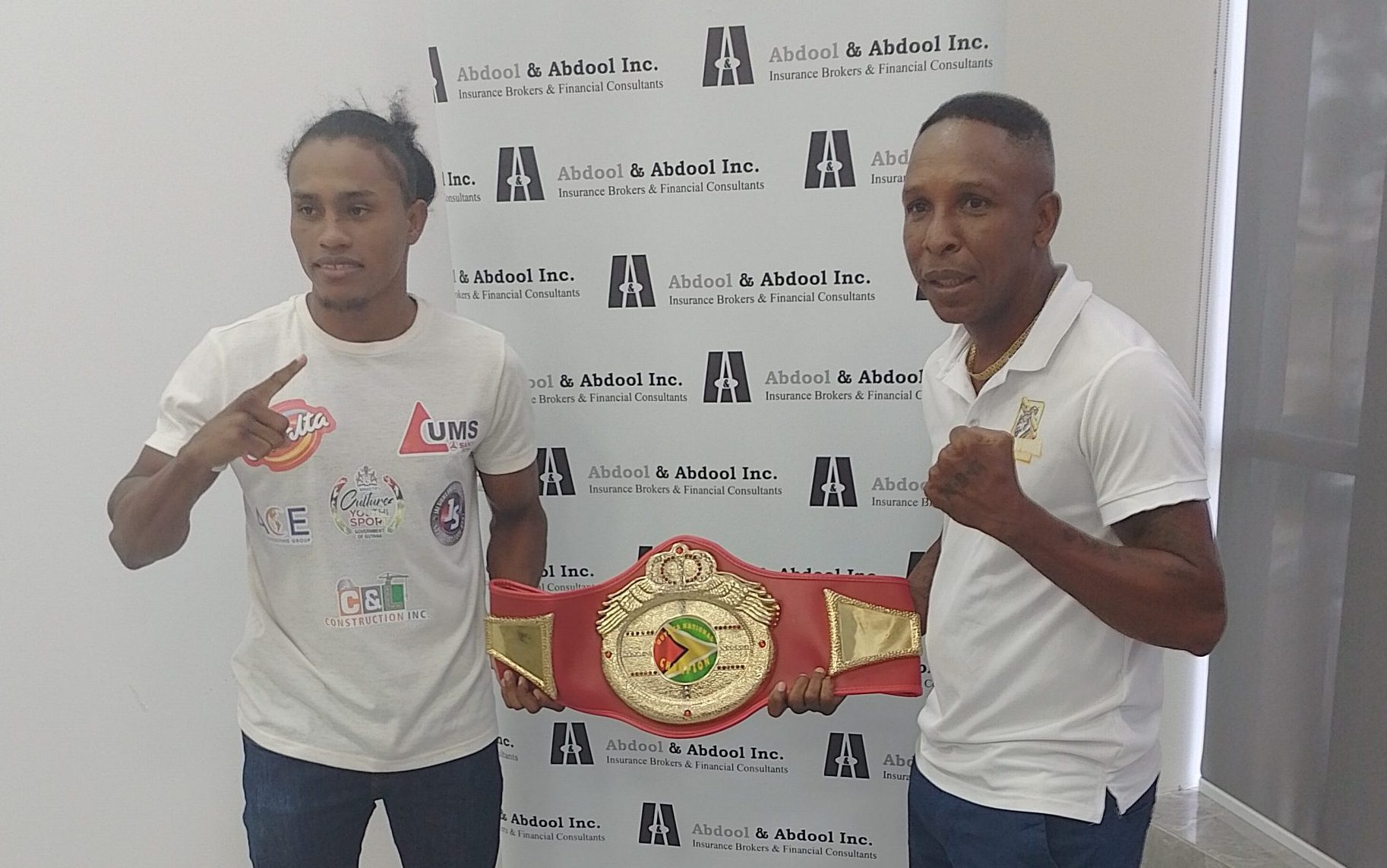
IBO/GBBC March 28 Fight Night at Pegasus Suites… – “Dexter will be lying flat on his face” Allicock promises By Clifton Ross Kaieteur Sports – Pre-fight banter got underway...Mar 05, 2026
(Kaieteur News) – In Guyana, governments fall not always because they are defeated by grand ideas, but because they are eroded by small familiar weaknesses. In the case of the People’s Progressive Party/Civic (PPPC) corruption has long been spoken of not as an aberration, but as an affliction....Mar 01, 2026
By Sir Ronald Sanders Kaieteur News) – When Marco Rubio arrived in St. Kitts to address the Heads of Government of the Caribbean Community, CARICOM, he did so only hours after attending President Trump’s State of the Union address in Washington. The speech ended late. Before dawn, he was on...Mar 05, 2026
Hard Truths by GHK Lall (Kaieteur News) – Whatever is thought of Trinidad and Tobago’s (TT) Prime Minister, Excellency Kamla Persad-Bissessar and her positions, she must be recognized for having a go at getting them before everyone. Whatever is said about her, she has her say in her own way,...Freedom of speech is our core value at Kaieteur News. If the letter/e-mail you sent was not published, and you believe that its contents were not libellous, let us know, please contact us by phone or email.
Feel free to send us your comments and/or criticisms.
Contact: 624-6456; 225-8452; 225-8458; 225-8463; 225-8465; 225-8473 or 225-8491.
Or by Email: glennlall2000@gmail.com / kaieteurnews@yahoo.com