Latest update February 13th, 2026 12:30 AM

Feb 13, 2026 Letters
Dear Editor,
Data clearly states that such discrimination is both systemic and persistent. Unfortunately, the historical legacies of exclusion and discrimination still shape the present where women are underrepresented in areas such as engineering, science and physics.
According to the United Nations Educational, Scientific and Cultural Organisation (UNESCO), women comprises about 35 per cent of STEM graduates globally, a figure that has remained stagnant for over a decade. In Latin America and the Caribbean (LAC), women comprise less than 30% to 40% of the STEM (science, technology, engineering, and mathematics) workforce and graduates. While 60% of tertiary graduates in the region are women, they are significantly underrepresented in engineering (under 31%) and Information and Communications Technology (ICT), with only 14% of girls expecting to work in STEM.
The causes surrounding gender discrimination are many. However, among the most noticeable are the persistent cultural belief that STEM is for boys. This skewed narrative discourages many girls from pursing subjects and careers in STEM fields. In male dominated societies such as Afghanistan, girls are banned from receiving an education beyond the primary level. Afghanistan stands out tragically as the only country in the world where secondary and higher education is strictly forbidden to girls and women. Nearly 2.2 million of them are now barred from attending school beyond the primary level due to this regressive decision. In many patriarchal societies, girls are often encouraged toward ‘softer’ subjects. These softer subjects are far removed from the STEM subjects. This societal expectation serves as yet another form of discrimination that girls face from embarking on a career in STEM fields.
The Organisation for Economic Co-operation and Development (OECD) report on Gender Differences in Education, Skills and STEM Careers in Latin America and the Caribbean: Insights from PISA and PIAAC states that gendered expectations shape career paths early. In LAC countries, only 14% of girls are expected to work in a STEM-related occupation compared to 26% of boys. This expectation gap persists into adulthood: only 30% of adults aged 30–40 in STEM-related occupations are women. Girls are more likely to express a lack of confidence in Mathematics and Science. For instance, just 27% of girls reported confidence in Mathematics compared to 45% of boys. Domestic responsibilities disproportionately affect girls, especially during adolescence. Prior to the COVID-19 pandemic, girls in Bolivia, Guatemala, and Nicaragua spent 3–4 hours per day on care work, compared to less than 2.8 hours for boys.
There are also workplace challenges. Women in STEM often face pay gaps, fewer promotions, and hostile work environments. There is also a visibility gap where historically, women’s contributions were overlooked or credited to men, thus reinforcing the idea that STEM is male-driven. Today, only one in three scientists is a woman. Lack of gender equality in science is not just a problem that affects women. It also limits scientific progress and hamstrings a country’s development and its efforts to build peaceful societies. In 2016, the UN declared 11 February as International Day of Women and Girls in Science. The main reason for this declaration is to encourage more girls and women to take up jobs in the fields of Science, Technology, Engineering and Mathematics (also known as the STEM subjects). The day is also set aside to emphasise that full and equal access to, and participation in science, technology and innovation for women and girls of all ages is imperative for achieving gender equality and the empowerment of women and girls.
In cutting edge fields such as artificial intelligence, only one in five professionals (22%) is a woman. A significant gender gap has persisted throughout the years at all levels of Science, Technology, Engineering and Mathematics (STEM) disciplines all over the world. Even though women have made tremendous progress towards increasing their participation in higher education, they are still under-represented in these fields. The theme of International Day of Women and Girls in Science (IDWGIS) 2026 is “Synergising AI, Social Science, STEM and Finance: Building Inclusive Futures for Women and Girls.” As societies grapple with widening inequalities, the integration of artificial intelligence (AI), social science, Science, Technology, Engineering and Mathematics (STEM) and finance emerges as a four-pillar approach to accelerate inclusive and sustainable development. It is evident that governments must be intentional in developing the policy framework to encourage more girls and women into STEM careers.
A comprehensive reform regarding gender equality in education is needed. There is much fragmentation and a lack of funding, mentorship and supportive policies that restricts opportunities for girls and women to enter STEM careers. There are a number of things that can be done to encourage girls to consider a career in science.
Probably one of the most important things is to make sure that girls see plenty of examples of successful women scientists in the news and in the media. A number of organisations send women scientists to talk to girls at schools about their work. Some schools encourage older girls who are studying STEM subjects to talk to younger students in their schools about their passion for their subject. Parents and schools can introduce all children to activities and toys that encourage them to build and make things, and get them interested in exploring the world around them. University and research facilities open their laboratories to schools so that the students can experience hands-on scientific research. Representation matters not only for fairness but also for innovation. On this International Day for Girls and Women in Science, let us demand more STEM opportunities for our girls and women through partnering with role models, to build inclusive environments where women and girls can drive innovation for more efficient, and inclusive societies.
Sincerely,
Wayne Campbell
Subscribe to get the latest posts sent to your email.
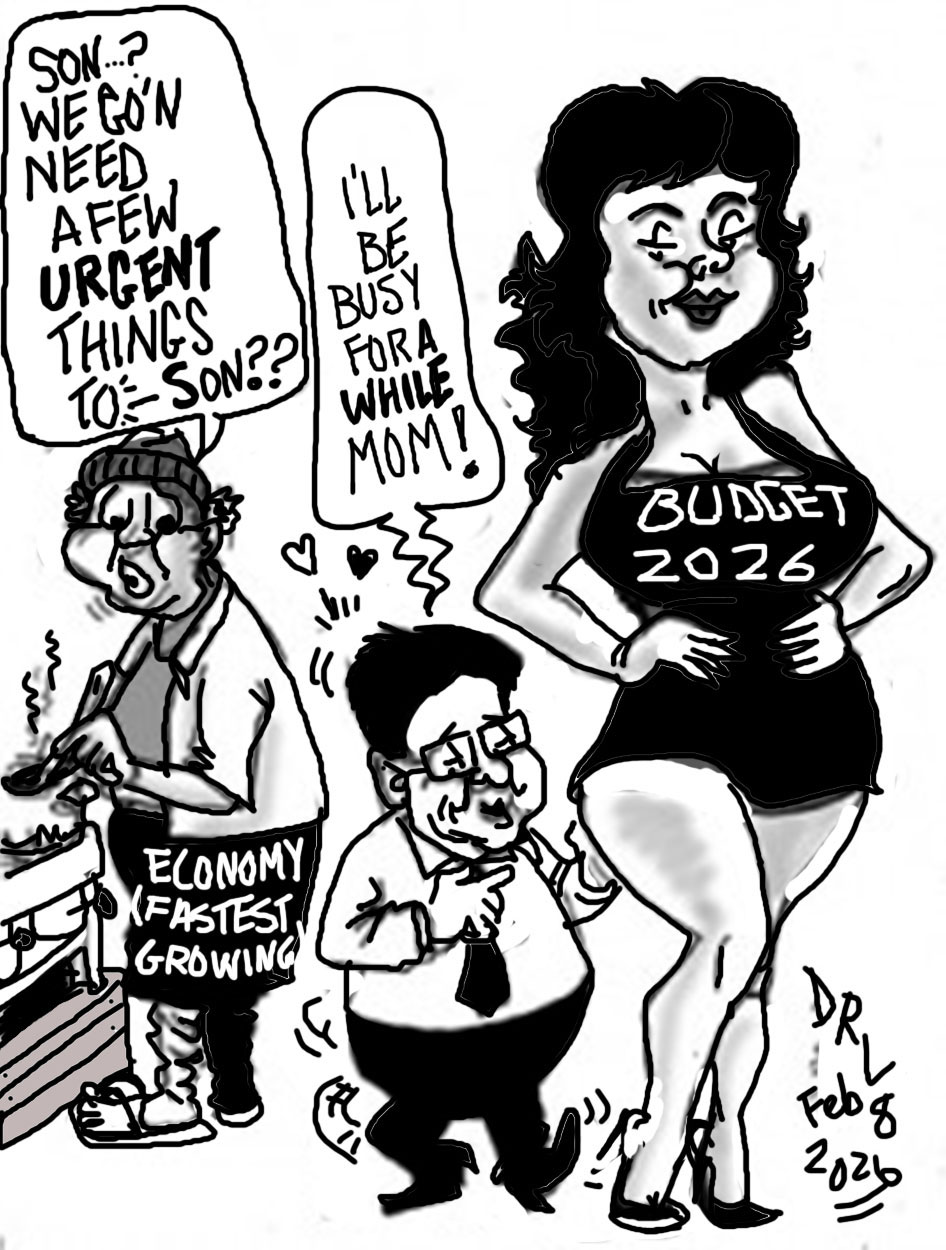
Your children are starving, and you giving away their food to an already fat pussycat.
Feb 13, 2026
(Reuters) – Brothers Justin and Anthony Mosca guided Twenty20 World Cup debutants Italy to their first win in the tournament, as their unbeaten half-centuries secured a dominant 10-wicket...Feb 13, 2026
(Kaieteur News) – When the U.S. Treasury’s Office of Foreign Assets Control (OFAC) designates an individual for corruption or illicit enrichment, assets are frozen, transactions are prohibited, and reputations are shattered. But when political parties had previously received substantial...Feb 01, 2026
By Sir Ronald Sanders (Kaieteur News) – When the door to migration narrows, the long-standing mismatch between education and economic absorption is no longer abstract; a country’s true immigration policy becomes domestic — how many jobs it can create, and how quickly it can match people to...Feb 13, 2026
(Kaieteur News) – Of course, he did. It is no secret that the Mohameds bankrolled the PPP for decades. The numbers vary, but as much as they did, they were never in the tens of millions, but in the hundreds. And before those in the Opposition breathe a sigh of relief now that the WIN’s...Freedom of speech is our core value at Kaieteur News. If the letter/e-mail you sent was not published, and you believe that its contents were not libellous, let us know, please contact us by phone or email.
Feel free to send us your comments and/or criticisms.
Contact: 624-6456; 225-8452; 225-8458; 225-8463; 225-8465; 225-8473 or 225-8491.
Or by Email: glennlall2000@gmail.com / kaieteurnews@yahoo.com