Latest update January 14th, 2026 12:35 AM
Jan 14, 2026 Letters
Dear Editor,
Guyana, West Indian countries (former colonies) and the global south have been victims of imperialism — domination and or control by more powerful countries. Recent actions in Venezuela are described as or likened to imperialism. There are varied explanations, definitions, interpretations of imperialism. Unless one has studied imperialism, a course in international politics at universities in USA, one wouldn’t know the subject matter.
The concept of imperialism is studied in political science, history, sociology, and economics at universities. American public high schools make lessons on imperialism mandatory; in Guyana the concept is not studied, certainly not when I did history for GCE in 1977 and not for CXC.
The first time I read about or became familiar with imperialism was at university post Bachelor’s degree when I studied political science and learned more about it in post graduate studies of other disciplines mentioned above. Guyana’s universities don’t teach the concept except in social science. For all the criticisms leveled at USA, academic freedom is still respected and students at public schools are taught about colonialism and imperialism and a wide array of other concepts, unimaginable in Guyana.
Imperialism, for simplicity, refers to control and or domination of a weaker nation (territory) by a more powerful country for resources and national security reasons. Guyana or its divided counties were governed by empires (Dutch, French, British) from colonisation and freed in 1966. And even after independence, Guyana has still remained a victim of imperialism. (There are variations in definition and explanation). Imperialism was initially characterised by conquest and rule by colonial powers or empires over territories or colonies to access food (including spices) and or raw materials for industrialisation in the mother country or empire.
In the olden days, the empire sent agents to govern the colonies for the benefit of the empire as happened to Guyana and other West Indian territories. During colonial rule, the empires became increasingly wealthy and the territories or colonies became increasingly impoverished. As an example, GDP per capita declined in India during British colonial rule while that of England increased. According to Dr. Shashi Tharoor, India accounted for 23% of global GDP (the largest economy in the world) when Britain took control in 1858; when Britain exited India in 1947, India accounted for just under 3% of global GDP, a significant decline.
Scholars characterise a period of colonial acquisition, even using war as in the scramble for Africa and Asia, in the late 19th and early 20th centuries by Western empires and powerful countries like Germany and Japan, as “New Imperialism”. It was driven by a greater need for raw materials for industrialisation and urbanisation and to lift the standards of living of its people, resulting in conflict among empires over colonies. They all wanted colonies for resources to drive their development and or to grow food to feed their people. It differed from earlier imperialism because it used more advanced technology and gun boat diplomacy than before to acquire and or control territories and extract resources. Militarism was used to secure resources. And Colonisation was referred to as a stage (final phase by the first Soviet ruler Lenin) of imperialism – required study for students in political science.
There have been additional phases of imperialism with former empires and powerful nations using non-traditional means (loans, mortgage, investments) to access and secure resources for their ongoing development. These became the new methods to control former colonies.
After decolonisation, imperialism has taken other forms such as control over resources and their exploitation by multinationals of the former empire. Scholarship also refers to this behavior as “new imperialism”. Some scholars call it neo-colonialism. China acquires resources through loans in Africa, Latin America, Guyana, Sri Lanka, etc. African nationalists call it a new form of imperialism. Then there is the might makes right mechanism to control or access resources — using threats and or brute force; the latter does not succeed for long as it often leads to rebellion, civil war, destruction of a nation as we have observed in the Middle East. New imperialism also refers to economic dominance, using whatever means, over a weak country.
A powerful nation, using military and or economic dominance to control the resources of another nation is also new imperialism. This is done through a legal framework or trade agreements (or other arrangements) between the powerful country and the subjected nation resulting in ‘dependency’ (dependent on powerful powers like the former empire for technology, capital, etc, for development) as in Guyana.
That has been happening post-independence in several nations. The concept of ‘dependency ‘, also taught in American universities, is also described as a form of imperialism or new imperialism. Some scholars also refer to that behavior as neo-imperialism. Larger nations like India, Brazil, South Africa, Saudi Arabia, etc can resist new imperialism. Guyana lacks the wherewithal to push back against new imperialism. We lack technology to advance development. Thus, we have to enter into agreements with big companies (like ExxonM) that have unlimited capital and powerful nations (like USA) for maximum benefits.
Yours sincerely,
Vishnu Bisram
Subscribe to get the latest posts sent to your email.
Your children are starving, and you giving away their food to an already fat pussycat.
Jan 14, 2026
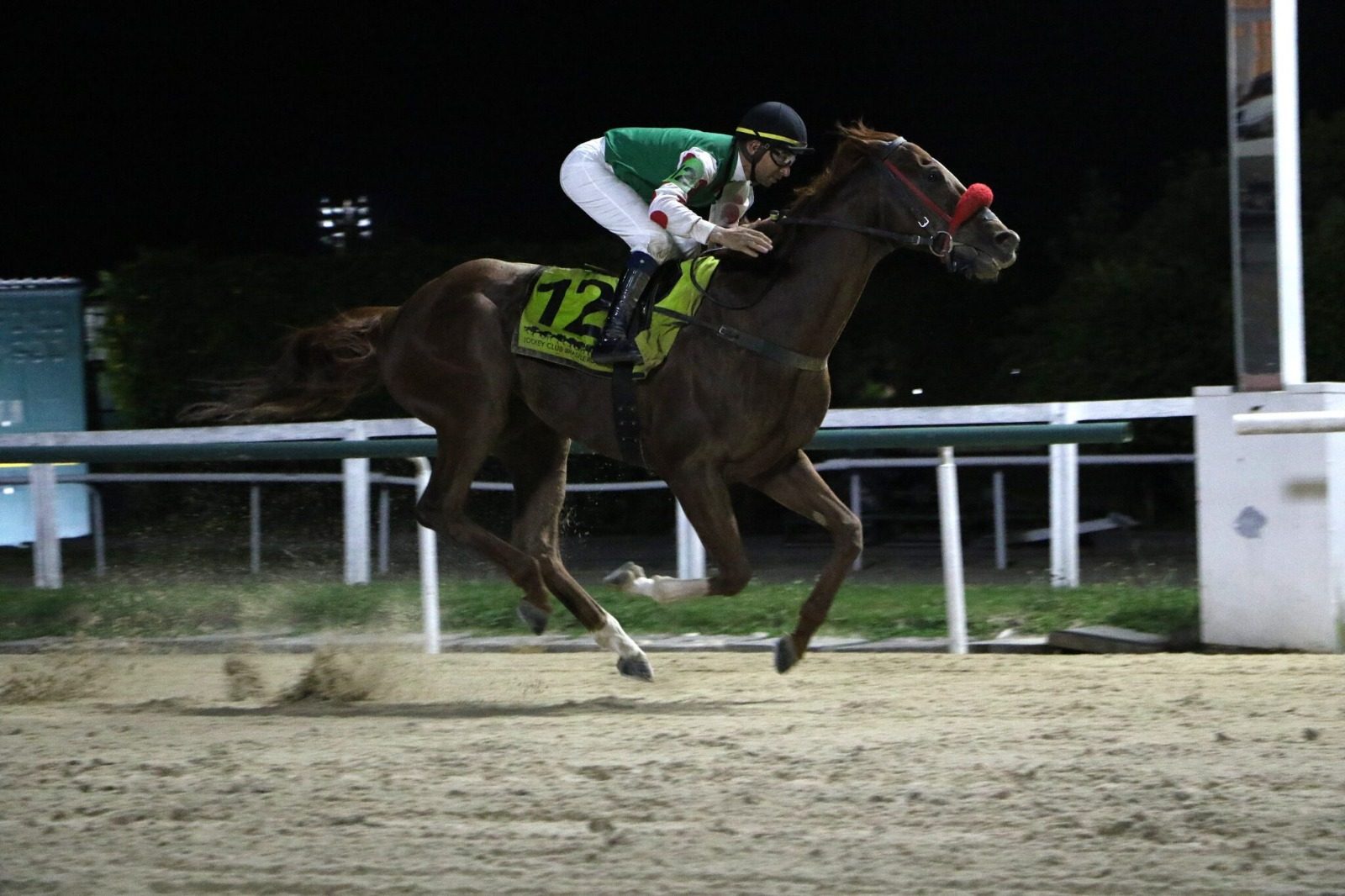
Kaieteur Sports – Slingerz Racing Stable could not have asked for a stronger start to the 2026 racing season, announcing its presence in emphatic fashion with a standout performance at one of...Jan 14, 2026
(Kaieteur News) – In May last year, a US$22.58 million contract was signed for the construction of a 15-megawatt (MW) solar farm in Linden. When completed, it will be the largest solar farm in Guyana. The cost of this project works out to roughly US$1.5 million per megawatt. Observers note that...Jan 04, 2026
By Sir Ronald Sanders (Kaieteur News) – As 2025 draws to a close, the Caribbean Community stands at a moment that calls for less rhetoric and more realism. CARICOM is experiencing a period in which external pressure is intensifying, new norms are hardening among powerful states, and the need for...Jan 14, 2026
Hard Truths by GHK Lall (Kaieteur News) – It is a positive development that embattled PPP Government Minister Susan Rodrigues took her asset portfolio to Pres. Irfaan Ali. According to a Demerara Waves article dated Jan 11. 2026, the president has accepted the minister’s explanation on her...Freedom of speech is our core value at Kaieteur News. If the letter/e-mail you sent was not published, and you believe that its contents were not libellous, let us know, please contact us by phone or email.
Feel free to send us your comments and/or criticisms.
Contact: 624-6456; 225-8452; 225-8458; 225-8463; 225-8465; 225-8473 or 225-8491.
Or by Email: glennlall2000@gmail.com / kaieteurnews@yahoo.com