Latest update September 2nd, 2026 10:50 AM


Latest News
- Commission wraps up site visit, prepares Arthur Chung Conference Centre, Liliendaal for M/V Barima public inquiry
- Opposition leader demands ring-fencing of future Stabroek Block projects
- GGMC to crack down on unauthorised sale and transfer of mining lands
- Govt. denies negligence in Mahdia dorm fire
- Cuban construction worker electrocuted; two others critical after scaffold hits live wire
Is Guyana’s democracy in peril?
Kaieteur News – “Is America heading to a place where it can no longer call itself a democracy?” That was the headline for an article in The Guardian dated June 5. We think it is drawing close to that place, with timely warnings for Guyana.
In America, less than six months after the attempted Capitol Hill coup, the political environment is laden with claims of “stolen election”, Republican blockage of an investigation into the ill-fated insurrection, Senate Republican acquittal of their House impeached former president, and mainly minority voter denial grips state after state. Anxieties abound that the January 6 riot is “a harbinger of systemic decline.” American democracy is under siege, great peril. As if to confirm fears, “Republican-controlled state legislatures have rammed through Bills that make it harder to vote in states such as Arizona, Florida, Georgia, Iowa and Montana.” Texas didn’t follow because of a walkout by Democrats. For these very reasons, it is clear that Republican thinking, Republican help, and Republican influence in efforts towards sensitive Guyanese electoral reform is not the wisest choice by local leaders.
In their book, How Democracies Die, Ziblatt and Steven Levitsky argue that democracies often come under threat not from invading armies or violent revolutions but at the ballot box: death by a thousand cuts. “People use elections to get into power and then, once in power, assault democratic institutions,” Ziblatt said. “Misinformation and conspiracy theories” overwhelm, which is the conclusion of Daniel Ziblatt, a Harvard University political scientist. He emphasised that “it’s not just about one person but…broader structural issues.” As The Guardian observed, the former president’s men “are maneuvering to serve as elections official in swing states such as Arizona, Georgia, Michigan and Nevada. If they succeed in becoming secretaries of state,” more moderate Republican secretaries of state would be gone and political mischief the norm. Just like we had here for five months at GECOM. There would be no principle restraining mind or hand.
Hungary’s Viktor Orbán, Turkey’s Recep Tayyip Erdoðan, and Venezuela’s Hugo Chávez [in Venezuela] benefitted from such anti-democratic mischiefs. Ziblatt added, “We shouldn’t overlook that fact that we had a change in government in January. What that suggests is our electoral institutions do work better than they do in Hungary.” Guyana’s then PPP opposition was better organised, financed, and backed than the Hungarian or Turkish opposition, so it triumphed. Today’s APNU+AFC coalition is still figuring what it is all about, and whether it is even interested in assuming and living up to the mantle of what it is to be a viable democratic opposition, one that is well-regarded, and justifies any trust that is placed in both leaders and group. One of the concerns always lurking here is the specter of political tribalism taking a violent turn. The reality is that Guyana’s opposition, like the American Republicans, does not have the numbers that lend to clean electoral victory. Further, it is not making any concrete steps at winning hearts, and changing minds. Unless, it is contented, therefore, to be an eternal runner-up, with no meaningful prize, then impatient elements may be tempted to take matters in their own hands, and for the worse. If this was what was tried in America, of all places, and came perilously close to gaining the upper hand, then Guyana, with its fragile institutions and shaky communities, does not look too promising in its future electoral prospects.
To put our best foot forward to defend against this, it is compulsory that whatever electoral reform measures are put into place be robust, as foolproof as can be, and accepted beforehand by as the widest social, political, racial, and national following. If we do not, then we could be setting ourselves to get to that place, the head of the progressive group Democracy for Action, envisioned: “We’re getting to the place where we might not be able to call ourselves a democracy anymore. That’s how dire it is.” This would be even more devastating to this country since, unlike the United States of America, we barely know what is involved in a democracy, such has been the limits of our exposure to the genuine aspects of it, and the briefness of our association with its bona fides.
Share this:

Discover more from Kaieteur News
Subscribe to get the latest posts sent to your email.
Similar Articles
Website Hits

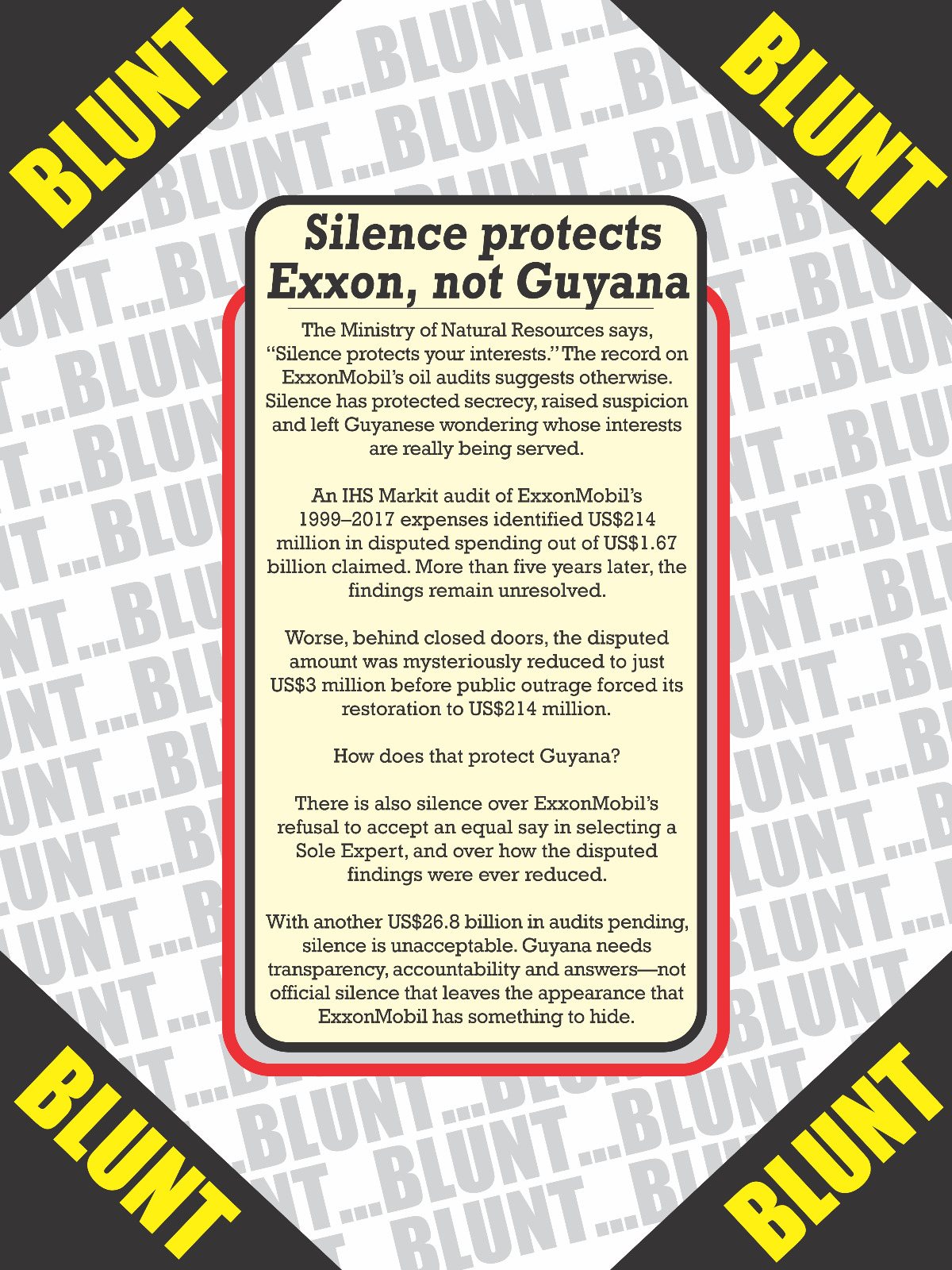
Blunt of the day
Sports

Features/Columnists

Sir. Ronald Sanders

The GHK Lall Column

Weekend Cartoon


