Latest update October 18th, 2026 10:40 AM



US-CHINA TRADE WAR ESCALATES
 On September 13, 2018, President Trump imposed tariffs of US$200 billion on Chinese goods entering the United States. It was no surprise. During the 2016 presidential election campaign, Trump had made it clear that he would impose tariffs to punish China for its unfair trade practices.
Although he made good on his threat, trade wars, especially between two major powers have always affected stock markets around the world, including the Wall Street, which has fallen by almost eight percent in the last few days.
The US first imposed US$50 million tariffs on imports from China earlier in the year and China retaliated. President Trump upped the ante with an additional $200 billion of tariffs on China’s goods, and China responded with tariffs of US$60 billion on American goods.
However, economists have opined that China cannot win a trade war with the U.S. It has only US$20 billion in tariffs left to impose on American goods, while the Trump administration has a further US$267 billion in tariffs to impose on Chinese imports.
Although China has only a few tariff options left, it could still make it difficult for the U.S. It currently holds US$1.3 trillion of US Government bonds, which makes it America’s largest single creditor. But it would be unwise for China to get rid of some of these bonds, because it would have a negative impact not only on the US economy but also its own and the international financial markets.
Trump’s unorthodox approach is inconsistent to the international system. Since the creation of the General Agreement on Tariffs and Trade (GATT) in 1948, countries have used tariffs only as a last resort when all efforts to resolve trade disputes through negotiation failed.
The elaborate dispute settlement mechanism of the World Trade Organization (WTO) was created precisely to avoid tariff wars. But President Trump has shown disdain for the WTO and has threatened withdraw the U.S. from it unless it improves. It takes an average of two years for the WTO to resolve a dispute and longer if the decision is appealed.
The high-profile meeting between President Trump and China’s president, Xi Jinping, in April last year yielded little. Mr. Trump has grown impatient with China. He blamed his predecessors for not confronting China, which he claims was unrealistic because China’s problem is real. Whatever some may think of Mr. Trump’s unorthodox management style, his undiplomatic posturing or his belief in putting America first, his insistence on a level playing field with China and the European countries is not without merit. China is the world’s largest exporter of goods, with a total of US$2.3 trillion in 2017.
However, his assertion that China imposes extremely high tariffs on imported American products to China is not true. China’s weighted tariff on imported American goods is 5.4 percent compared with US weighted tariff of 3.0 percent on imports from China.
China has restricted foreign access to its financial markets and other critical segments of its economy. It has deliberately suppressed the value of its currency in order to make imports more expensive and exports more profitable.
Unlike the U.S., China does not have an open, market-driven economy. State-owned enterprises account for more than 35 percent of its production and they receive direct and indirect subsidies and other commercial benefits from the government that allow them to compete advantageously with global competitors.
It is difficult to predict how this trade war between the U.S and China war will play out. But trade wars are usually injurious to its combatants. Trade wars have restricted trade which, in turn, has hurt the investments and jobs that produced the traded goods.
Share this:

Discover more from Kaieteur News
Subscribe to get the latest posts sent to your email.
Similar Articles
Website Hits

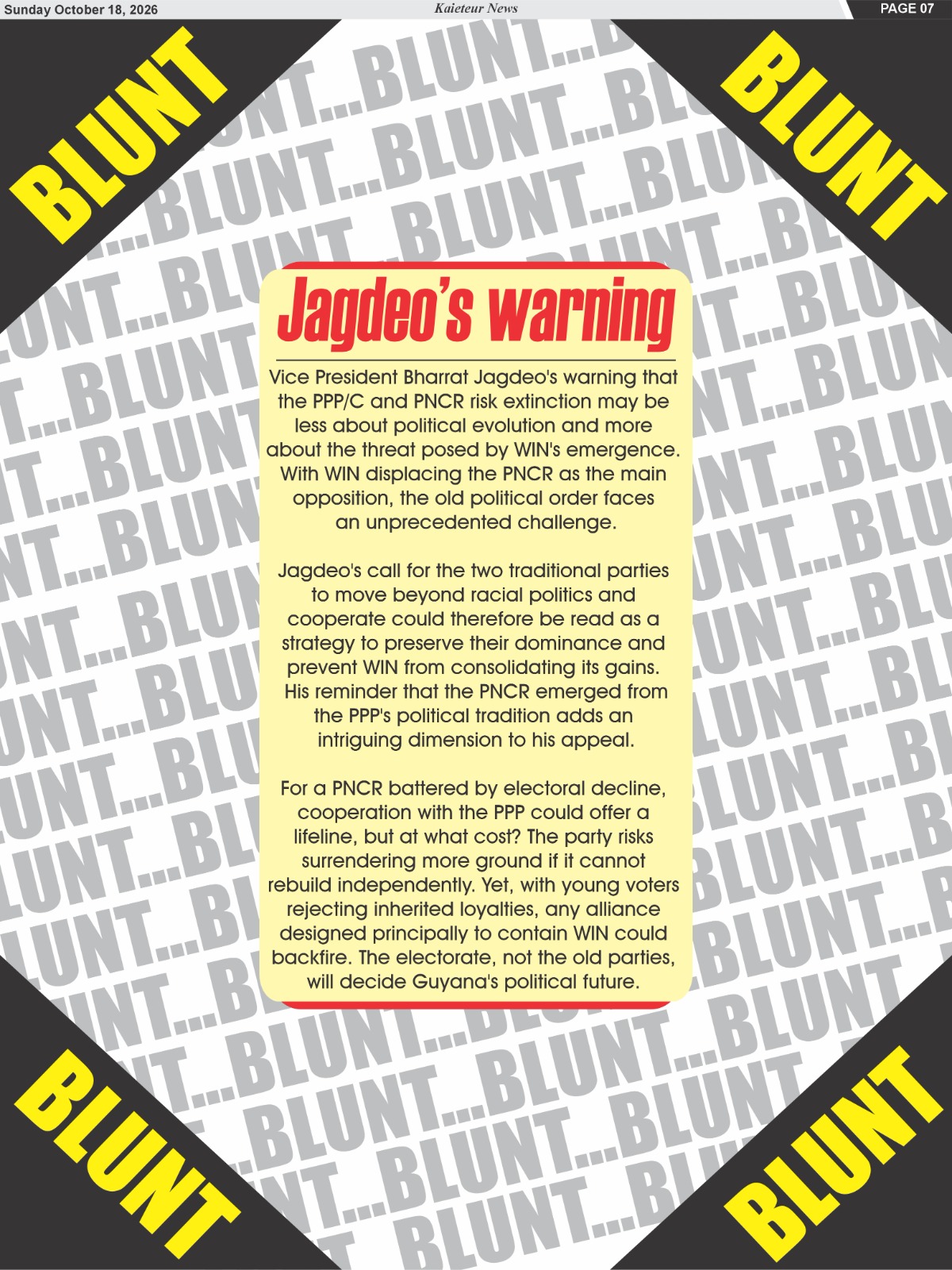
Blunt of the day
Sports

Features/Columnists

Sir. Ronald Sanders

The GHK Lall Column

Weekend Cartoon


