Latest update October 16th, 2026 10:24 AM



Latest News
- Ivor English applies for mining permit renewal after Govt. claimed no involvement in sector
- “Old technology of eyeballs” hampered night search for MV Barima survivors
- Guyana bids final farewell to Robert Corbin
- Jagdeo warns PPP, PNCR face extinction if they fail to adapt
- Man wanted by INTERPOL nabbed in Lusignan
Tax haven for foreigners
(Kaieteur News) – Guyana’s oil wealth is transforming the country, but the question of who benefits most from that transformation remains unsettled. Now, as the United States calls for more tax incentives and other concessions for its companies seeking to enter the Guyanese market, the Government must confront a fundamental question: how much more must Guyana give away to attract investors, and what guarantees exist that the country will receive a fair return?
U.S. Ambassador to Guyana Nicole Theriot’s appeal for additional incentives for American firms must be examined against the background of the extraordinary concessions granted to ExxonMobil and its partners under the 2016 Production Sharing Agreement (PSA).
At a business luncheon hosted by the Guyana Manufacturing Services and Association (GMSA), Theriot acknowledged the Government’s efforts to introduce incentives for local businesses. She nevertheless pointed to obstacles confronting American companies, including high energy costs, logistical challenges, access to land and skilled workers, and what she described as an onerous and unpredictable tax regime.
These are legitimate concerns. Guyana cannot expect to attract and retain serious investors if the cost of doing business remains unnecessarily high, infrastructure is inadequate and the regulatory environment is unpredictable. A diversified economy requires investment beyond the petroleum sector, and American companies could contribute significantly to manufacturing, technology, services and employment.
However, the call for additional tax concessions raises an important issue of fairness. If local businesses require incentives to expand, and foreign companies want similar assistance to establish themselves, the Government must ensure that these arrangements produce measurable benefits for the country. Incentives should not become an open-ended exercise in accommodating investors while the public assumes the cost.
The ExxonMobil arrangement offers a particularly troubling example of the consequences of an overly generous fiscal bargain. Under the 2016 PSA, ExxonMobil Guyana Limited and its affiliates are exempt from a range of taxes and charges associated with petroleum operations. The agreement provides for the Government to pay taxes on the companies’ behalf, allowing them to receive tax receipts without making those payments directly from their own funds.
ExxonMobil has disclosed that US$1.1 billion in taxes was paid to the Guyana Revenue Authority in 2025 under this arrangement. That figure may appear impressive, but the public must understand the distinction between taxes paid by the companies themselves and taxes paid by the Government on their behalf. The latter arrangement effectively draws on Guyana’s petroleum revenues to satisfy the tax obligations.
Ambassador Theriot correctly observed that ExxonMobil is operating under an agreement made with the Government of Guyana. She also acknowledged that the company was not simply avoiding its obligations under that agreement. But the fact that a contract was signed does not mean its terms should never be scrutinised, particularly when the country’s circumstances and the scale of its petroleum industry have changed dramatically.
Attorney and chartered accountant Christopher Ram has argued that the agreement should be renegotiated, including provisions for the company to file and pay its own taxes and for a defined period on any tax waiver. He has also called for an increase in the royalty rate from the existing two per cent.
With Guyana producing approximately 900,000 barrels of oil daily from four projects in the Stabroek Block, the Government must continually assess whether the country is receiving an adequate return from its natural resources.
There is also a lesson here for the treatment of prospective investors. Guyana should not automatically reject tax incentives, but neither should it grant concessions simply because investors request them. Every incentive must be justified by its economic value, its duration and its contribution to national development.
The Government must establish transparent, predictable and equitable rules that encourage investment while protecting public revenue. It must also address the practical obstacles identified by the Ambassador, particularly energy costs, infrastructure and workforce development.
Guyana needs American investment, but it also needs strong local businesses, better-paying jobs and sustainable public revenues. The objective must be to attract investors who contribute to the country’s development, not to compete with other nations by offering increasingly generous concessions.
The time has come for a more balanced approach. Guyana’s resources are too valuable, and its development needs too urgent, for investment policy to be reduced to a contest over who can offer the biggest tax break. Investment must benefit Guyana, not merely the investors who come here.
Share this:

Discover more from Kaieteur News
Subscribe to get the latest posts sent to your email.
Similar Articles
Website Hits

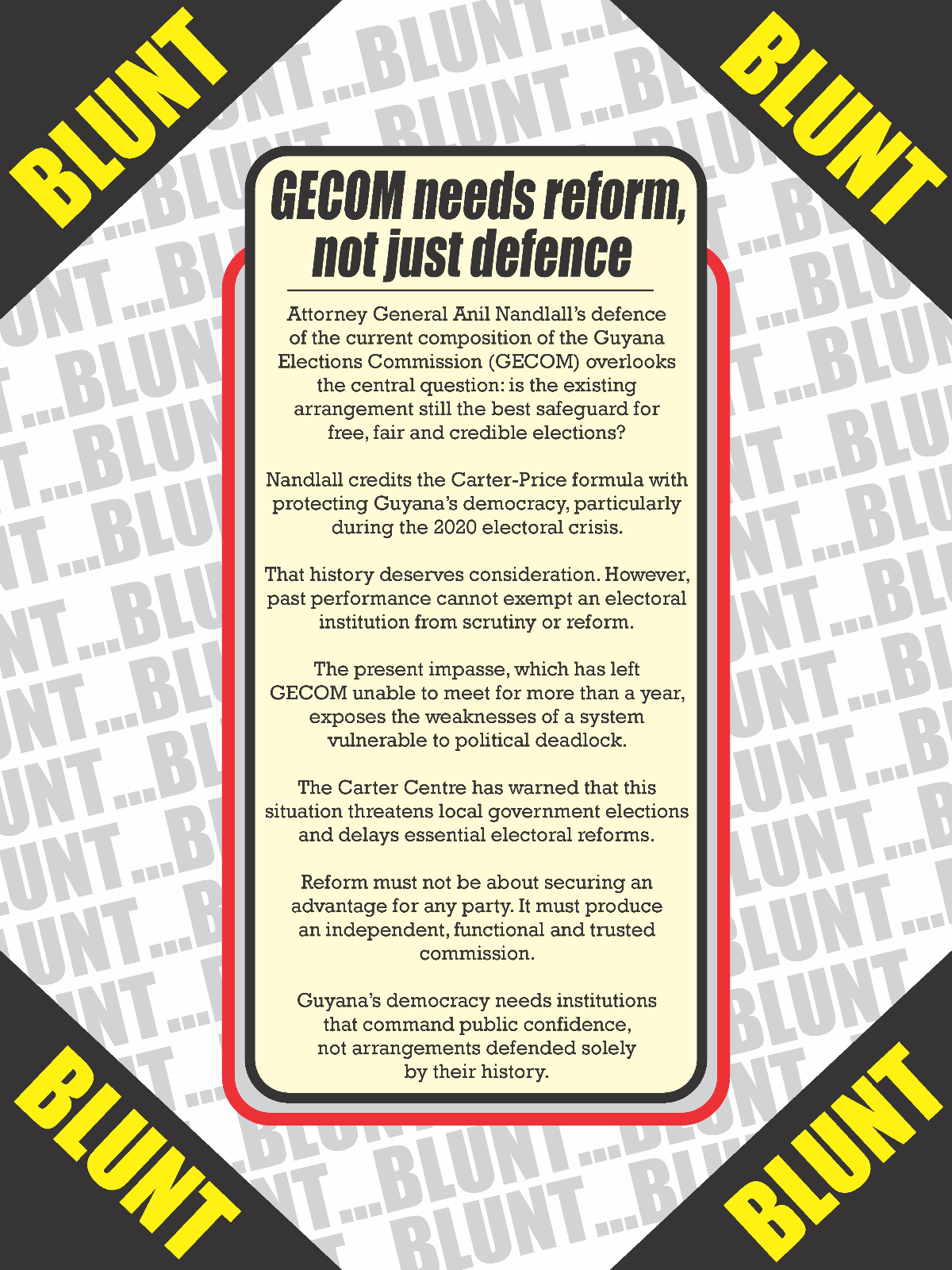
Blunt of the day
Sports

Features/Columnists

Sir. Ronald Sanders

The GHK Lall Column

Weekend Cartoon