Latest update November 2nd, 2026 10:20 AM



Latest News
- Outrage over death of man in police custody
- Authorities silent for days after diver dies during MV Barima salvage operation
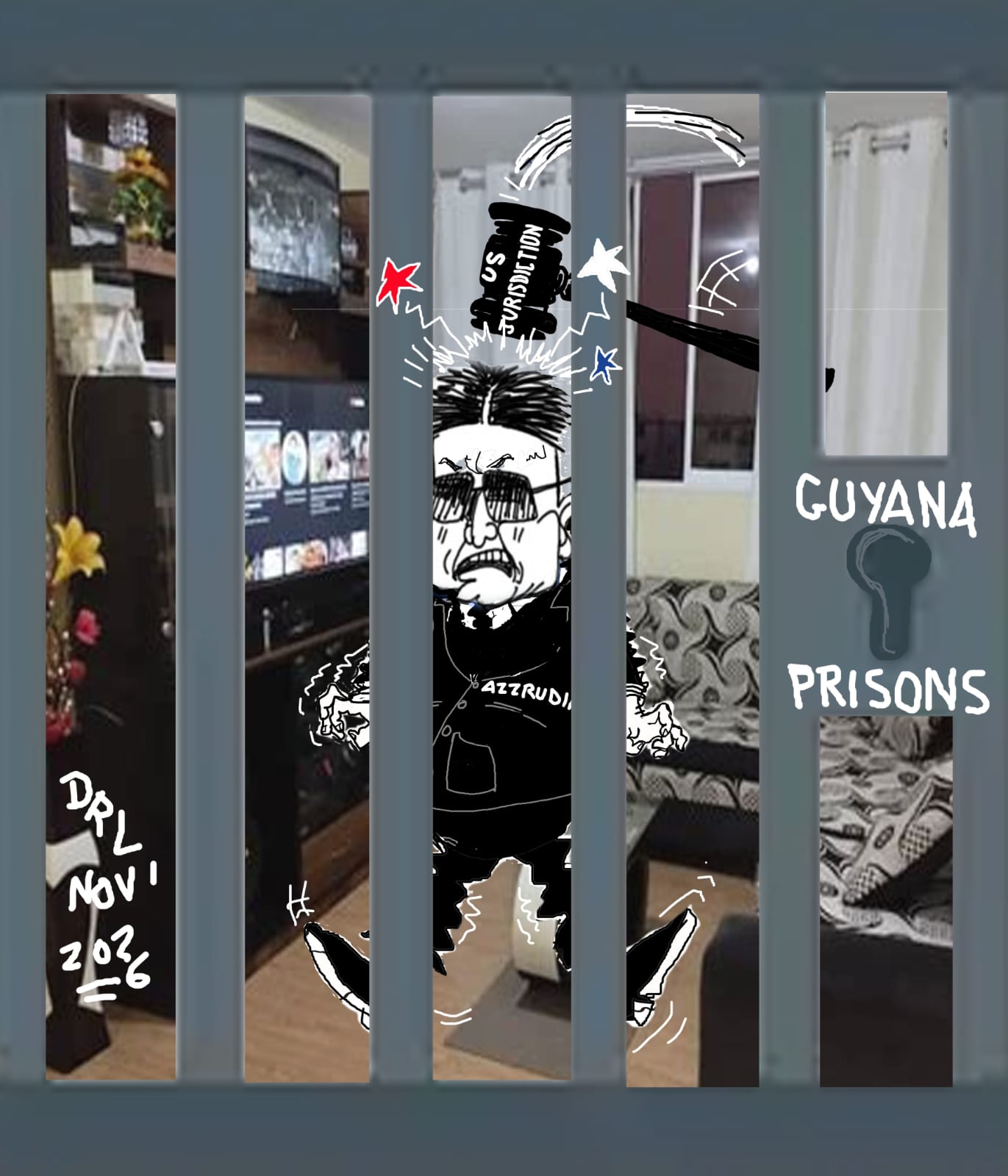
- Family fears for opposition leader’s safety, calls for his release
- Trump White House maps path to govern without Congress if Democrats win
- Indigenous leaders condemn exclusion from biodiversity talks, demand land rights
ADHD: “Here’s how I Know You Have ADHD”
By Dr. Telford Layne Jr. PsyD, MSc. Postgrad, BSc.
Part 1 of 5
(Kaieteur News) – When schools refer students to my clinic for behavioural and academic challenges, eight of ten times after assessment and diagnosis, the child has ADHD. That’s when parents (especially mothers) in their 30’s and 40s also discover they too have ADHD. “You bright, but you careless.” “Why you can’t sit still?” “You always forget something!” In Caribbean homes, classrooms and workplaces, these statements can attach shame to difficulties care. Individuals with ADHD, intelligence is always above average.

Dr. Telford Layne Jr.
Attention-deficit/hyperactivity disorder is a neurodevelopmental Disorder involving persistent, impairing difficulties with attention regulation, hyperactivity- impulsivity. It affects planning, organization; time management and task completion. There are three clinical presentations, which can change over time. There is no cure. Only 5% of children grow out of ADHD the rest live on with it. ADHD symptoms need to be present before age 12. Ninety percent of children with ADHD acquire it from one of their parents. The other 10% from premature birth, problematic pregnancy, or significant stress environment surrounding early after birth.
Predominantly Inattentive Symptoms: Those under age 16 need 6 of the nine symptoms while those above age 17 need 5.
- Overlooking details or making avoidable errors: Missing questions on an examination or entering incorrect information despite understanding the task.
- Struggling to sustain attention: Losing focus during lessons, conversations, reading or lengthy assignments.
- Appearing not to listen when addressed directly: Seeming mentally elsewhere, even without an obvious distraction.
- Failing to follow through: Starting instructions, chores or work duties but becoming sidetracked and leaving them incomplete.
- Having difficulty organizing: Struggling with task sequences, belongings, time management and deadlines.
- Avoiding or resisting sustained mental effort: Repeatedly postponing lengthy reading, reports, homework or paperwork.
- Losing necessary belongings: Misplacing schoolbooks, tools, keys, glasses, phones or documents.
- Becoming easily distracted: Having attention pulled away by surrounding activity or, especially in adults, unrelated thoughts.
- Forgetting everyday responsibilities: Missing appointments, errands, bill payments or promised tasks. Poor time management.
Predominantly Hyperactive-Impulsive Symptoms: Those under age 16 needs 6 of the nine symptoms while those above age 17 needs 5.
- Fidgeting or squirming: Repeatedly moving hands, feet or the body while seated.
- Leaving the seat unexpectedly: Getting up when remaining seated is expected.
- Running or climbing in unsuitable situations: In adolescents and adults, this appears mainly as pronounced restlessness.
- Struggling with quiet leisure: Finding it difficult to play or participate in recreational activities quietly.
- Being constantly active: Having difficulty remaining still for extended periods, as though compelled to keep moving.
- Talking excessively: Speaking substantially more than the situation requires.
- Answering prematurely: Responding before a question is completed or finishing another person’s sentences.
- Having difficulty waiting: Struggling to wait a turn in conversation, games or queues.
- Interrupting or intruding: Entering others’ conversations, cutting off others in mid conversation, or activities, taking over tasks, or using belongings without permission.
Combined presentation persons meet all two of the thresholds
ADHD in males
Boys are more often recognized because hyperactivity and impulsivity attract attention. A boy might leave his seat, interrupt lessons, lose homework or act before thinking. Adults call him “hard ears,” although his difficulties require more careful understanding. Quiet, inattentive boys can also be overlooked.
During adolescence, increasing academic demands expose difficulties with planning and deadlines. In adulthood, obvious running and climbing may become internal restlessness, impatience, constant activity or difficulty relaxing. Forgetfulness, unfinished tasks and impulsive decisions may affect employment, finances and relationships.
ADHD in Females
Girls may be overlooked when their difficulties appear as daydreaming, disorganization or quiet overwhelm. Some compensate through perfectionism, compliance and extensive preparation. Others are visibly hyperactive or impulsive.
A girl, who managed through parental reminders, would struggle when university employment, household responsibilities or parenting demand more independent organization. A capable woman may privately feel she is constantly catching up. Anxiety or depression may receive attention while longstanding ADHD remains unrecognized.
Some women experience worsening concentration, irritability and emotional regulation before menstruation, sometimes continuing into their period. Hormonal fluctuations contribute, while pain and disrupted sleep add difficulties. Perimenopause and menopause: women also report worsening forgetfulness and overwhelm during this transition. Hormonal changes; sleep disruption and mood symptoms interact with existing ADHD.
Co-occurring conditions
Comorbidity means having more than one condition. ADHD coexists with the following conditions. A person can have 2 or these conditions while other can have all of their conditions.
Autism spectrum disorder: Developmental differences in social communication alongside restricted or repetitive behaviours, interests or sensory patterns. Both conditions can involve executive-function and social difficulties, but autism and ADHD require separate diagnostic consideration. About 40% of individuals with ADHD also have autism.
Specific learning disorders: persistent difficulties in reading, written expression or mathematics, often described as dyslexia, dysgraphia and dyscalculia. ADHD disrupt learning through inattention; a learning disorder involves additional, specific academic skill difficulties. Both may coexist. About 46% of individuals with ADHD also have autism
Oppositional defiant disorder: A persistent pattern of angry or irritable mood, argumentative or defiant behaviour, or vindictiveness. It occurs more frequently alongside ADHD. About 60% of individuals with ADHD also have Oppositional Defiant Disorder
Conduct disorder: A repeated pattern of violating others’ rights or major rules, including aggression, theft or property destruction. It can coexist with ADHD; ordinary impulsiveness alone does not establish it. About 39% of individuals with ADHD also have Conduct Disorder
Anxiety disorders: Excessive fear or worry that interferes with life. Anxiety can cause restlessness and poor concentration, resembling or intensifying ADHD. About 50% of individuals with ADHD also struggle with anxiety
Depressive disorders: Persistent low or irritable mood and/or loss of interest, often with changes in energy, sleep and concentration. Depression can coexist with ADHD and needs its own assessment. About 53% of individuals with ADHD also have depression
Bipolar disorder: Distinct episodes of mania or hypomania, often alongside depression. Distractibility, rapid speech and impulsivity overlap with ADHD. Episodic changes in mood and energy, particularly reduced need for sleep, help distinguish bipolar illness from longstanding ADHD patterns. About 60% of individuals with ADHD also have bipolar disorder
Share this:

Discover more from Kaieteur News
Subscribe to get the latest posts sent to your email.
Similar Articles
Website Hits

Blunt of the day

Sports

Features/Columnists

Sir. Ronald Sanders

The GHK Lall Column

Weekend Cartoon