Latest update September 21st, 2026 2:51 PM


Latest News
- Three killed in Baramita clash
- Defense accuses Police of misrepresenting court testimony, Magistrate says court unfazed by media
- Mohamed alleges political hand behind review of Justice Persaud’s U.S. visa
- ‘Stop blaming ‘sanctity of contract’ for keeping 2016 oil deal – Chris Ram tells Pres. Ali
- Iran and U.S. trade threats after Houthi attacks escalate regional conflict
Building Guyana’s Future Through STEM: Education, Innovation and the Road Ahead
By Dr. Karen Abrams, MBA AA
(Kaieteur News) – Guyana has entered the 21st century with an extraordinary economic opportunity. Oil has expanded the country’s financial possibilities and created expectations of new industries, better infrastructure, higher wages and improved living standards. Yet beneath all this optimism lies a fundamental question: who will have the skills to build, operate and eventually own this new Guyanese economy?
Oil can make a country richer, but it cannot, by itself, make its people more capable. That distinction matters because Guyana is attempting to build a modern economy while carrying deep educational inequalities into the future. A child growing up with educated parents, reliable internet, private lessons and access to technology experiences a very different educational environment from a child in a remote community or low-income household. Our assessments repeatedly warn us that too many children who begin behind remain behind.

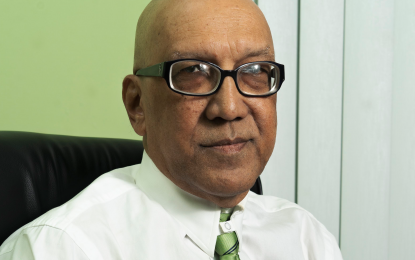
Director of STEM Guyana, Karen Abrams
This is especially dangerous for a country with Guyana’s small population. As jobs expand in engineering, energy, information technology, logistics, environmental monitoring, automation and advanced manufacturing, companies will require specialised skills. If enough Guyanese do not possess those skills, the positions will still be filled, but increasingly by imported professionals. Meanwhile, lower-skilled Guyanese may face greater competition from migrant labour for the jobs available at the bottom of the economy.
Education must therefore be understood as economic infrastructure. Roads, bridges, ports and power plants matter, but so do educated people. Guyana cannot import its way into sustainable development forever. Guyanese must eventually be capable of designing systems, programming machines, managing energy infrastructure, analysing data, building companies and solving the problems upon which the country’s future depends.
What STEM Education Really Means
STEM stands for Science, Technology, Engineering and Mathematics, but meaningful STEM education is broader than teaching four separate subjects. It allows students to combine knowledge and apply it to real problems.
Imagine students designing an irrigation system during an El Niño drought. They must understand plants, soil and water. They use mathematics to calculate flow rates, engineering to design the system, electronics to measure soil moisture and programming to determine when irrigation should begin. Suddenly mathematics, science and coding have a purpose, and students begin to understand that knowledge is something human beings use to solve problems. STEMGuyana students are doing this today.
This is also why robotics and coding matter. The objective is not to produce thousands of professional roboticists. Robotics teaches children to think, test, diagnose, collaborate and try again. A robot does not care whether a student believes the programme should work. It either works or it does not, and failure becomes information rather than humiliation.
The evidence supports this approach. A 2024 meta-analysis of educational robotics in STEM found positive effects on students’ knowledge, skills and attitudes. A larger 2026 meta-analysis covering 58 studies and 5,806 learners also reported meaningful improvements in cognitive and emotional learning outcomes. More importantly, hands-on STEM education builds technical competence while encouraging persistence, confidence and problem-solving.
At STEMGuyana, we want children building with technology rather than merely consuming it. A student may begin with basic coding, progress to robotics and electronics, and eventually develop systems that monitor soil moisture, rainfall, flooding or water quality. Our children should be working on our region’s problems: agriculture during drought, drainage and flood monitoring, renewable energy, healthcare, etc.
Preparing Children for an Uncertain Future
Artificial intelligence has made this mission even more urgent. No one can confidently predict the labour market today’s children will enter. Some jobs will disappear, others will change, and new professions will emerge. The U.S. and China lead in developing innovations in artificial intelligence, which will affect jobs across the globe. China launched an “AI Plus Education” initiative, aiming to integrate artificial intelligence (AI) into classrooms from an early stage as the country accelerates efforts to develop the technology and adapt its economy to an increasingly digital future. By 2030, China aims to establish a comprehensive AI education system that spans all levels of schooling and extends to the broader public, their Ministry of Education reported.
Countries building the future understand that technological strength begins with education.
Guyana must teach children how to learn, think and adapt. Information will become abundant, but young people will still need to ask intelligent questions, evaluate answers, communicate ideas, work with others and exercise sound judgement. Curiosity, creativity, leadership, ethics, collaboration, resilience and adaptability are sometimes called “soft skills.” There is nothing soft about them. In an uncertain technological future, they may be among the hardest abilities to replace.
Every Guyanese child does not need to become a programmer or engineer, but every child deserves meaningful exposure to science, technology, engineering, mathematics, coding and problem-solving. Why? because STEM exposure is no longer only preparation for technical careers. It develops the abilities every child will need to participate confidently in a society increasingly shaped by technology.
A child who learns coding does not have to become a programmer, just as a child who studies Mathematics does not have to become a mathematician. Coding teaches logic, sequencing, persistence and how to break a difficult problem into smaller parts. Engineering teaches children to design, test, fail, improve and try again. Science teaches them to question claims and examine evidence. Mathematics strengthens reasoning, while hands-on problem-solving teaches them how to apply knowledge in unfamiliar situations.
These skills matter in agriculture, healthcare, business, construction, education, public service and everyday life. They also help young people understand the technologies and automated systems that will increasingly influence their employment, finances, privacy and access to opportunity.
Guyana needs trained teachers, functioning laboratories, community STEM clubs, ambitious competitions, private-sector mentors and technology that connects hinterland, rural, urban and vulnerable students to opportunities which are mainly concentrated on the coast. Most importantly, we must identify struggling children early and intervene before another assessment simply confirms that they have fallen further behind.
The great challenge of Guyana’s oil era is not simply how much oil we produce or how much money enters the Natural Resource Fund. It is what kind of people we develop while the oil is flowing. Oil is finite. Human capability is renewable.
Share this:

Discover more from Kaieteur News
Subscribe to get the latest posts sent to your email.
Similar Articles
Website Hits

Blunt of the day

Sports

Features/Columnists

Sir. Ronald Sanders

The GHK Lall Column
Weekend Cartoon