Latest update September 21st, 2026 2:51 PM


Latest News
- Three killed in Baramita clash
- Defense accuses Police of misrepresenting court testimony, Magistrate says court unfazed by media
- Mohamed alleges political hand behind review of Justice Persaud’s U.S. visa
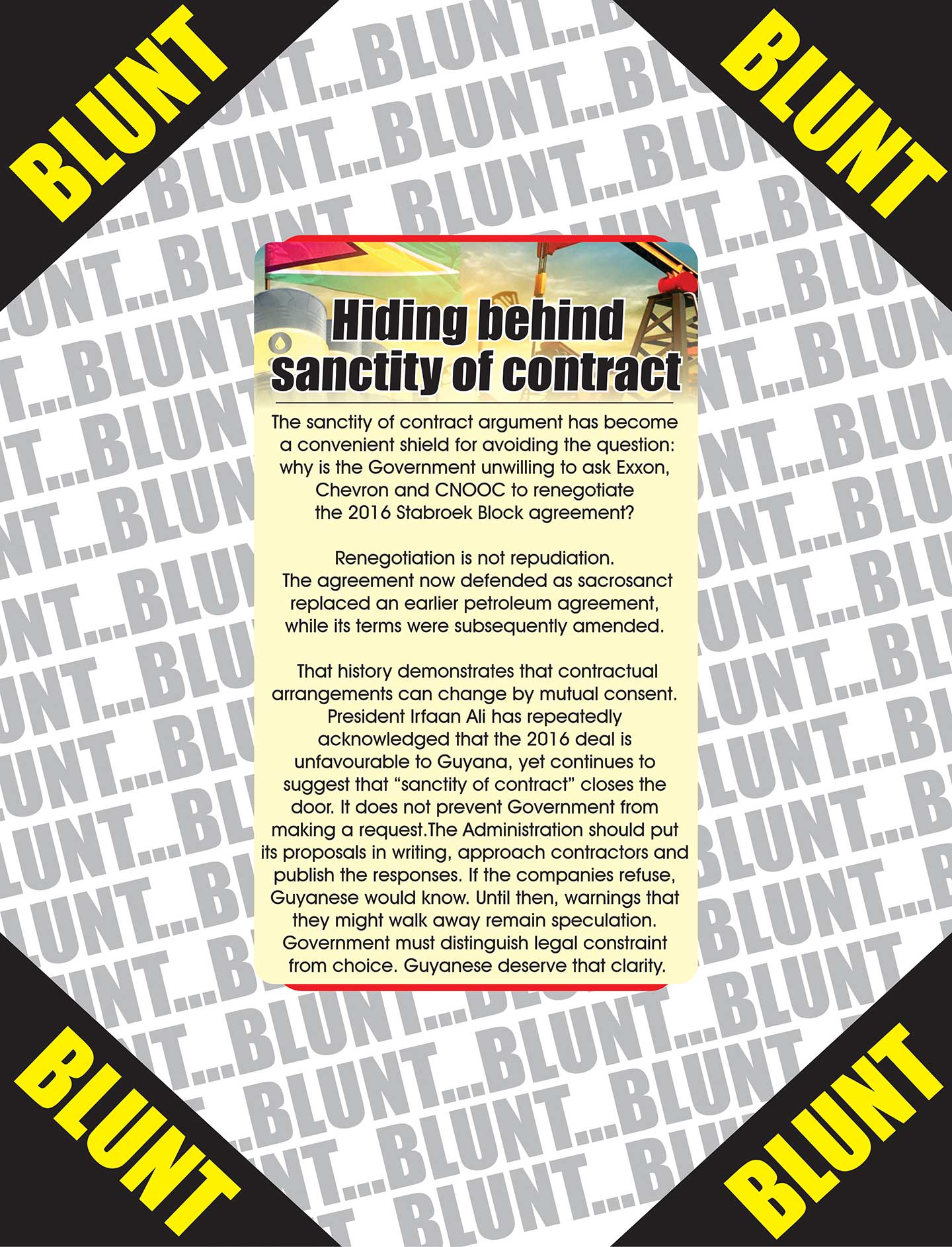
- ‘Stop blaming ‘sanctity of contract’ for keeping 2016 oil deal – Chris Ram tells Pres. Ali
- Iran and U.S. trade threats after Houthi attacks escalate regional conflict
Political Negligence: The Psychological Cost
By Dr. Telford Layne Jr. PsyD, MSc. Postgrad, BSc.
(Kaieteur News) – Political neglect is just as devastating as emotional neglect. MV Barima went down killing over 100 Guyanese because of political neglect, so was the Mahdia fire. The health care system. The road accidents. Political neglect is fuel by greed and corruption, administrated by mentally ill political groups. From 1966 Guyanese are in a state of survival mode; emotionally dysregulated and hijacked nervous system. The result, a broken society accepting mistreatment with no sense of self preservation.
Race is not merely a difference among Guyanese people; it was deliberately organised into a system of labour, power and economic control. Colonialism assigned human value according to colour, ancestry and usefulness to the plantation economy. Racism became a means of conducting business and governing Guyanese society from independence. It shaped where people lived, their work, the opportunities available and the groups they were taught to fear. The psychological architecture of colonialism remained. Political loyalty became entangled with ethnic identity, and elections feel like struggles for racial survival.

Dr. Telford Layne Jr.
At the turn of the twenty-first century, Guyana’s dominant mode of business increasingly evolves from overt racism into systemic corruption. Race did not disappear; it remained available as a powerful instrument for mobilising fear and loyalty. But corruption expanded across ethnic boundaries, connecting political influence, public contracts, natural resources, personal enrichment and access to state services.
In this environment, political negligence is understood as one of the greatest threats to Guyanese life. It does not always kill dramatically or immediately. It kills through unsafe roads, weak public systems, delayed medical treatment, preventable accidents, inadequate schools, neglected communities, poverty, hopelessness and the steady migration of skilled citizens. It also injures psychologically, creating a population that expects disappointment and learns to survive without trusting the institutions established to protect it.
Negligence as Structural Violence
Political negligence occurs when leaders possess the authority, information and resources to protect citizens but repeatedly fail to act responsibly. It includes ignoring warnings, postponing maintenance, weakening professional standards, tolerating incompetence and allowing political loyalty to replace accountability.
When such failures become normal, negligence turns into structural violence. No single person appears to have pulled a trigger, yet people are harmed because systems were not designed, funded or managed with human life as the priority. A child injured on an unsafe road, an elder unable to obtain timely healthcare, or a family trapped in an unhealthy community experiences the consequences of political decisions.
Negligence communicates a devastating psychological message: “Your life is not important enough for us to plan carefully, act promptly or accept responsibility.” This message damages national self-worth.
Psychological Cost to Human Development
Children are among the first casualties of political negligence, their development depends upon stable families, safe communities, reliable schools, adequate nutrition and accessible healthcare. With these weak foundations, Guyanese children grow up in prolonged states of uncertainty.
Chronic uncertainty activates the stress-response system. A child who is repeatedly exposed to poverty, community violence, unsafe transportation, family instability or poorly resourced schools may become hypervigilant. The brain learns to prepare for danger instead of concentrating on learning, creativity and healthy relationships.
This can appear as aggression, withdrawal, anxiety, poor concentration, emotional outbursts or apparent disrespect. Adults may punish the behaviour without recognising the distress beneath it.
Political negligence damages children by exhausting their parents. Adults struggling with unemployment, low wages, inadequate services and constant financial pressure may become emotionally unavailable. Parents turn to alcohol, substances, gambling, violence or harsh discipline. Their children then inherit emotional wounds created not only inside the family but also by the conditions surrounding it.
A neglected child eventually becomes an angry adolescent, a fearful adult or a parent who repeats what was done to them. Just like our politicians. In this way, public negligence becomes private trauma, which becomes intergenerational trauma.
Many elders sacrificed greatly to raise children, build communities and contribute to national life. Yet some enter old age facing financial insecurity, loneliness, inadequate healthcare and dependence upon relatives who are themselves struggling or living overseas.
Neglecting elders produces more than physical hardship. It creates humiliation, grief and a painful sense of disposability. When an older person must repeatedly beg for services, medication, transportation or basic dignity, the state reinforces the belief that human worth decreases with age.
Elders experience depression, anxiety, unresolved grief and fear of becoming a burden. Social isolation can worsen cognitive decline and physical illness. A nation that abandons its elders also loses history, cultural memory, practical wisdom and intergenerational connection.
Guyana is growing but not developing. Human development is not measured only by buildings, oil revenues, highways or economic growth. It’s measured by whether people are becoming healthier, safer, better educated, emotionally secure and capable of imagining a future within their own country.
A nation may become wealthier while its people remain psychologically impoverished. Corruption redirects resources, weakens trust and teaches citizens that connections matter more than competence. Young people learn that integrity is naïve, qualifications are insufficient and success depends upon political access. Some imitate the system; others withdraw from it; many migrate.
This erosion of trust is one of corruption’s deepest psychological consequences. People stop believing that reports will be investigated, that rules will be applied fairly or that leaders will accept responsibility. Helplessness becomes normalised. Citizens complain privately but remain silent publicly because they fear victimisation or believe that nothing will change.
The result is collective trauma: anger without direction, grief without acknowledgement and fear without security. Society becomes emotionally dysregulated. Every tragedy quickly becomes racialised or politicised, preventing the shared mourning and honest investigation necessary for healing.
PSYCHE OF GUYANESE LEADERS
Guyana political systems are operated by human beings with psychological histories. Their unresolved childhood experiences influence how they relate to power, criticism, loyalty and control. Childhood deprivation contributes to compulsive accumulation, maga farm. Humiliation produces an excessive need for recognition. Emotional neglect weaken empathy for others, while exposure to domination make authoritarian behaviour appear normal.
Psychological history matters because unexamined wounds become dangerous when combined with power and limited accountability. Guyanese leaders who need constant admiration surround himself with compliant supporters. One who fears abandonment treat disagreement as betrayal. A person driven by scarcity accumulate wealth far beyond any legitimate need. All of our presidents projected inner insecurity onto critics, minorities or political opponents.
When Guyanese leaders refuse self-examination, the nation is forced to act out their unresolved conflicts. Citizens become divided into loyalists and enemies. Public resources are used to reward submission. Truth becomes threatening by ministers, and accountability is treated as persecution hence the refusal of ministerial resignations.
Greed is more than the desire for money. It became an attempt to fill an emotional emptiness, in Guyanese leaders, that material possessions cannot satisfy. When public office becomes the means of soothing insecurity, proving importance or rewarding one’s inner circle, national development is sacrificed to private psychological needs.
From National Trauma to National Healing
National healing requires transparent institutions, independent oversight, professional public services and meaningful consequences for corruption and negligence. Competence must become more valuable than loyalty, and human life more valuable than political reputation.
Citizens have responsibilities. Racial fear must no longer excuse corruption . Political loyalty must not silence moral judgment. Religious bodies, professionals, educators, journalists and community leaders must resist becoming extensions of political machinery.
Guyana’s greatest resources are not found beneath its soil or offshore. They are found in the minds of its children, the wisdom of its elders and the creative capacity of its people. When political negligence injures these human resources, no amount of national wealth can fully compensate for the loss.
The nation must therefore make a fundamental choice: continue organising public life around fear, greed, race and political self-preservation, or build a society grounded in accountability, psychological maturity and respect for human dignity.
Share this:

Discover more from Kaieteur News
Subscribe to get the latest posts sent to your email.
Similar Articles
Website Hits

Blunt of the day
Sports

Features/Columnists

Sir. Ronald Sanders

The GHK Lall Column
Weekend Cartoon