Latest update September 21st, 2026 2:51 PM


Latest News
- Three killed in Baramita clash
- Defense accuses Police of misrepresenting court testimony, Magistrate says court unfazed by media
- Mohamed alleges political hand behind review of Justice Persaud’s U.S. visa
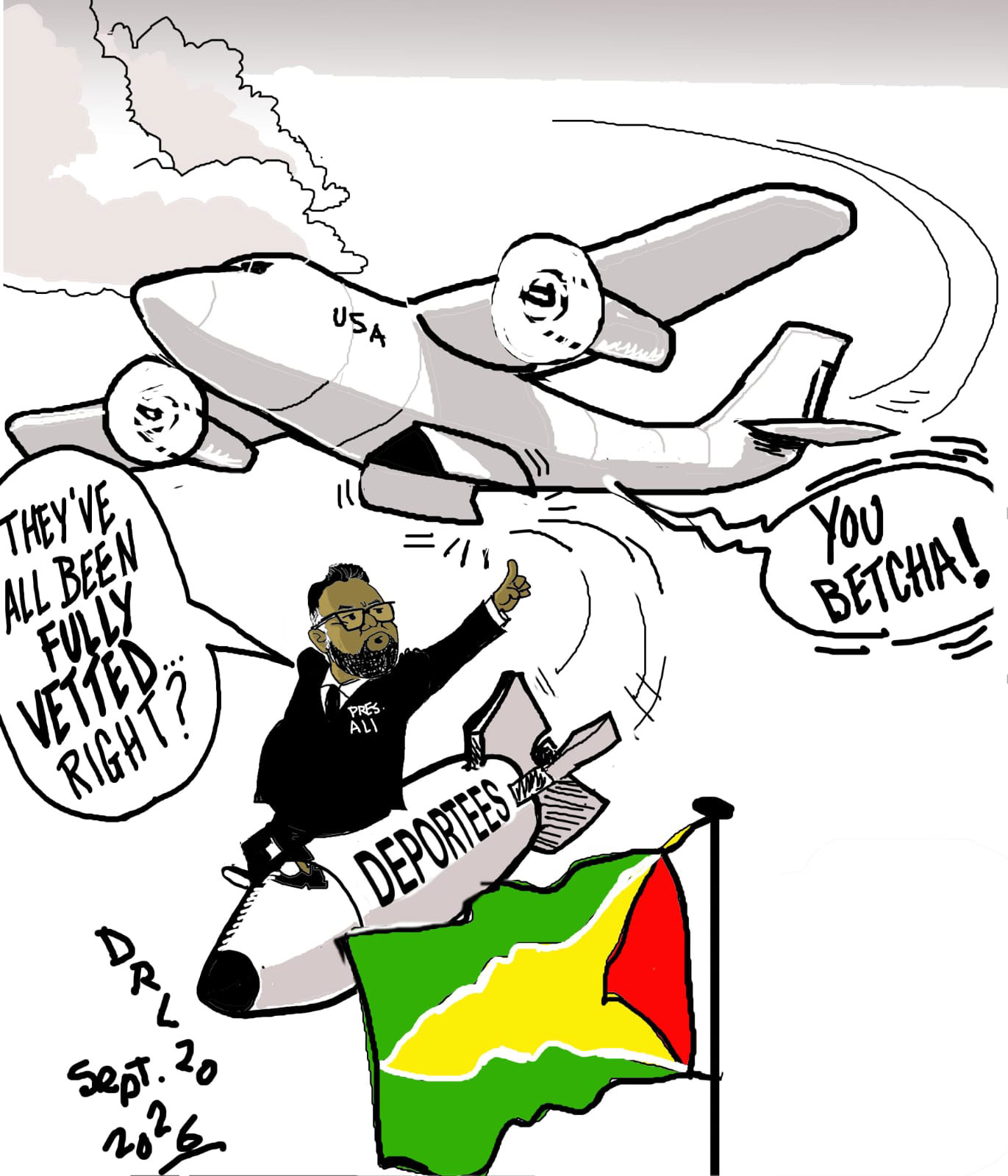
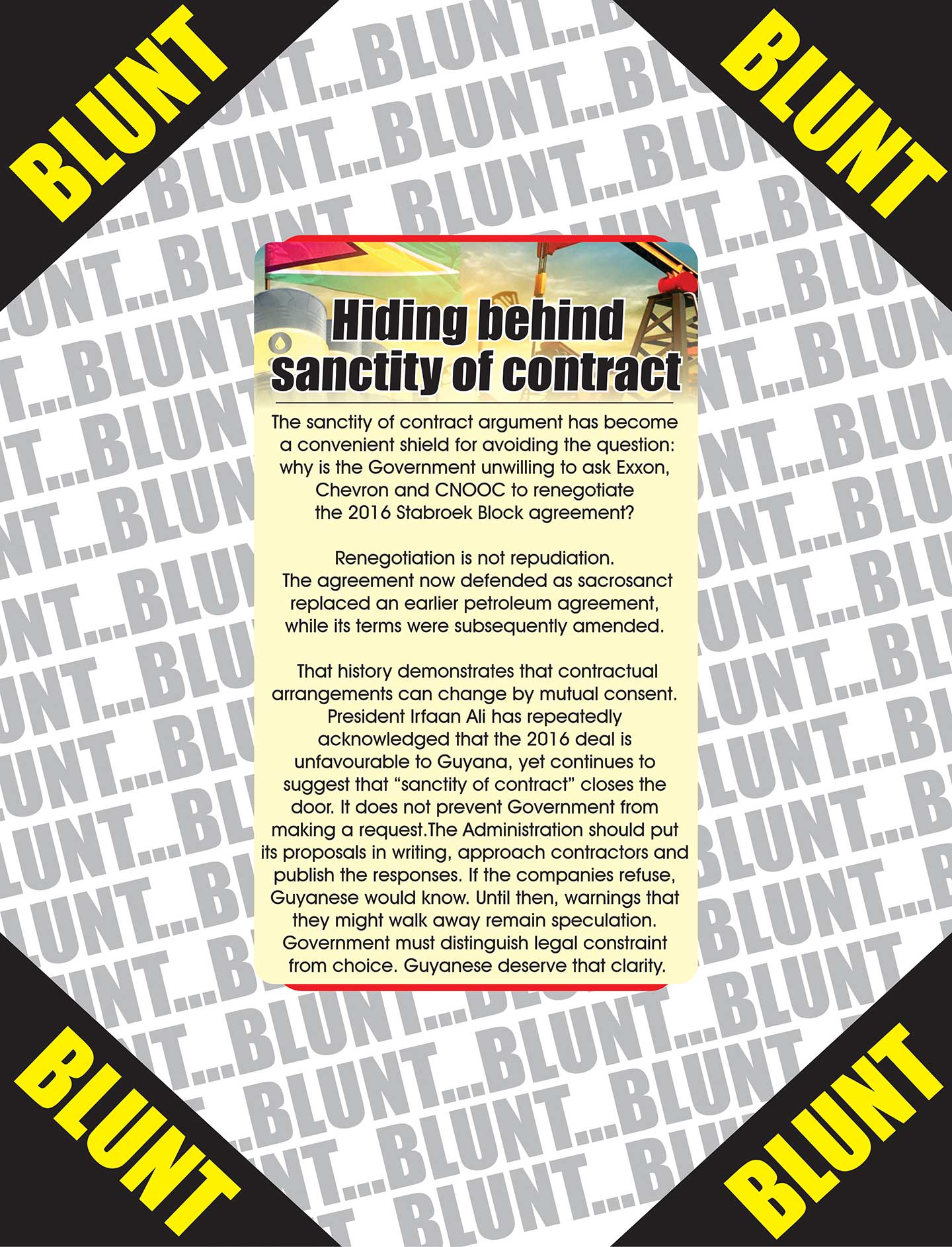
- ‘Stop blaming ‘sanctity of contract’ for keeping 2016 oil deal – Chris Ram tells Pres. Ali
- Iran and U.S. trade threats after Houthi attacks escalate regional conflict
There seems to be a deliberate effort to defame a community
Dear Editor,
One of my maternal great-great-grandmothers, Molly Millington, was born, raised, and died at #12 Village, West Coast Berbice. She was part of the first generation of formerly enslaved Africans. Many descendants of Molly, along with other Afro-Guyanese, lived in #12 Village until 1964, when they were forced to leave due to racial strife. Lives were lost, properties were destroyed, and years of trust were eroded. Cyrus Britton was among the first killed, and since that time, Afro-Guyanese have not lived in #12; only our deceased relatives are buried there.
This was indeed an unfortunate situation that should not have occurred. Although it was traumatic and painful, I will not refer to it as “The #12 Village Massacre and Ethnic Cleansing.” Such a characterisation is academically dishonest and aims to portray a specific ethnic group as villains. The racial disturbances of 1963-1964 harmed the entire colony, and both Afro-Guyanese and Indo-Guyanese suffered greatly during this time. The trauma and pain from these events still affect us today. However, in analysing what happened, we must do so within context and avoid demonising any community or group of people.
There is currently an ongoing debate regarding the so-called “Wismar Massacre.” I see this as a propaganda piece. The term “massacre” typically evokes an image of mass murder; however, some theorists argue that the act of killing even a single person can also be classified as a massacre.
If the Wismar event is classified as a massacre, then the incident at #12 Village, West Coast Berbice, should be considered the same. There seems to be a deliberate effort to defame a community or a particular group of people by altering historical facts or ignoring relevant context. Therefore, I will now address some additional crimes committed against Afro-Guyanese during the same period.
The empirical record is clear: Afro-Guyanese suffered grievously during this period, often at the hands of Indo-Guyanese perpetrators:
The “Son Chapman” Tragedy: On 6th July, 1964, the motor vessel “Son Chapman” was blown up on the Demerara River, killing 43 Afro-Guyanese passengers. This was a deliberate act of violence, not an accident, and it claimed predominantly African lives. The central issue is that this tragedy is often mentioned only in passing—if at all—by those who frame the conflict as one-sided.
Mahaicony: During the period from June to August 1964, the Mahaicony District became a “zone of conflict.” Available evidence demonstrates that “Afro Guyanese, predominantly, were the victims of terrorist violence.” Among the victims:
- Eustace Waldron and Joseph Nedd were killed by machine-gun fire
- George Halley, Sydney Halley, Neil Bascomb, Royston Bourne, Kenneth Gibbons and Percy Richmond—all of Strath Campbell—were reported missing from “aback of Mortice.” Four were later confirmed dead and two survived
- Ivan Chung was shot dead
- Ernest D’Aguiar’s body—riddled with gunshots and tied to a log with barbed wire—was later found floating
Abary Creek, On 23rd August, 1964, four Afro-Guyanese farmers, Albert Thompson and his cousins Vivian McKenzie, Donald Wade, and William Woodruff, were ambushed in their home in Abary Creek. Their house was set on fire, and they were shot and burned. These individuals were cultivating land that they owned.
Burma Road, In July 1964, Richard Carmichael was brutally murdered on Burma Road; his penis was severed and placed in his mouth.
Foulis Hole, West Coast Berbice. On 22nd June, 1964, Whitney Daniels was shot and killed on his farm.
#12 Village, West Coast Berbice: The historical record documents a “permanent cleansing of Afro-Guyanese” from this village—a fact those who present a one-sided narrative refuse to acknowledge.
Unfortunately, some people depict Afro-Guyanese as aggressive and belligerent while characterising Indo-Guyanese as passive victims. However, historical records indicate that more Afro-Guyanese lost their lives during the racial strife of 1963-1964 than any other racial group. For example, in the Mahaicony District, a larger proportion of the victims were Afro-Guyanese.
Those who assert that Afro-Guyanese were involved in ethnic cleansing must confront an inconvenient truth: Indo-Guyanese reside in nearly every African village and community, except Baracara, Canje River. Conversely, many villages and communities are exclusively Indo-Guyanese. If ethnic cleansing had truly occurred at the hands of Afro-Guyanese, this demographic reality would not exist. The events of 1963 and 1964 resulted in the permanent abandonment of legitimate properties in the Mahaicony and West Berbice Districts
This review does not aim to diminish the suffering of Indo-Guyanese or to portray Afro-Guyanese as passive victims; instead, it recognises that the entire nation has endured pain. The path to genuine reconciliation requires an acknowledgement that both Afro-Guyanese and Indo-Guyanese have inflicted significant harm on each other. Both groups were manipulated by political actors, both local and international, who profited from the racial divisions and continue to reap dividends from perpetual racial hostility.
Fellow Countrymen, let us make all the victims of this tragedy our own. But, for the most part, harden up and let’s critically look at what happened. And let us send to the grave with all the moral indignation at our disposal every attempt to weaponise history against any group of the Guyanese people.
Lelon A. Saul
Lt Col (Ret’d)
Share this:

Discover more from Kaieteur News
Subscribe to get the latest posts sent to your email.
Similar Articles
Website Hits

Blunt of the day
Sports
Features/Columnists

Sir. Ronald Sanders

The GHK Lall Column
Weekend Cartoon