Latest update July 22nd, 2026 12:47 AM



Latest News
- MV Barima Disaster… Death toll now pegged at 103
- Another boat calamity… Several injured, captain critical after boat collision in Canje River
- Opposition Leader calls for Edghill’s resignation
- Pres. Ali declares three days of mourning following capsizing of MV Barima
- ‘US$12.7M MV Ma Lisha still idle’ …embattled Edghill blames shifting soil, failed Port Kaituma wharf
‘Fare war on Route 32’ …Minibus drivers strike, decry govt. ‘price control’
(Kaieteur News) – This was the stinging question echoed by frustrated operators on Wednesday as Route 32 (Georgetown to Parika) minibus drivers withdrew their services, staging a strike that left hundreds of commuters stranded along the East Bank Essequibo corridor. This strike further highlighted tension between the private transportation providers and government regulations over fixed fares in the face of skyrocketing inflation.

Route 32 (Georgetown to Parika) bus drivers are adamant that government’s attempt to control transportation fares is hurting them and their families. They are questioning the government’s move to implement price control on them and not on the supermarkets. (News Source Guyana)
For more than a decade, the official minibus fares have remained static, a reality drivers said to Kaieteur News (KN) is “no longer making sense”. Standing by their parked vehicles, operators vented their frustrations over the economic disparity they face daily. One driver lamented that, “The fare is ridiculous, but it’s over a decade of fare and change.”
“It’s ridiculous. Do you understand? And everything keeps going up every day. The government is doing it for public transportation, but it’s private people doing it for public transportation. It’s private people taking the vehicle off the road,” the bus operator told KN.
They emphasized that the cost of living continues to rise, and while the government regulates public transportation, it is actually private individuals who are doing the work and risk taking their vehicles off the road.
“Why the government wanna control our prices when they not controlling the supermarket and spare parts costs? The cost for everything in we life raise, why we money cyan raise too?”
The drivers emphasized that unlike state-subsidized transit systems in other countries, Guyana’s public transport relies entirely on independent owners who receive no government safety net. Operators stressed that the public is left without transportation, yet the government does not give anything back to the people. They pointed out that they pay full price for everything they buy, including gas and vehicle maintenance, while nothing gets cheaper and everything is heavily taxed.
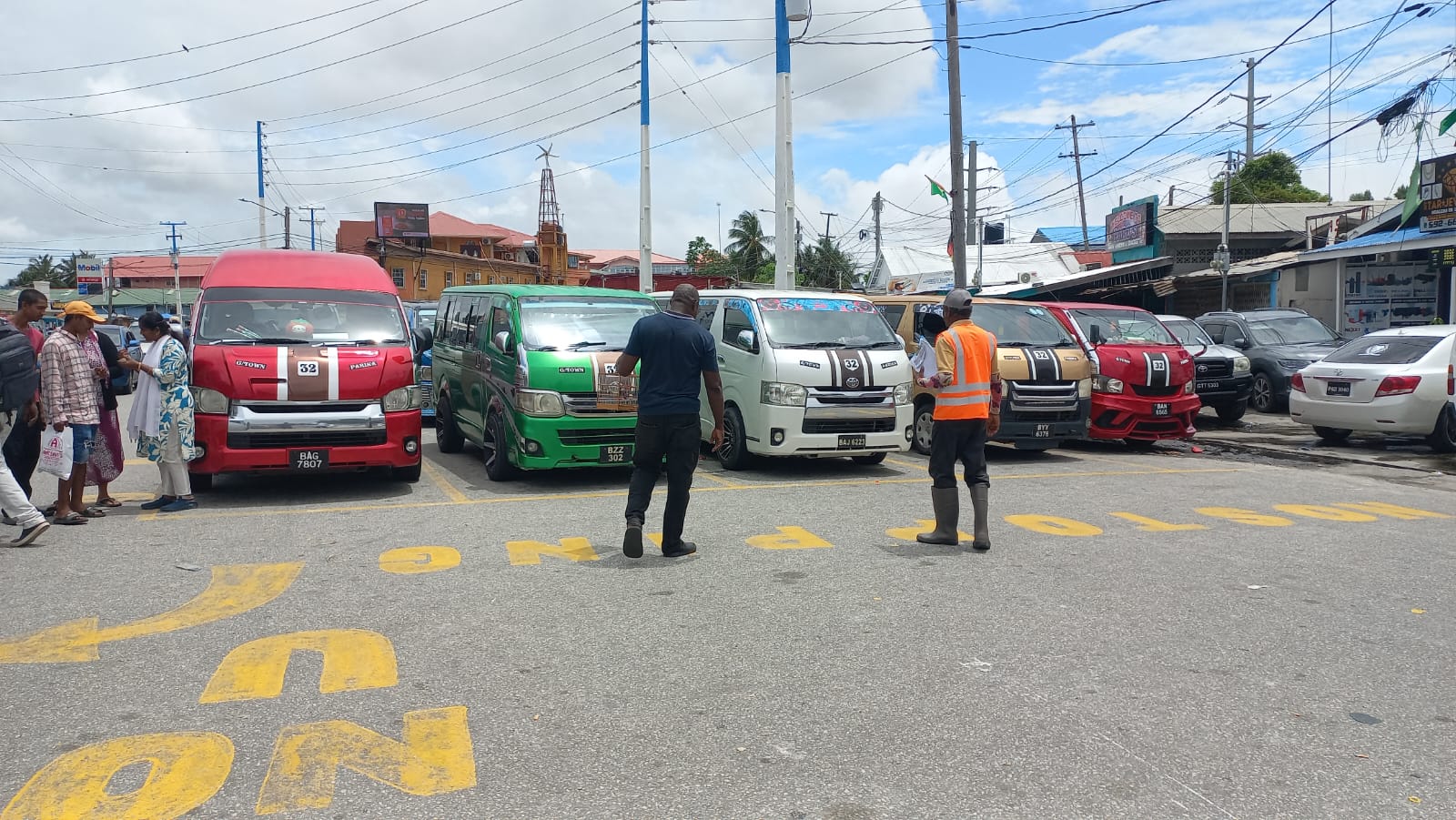
They noted too that minibus operators do not enjoy special exemptions as public transportation vendors, leaving them with nothing in the basket from the state. “The public don’t have any transportation, and the government don’t give back nothing to the people,” the operator continued. “We pay straight for everything we go to buy. We pay straight for gas. We pay straight for maintenance of vehicles. We pay straight for everything. And nothing gets cheap. Nothing gets cheap. Everything you go to buy, you have to pay tax on it. It’s not like we have an exemption as bus drivers.”
Accordingly, the drivers argued that they are unfairly bearing the moral and financial burden of keeping the country moving. They explained that when they try to raise the fare, it becomes a heavily scrutinized responsibility because they feel an obligation to help the people they transport. However, they stressed that driving is not their only reality, as they also have homes to maintain and families to feed. “When we raise the fare, it’s a super weak responsibility. Because we have a responsibility to help people, and because we drive. It’s not the only thing we have to do. We have a family. We have a home,” one bus operator said.
The crux of the drivers’ frustration lies in what they describe as a one-sided regulatory system. While the government strictly regulates the fares they can charge passengers, the wider market remains entirely unchecked.
“Why don’t they pay the prices on the spare parts? Why don’t they pay the prices on the items in store? Why don’t they pay the public transportation prices?” an operator asked. “Because I saw a lot of people saying, oh, we don’t know the prices. But then I was looking at the prices they were giving y’all, and I thought, it’s actually price control.”
Operators questioned why the state does not step in to manage the prices of spare parts or items in the supermarkets, arguing that the targeted enforcement on public transportation amounts to unfair price control. They pointed out the glaring double standard where supermarket and retail managements can raise prices at will whenever their costs increase, while minibus drivers are completely restricted by government controls.
“It’s called price control. Because when you are controlling the price on public transportation, but you’re not controlling the prices on the supermarket… you’re controlling the spare parts? And when you go there, when you go back to the store, don’t go back to the supermarket. No, that’s what I’m saying. We can’t control those prices. We can’t, whatever the management, when you go back and say the items to raise, it raises. But when they have the controls [on us].”
Weighing in on the crisis, Alliance for Change Chairman David Patterson heavily criticized the administration’s inaction, pointing to Guyana’s massive oil revenues as a viable solution to the stalemate. Patterson stated that at today’s oil price, Guyana is earning roughly US$14.5M, which is equivalent to G$3.1B, every single day, with national production sitting at 916,000 barrels per day.
The opposition Member of Parliament offered a breakdown of how the state could easily buffer the industry without placing the burden on commuters. He estimated that there are roughly 2,500 minibuses in operation across the country. Providing each of these vehicles with a G$25,000 monthly fuel-support voucher would cost the state G$62.5 million per month, which breaks down to just G$2 million per day. Patterson argued that this entire subsidy amounts to only about 0.6% of the country’s monthly oil revenue. He declared that in a period of rising prices and mounting pressure on households, there is no excuse for inaction, and the government must implement practical, targeted measures to ease the cost-of-living burden on the public.
KN reported previously that government officials have defended their position by pointing to macro-economic interventions, specifically highlighting the total removal of taxes on fuel, which they claim should have a cushioning effect against the global surge in oil prices.
However, Route 32 mini-bus drivers remain adamant that these top-down tax cuts are not translating to genuine relief at the pump, in the supermarkets nor in the auto shops. Operators insist that the administration needs to look at the ground-level reality of running a small business in Guyana.
Share this:

Discover more from Kaieteur News
Subscribe to get the latest posts sent to your email.
Similar Articles

Blunt of the day
Sports
Features/Columnists
Sir. Ronald Sanders

The GHK Lall Column

Weekend Cartoon