Latest update March 22nd, 2026 12:55 AM

Mar 22, 2026 Letters
Dear Editor,
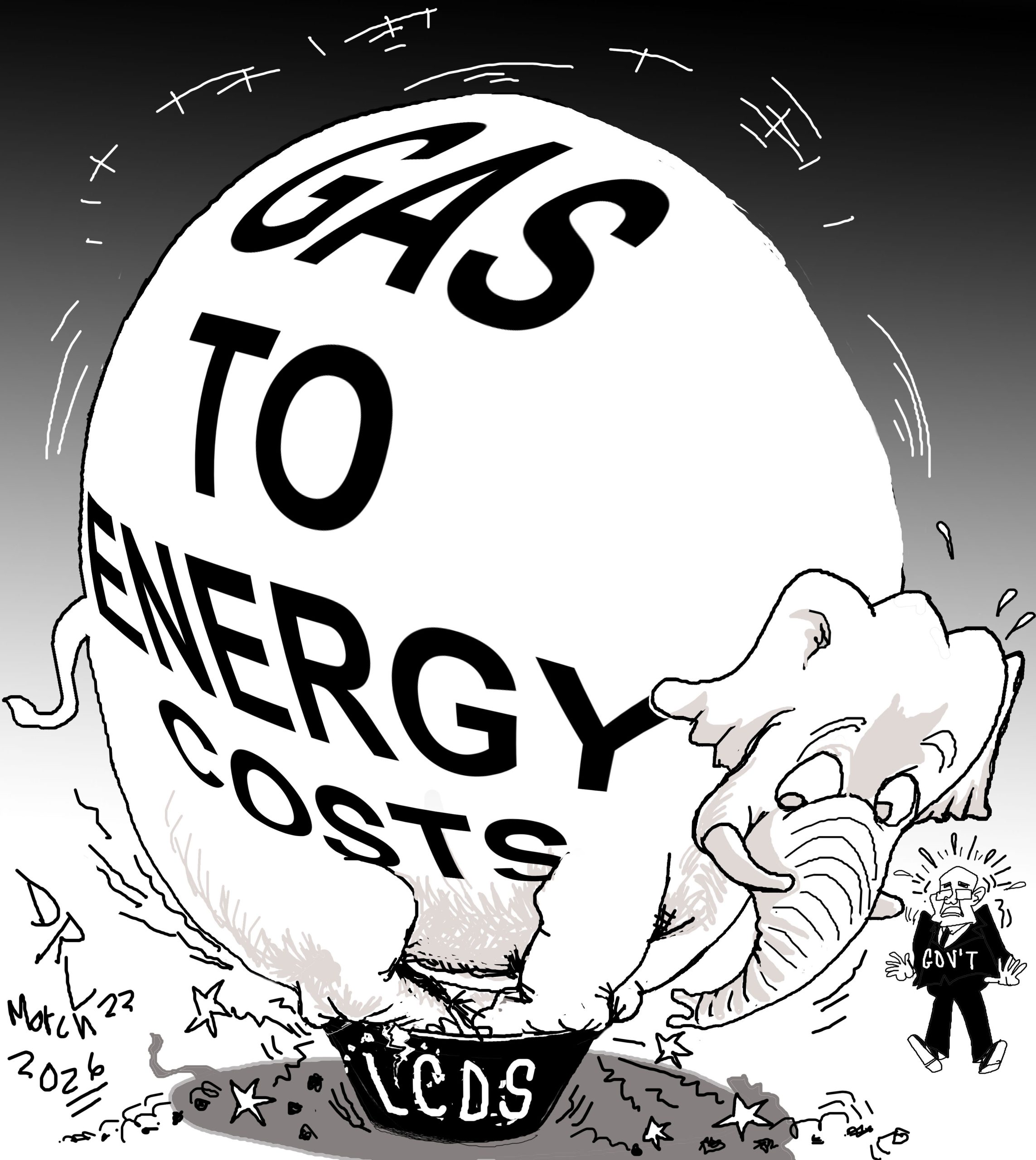
Alistair Routledge has fired the first shot in a well-rehearsed campaign of persuasion. His triumphant declaration that ExxonMobil Guyana will wipe its Stabroek Block “cost bank” clean by year’s end—thanks to US$100 oil and surging output—is no neutral bulletin. It is a flare launched into the public sky, meant not to inform but to warn: don’t get ideas. It’s Exxon’s polite way of saying, “the table is set, but wait your turn.”
“Accelerated cost recovery”—how melodious the phrase sounds. It hums with progress and prosperity, as if it were a national triumph rather than a corporate ploy. The narrative is intoxicating: costs are dwindling, Guyana’s break-even grows nearer, and soon, oh so soon, the country will bathe in flowing oil wealth. On the surface, it’s reassurance. Beneath it’s, strategy.
What Routledge really offers is a lullaby of deference.
By linking this “acceleration” to current high prices, he slips in a warning cloaked as wisdom: now is not the time to renegotiate, revisit, or reclaim. High prices—the very conditions that trigger windfall taxes worldwide—are, in his telling, grounds for restraint. The subtext is plain: do nothing now; your reward is coming later.
That is Exxon’s first motive—to inoculate itself against a windfall tax.
The logic is as transparent as it is cynical. Around the world, when oil prices soar and profits balloon, governments enact windfall taxes to capture a portion of those extraordinary gains. These are not punishments but patriotic correctives: the state reclaiming value that belongs to the people. But Routledge’s framing flips that moral lens.
He recasts cost recovery as something sacred, fragile, and untouchable—an altar upon which national prudence must be sacrificed. He warns that any fiscal adjustment might disturb the sacred balance, delaying Guyana’s golden moment. And if the public swallows this story of patient submission— “let us finish recovering, then all will be well”—Exxon wins without firing another shot. When that “full recovery” finally arrives, the moment for reform will have passed. The window will have slammed shut. The giant will be too entrenched, and its beneficiaries too comfortable, to risk change.
Then comes the second motive—to redefine fairness on Exxon’s terms.
Routledge’s voice drips with the familiar colonial cadence: we took the risk, we built the infrastructure, therefore we deserve the spoils. It’s the same script that underwrote every extractive empire from the Congo to the Niger Delta. Guyana, in this telling, should bow in gratitude for the privilege of hosting foreign enterprise.
But this mythology breaks down under its own contradictions. Guyana already shares in production, in profit oil, and in macroeconomic spillover—though on terms heavily skewed toward the operator. The 75 percent cost-oil ceiling and the absurdity of the state paying the company’s taxes are vestiges of a deal struck in desperation, not dignity.
The days of exploration risk are over; this is no longer frontier pioneering—it is factory-scale extraction. Treating Exxon as a fragile risk-taker now is like treating a casino as a charity.
Fairness evolves. Contracts evolve. Only colonies stay frozen in time.
To tether the concept of fairness to rapid cost recovery is to redefine equity so that it always favors the extractor. It’s the theology of resource dependency rewritten in corporate prose: bless the pipeline, and pray for patience.
Then there’s the third motive—to discipline ambition itself.
Oil awakens expectation. People see tankers load and coffers swell and rightly ask: where are the roads, hospitals, wages, schools? Exxon’s gospel response is a sermon in delay. “The big money comes after cost recovery,” they chant, turning hunger into virtue and postponement into policy. It’s a formula for national sedation.
An administration lulled by this lullaby won’t dare test temporary windfall levies, won’t audit cost claims with sharp teeth, and won’t reopen the most lopsided contract in the hemisphere. And Exxon will smile—two victories secured: silence from politicians and patience from the people.
So, we must ask: is this prudence—or pre-emptive surrender?
For Exxon, prudence is profit security. For a sovereign state, prudence is the ability to adapt, to protect its people from the volatility of markets and the predations of multinationals. True prudence means building mechanisms—a time-bound, price-linked windfall tax among them—to ensure that extraordinary profits from Guyana’s patrimony don’t vanish offshore before the tide turns.
Yet bewitched by Exxon’s hymn of “don’t rock the boat,” the government risks institutionalizing submission. It becomes a willing custodian of someone else’s fortune. Rejecting the debate while oil prices tower isn’t prudence—it’s capitulation dressed in civility.
That is the real sting hiding inside Routledge’s cheerful press release. His talk of acceleration is not celebration—it’s choreography. A softly spoken campaign to brand fiscal justice as recklessness, and any attempt at sovereignty as “anti-investment.”
So, let’s strip away the euphemisms.
Why the rush to clear Exxon’s billions, but the crawl to deliver citizens’ basics? Why should the richest oil company in the world decide when a poor country can tax its own wealth? Why are tools like windfall taxes—routine in London, Ottawa, and Oslo—suddenly taboo in Georgetown?
Routledge’s song of acceleration is a siren’s tune. It calls Guyana closer to the reef of dependency, dressed as triumph. The real question is whether we will dance to it—or break the spell and demand our share of this fleeting abundance before it’s siphoned away under the banner of “partnership.”
Because this moment, this price surge, this dizzying windfall—that is our window, not Exxon’s.
The salvo has been fired.
Now, Guyana must decide whether to stand and salute—or to return fire.
Regards,
Hemdutt Kumar
Subscribe to get the latest posts sent to your email.
Your children are starving, and you giving away their food to an already fat pussycat.
Mar 22, 2026
– Zeeburg, Charity, West R/veldt Secondary start with wins in Massy Distribution U18 Schools Football tournament Kaieteur Sports – The ultimate Secondary Schools Football challenge kicked...Mar 22, 2026
(Kaieteur News) – There is a peculiar vanity among nations. It takes the form of the belief that history is something that happens elsewhere, to other people, in less fortunate geographies, preferably in languages we do not speak. We congratulate ourselves on being on the right side of...Mar 22, 2026
By Sir Ronald Sanders (Kaieteur News) – The war in Iran is already at Caribbean doors. The attacks in Iran and the Gulf are being justified by some on the grounds that Iran’s record on terrorism, nuclear ambition, and regional meddling leaves the “free world” with no choice but to act...Mar 22, 2026
Hard Truths by GHK Lall (Kaieteur News) – I come humbly before Hon. Minister Dr. Vindhya Persaud today. Cap in hand, a curtsy for a sister, a fine lady. The legacy of my folks, village, times. Something came to me recently, and I shook. So, I come before Minister Persaud with a thought,...Freedom of speech is our core value at Kaieteur News. If the letter/e-mail you sent was not published, and you believe that its contents were not libellous, let us know, please contact us by phone or email.
Feel free to send us your comments and/or criticisms.
Contact: 624-6456; 225-8452; 225-8458; 225-8463; 225-8465; 225-8473 or 225-8491.
Or by Email: glennlall2000@gmail.com / kaieteurnews@yahoo.com