Latest update March 16th, 2026 10:23 AM

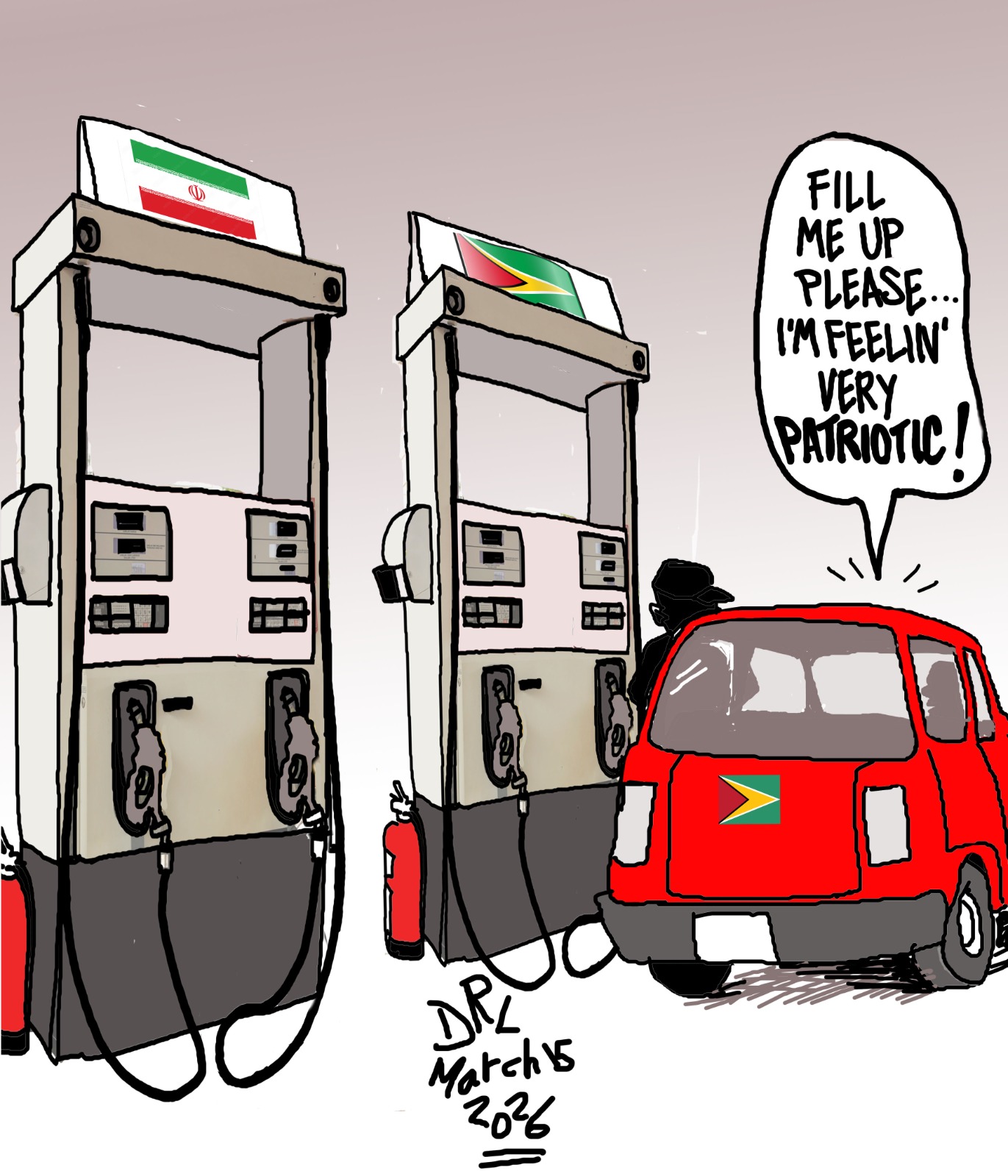
(Kaieteur News) – The Group of Seven nations released an historic 400M barrels of oil from their strategic petroleum reserves. The news came through the International Energy Agency, which coordinates such developments. In the U.S., President Trump authorised the release of 172M barrels from the strategic reserves bringing the total freed up to 572M barrels.
It looks like a huge number, with the objective being to stabilise oil prices, and soothe the jitters that crisscross many parts of the world. How much of a difference these releases from reserves would make, and how long they last, are questions that wait for the future to provide answers, hopefully uplifting and not further depressing.
In reaction, oil prices slipped for a brief moment, then quickly rose again. It could be that the markets, having reacted to the release, factored in the significance of the 572M barrels made available, and concluded that those barrels only makeup for so long. Tensions, blockages, mining, and attacks in the Strait of Hormuz have effectively prevented approximately 20 million barrels from reaching their destinations, and feeding the insatiable demand of the world for oil. It is worth noting that strategic reserves releases amount to less than a month’s replacement supply or, for more accuracy, 28 days. In the tactics and devastations of war, even if the conflict, which is nothing but war, was to end, residual tensions could still put the Strait of Hormuz out of commission.
Would the war between the U.S. and Israel, on one side, and Iran on the other, be called off before the reserves released are swallowed up? Or could it be that it drags on, with none of the combatants giving an inch, and another release is necessary from both the U.S. and the Group of Seven nations?
The strategic reserve of this group holds about 1.2B barrels that are under government control. Another sizable release could leave that reserve in a wobbly and undesired level. In the circumstances, the best development would be for this war to be over in the shortest time possible. Iran has been subject to a relentless wave of bombardments, yet the likelihood of it crumbling under the hammering looks more remote as the war extends. It has shown an extraordinary capacity to absorb punishment, while showing no signs of flagging in its will to standup and deliver its own stinging blows. Some countries in the Gulf States are on the edge of slowing down their production facilities, or shutting down them, altogether. Such actions serve to tighten further already restricted supply, with higher oil prices being the inevitable result.
The concern that we have with higher oil prices is that the negative impacts are not limited to those at war with one another. Those impacts spread across the globe and inflict considerable amounts of pain on the economies of already struggling, nonoil producing countries. Rising oil prices are like a virus on the move. There isn’t any picking and choosing about where steeply rising prices strike, and how hard. Truth be told, prices lash blindly, and envelop all, from weak to strong. Some countries are able to cushion the effects better, while others get crushed into a worse place than they were before. It becomes a huge challenge to get back to an even level, and that’s just the beginning.
We at this paper think that the releases by the U.S. and the Group of Seven nations from their strategic reserves have their positives. We quickly move, however, to assert that the benefits are temporary and may not be to the degree expected. War hurts everyone, especially those trapped in the middle of the battles, and others caught within breathing distance of it. The area around the Iranian theater of war represents a cluster of some of the largest oil and gas producers in the global oil business. War, and any extension of it, is a catastrophe that started from the first day and the first missile. The longer this war lasts, and the more the resulting destructions, the greater the bruising of the global economy. Poor countries will feel it the most, take the longest to recover. There is one solution: this war must end now, yesterday.
Subscribe to get the latest posts sent to your email.
Your children are starving, and you giving away their food to an already fat pussycat.
Mar 16, 2026
Kaieteur Sports – Competitive football action returned to the East Bank corridor after a long hiatus when the inaugural East Bank Inter Village Competition kicked off at the Eccles EE Ground on...Mar 16, 2026
(Kaieteur News) – We are told that Guyanese, beginning with salaried public servants, will begin receiving the $100,000 cash grant this week. This is excellent news. Nothing cheers the national spirit quite like the promise of free money, except perhaps the discovery that your neighbour’s fowl...Mar 15, 2026
By Sir Ronald Sanders (Kaieteur News) – Amid the current turmoil in the world, it is important that, in the Americas, we should not forget the urgent humanitarian and political crisis confronting the Haitian people. For many years, the United States has been the principal destination for...Mar 16, 2026
From Shakespeare’s lament in Cymbeline: Fear no more the heat o’ the sun, Nor the furious winter’s rages; Though thy worldly task hast done, Home art gone, and ta’en thy wages; Golden lads and girls, all must, Like chimney sweepers, come to dust (Kaieteur News) – The life and times of...Freedom of speech is our core value at Kaieteur News. If the letter/e-mail you sent was not published, and you believe that its contents were not libellous, let us know, please contact us by phone or email.
Feel free to send us your comments and/or criticisms.
Contact: 624-6456; 225-8452; 225-8458; 225-8463; 225-8465; 225-8473 or 225-8491.
Or by Email: glennlall2000@gmail.com / kaieteurnews@yahoo.com