Latest update October 1st, 2026 2:29 PM


Latest News
- 76-year-old Chinese businessman admits killing boy, 6, amid US$3M dispute with parents
- Demon’s brother charged with abduction of Surinamese men
- Guyana and France renew air services agreement
- Mazaruni prison officers rescue miner after boat mishap
- Cromwell family released on $1M station bail as probe into missing Surinamese men continues
GuySuCo requires structural change
Dear Editor,
The facts outlined by Mr. Christopher Ram in his article, “State is like an ATM to GuySuCo,” leave little room for denial: GuySuCo has become a permanent challenge for the taxpayers, with no credible path to sustained profitability under its current state-controlled structure (even in 2030). It must have some level of private sector involvement at the policy-making/executive level and I am not speaking about the political operative and PPP Central Committee Member Mr. Paul Cheong whose private sector credentials has been a period of massive confusion for the industry. I am speaking about a management contract that involves real sugar professionals from India, Brazil, or even Belize.
Sugar’s historic importance to Guyana is undeniable. However, sentiment cannot justify an increasing number of financial transfers ($15 billion in 2025) from the taxpayers and increasing losses ($19 billion in 2025). When a state enterprise consistently absorbs billions in public funds without delivering commercial viability, decisive reform is required. Instead, we have heard only repeated public threats that “heads will roll” from President Irfaan Ali, without evidence of structural correction. This mess is now on him since, from all appearances, he has created this mess, and Minister Zulfikar Mustapha is only carrying out the President’s instructions.
A stark example of this mess under Mr. Paul Cheong is the fact that some 301,000 metric tonnes (MT) of prime cane were left unharvested at the end of 2025. But what is even more shocking is that on top of that there is approximately 54,000 MT of old standing canes from 2024, which has not been harvested for over two years, and are now in a state of advanced decay. To rehabilitate these fields was estimated to cost some $1.1 billion to rake out and replant those fields. This is an avoidable loss that Mr. Paul Cheong was incapable of actioning in 2024 and 2025 as he allegedly busied himself with political directives and his personal business. In an industry where timing determines value, this is not a minor setback—it is a strategic operational failure and this one lays solely at the feet of Mr. Paul Cheong.
Data from 2019 to 2023 reportedly showed improvement in reducing cane left standing, even amid the 2021 floods. Yet those success were allowed to sharply deteriorated in 2024 and 2025 under Mr. Paul Cheong (see graph below). The value of unharvested cane increased dramatically over those two years, reflecting systemic breakdowns in harvesting and transport. Instead of being converted into sugar and revenue, substantial volumes remained in the fields, compounding financial strain.
Responsibility must be properly aligned. The most senior field leadership for 2024 was Mr. Vishnu Panday, and for 2025 it was Mr. Threbowan Shivprashad, and their direct superior in both of those years was Mr. Paul Cheong. These three men should have been made to account for these outcomes. Rather, it is a major cover-up going on in the industry. If Mr. Panday had not changed political sides, he would have continued to benefit from this political coverage.
Investments in mechanization (including more than 100 tractors since 2020) have not translated into improved extraction and processing performance. That disconnect raises legitimate questions about the operational competence and the strategic capabilities of Mr. Paul Cheong.
The agronomic science is clear. Cane harvested at peak maturity can yield quite comfortably approximately 13% recoverable sugar. Once it passes its peak mature (after 12 months in the fields), the yields can decline to 11% or less. Across hundreds of thousands of tonnes, that 2% differential represents significant lost sugar and revenue, while increased fibre content which reduces factory efficiency and raises processing costs. Leaving cane standing is not merely inefficient—it undermines factory performance and profitability.
Industry professionals also cite recurring factory constraints: reduced grinding days, maintenance challenges, transport bottlenecks, and labour inefficiencies. Mechanisation alone cannot correct systemic weaknesses. Effective management of the entire value chain—from field to factory—is essential, and this is what is not happening enough in the industry as the leadership hustles to attend to their personal business and another political gathering with the Minister at Regent Street.
Labour and compensation structures likewise require review to ensure productivity aligns with sustainability, while safeguarding technical expertise critical to recovery. Reform must balance fairness with performance discipline. This is definitely not happening in the industry, as the PPP-aligned union GAWU is calling the shots on the payment for workers without adequate hours of work. The labour efficiency rate under President Granger was far superior to what is taking place today under President Ali.
The Agriculture Minister has articulated a goal of profitability by 2030. But it will not happen once we have a PPP Government that is afraid to confront the hard operational realities, with the biggest one being the productivity of the workers. GuySuCo must restore its factory reliability, improve its field management, and insulate its commercial decision-making from political interference. To date, there is little evidence of such transformation.
The unavoidable conclusion is that GuySuCo requires structural change—either privatisation or genuinely independent commercial management shielded from political control. Market discipline, professional governance, and operational accountability are indispensable if the industry is not to call in 2027 for $20 billion from the Treasury. Leaving prime cane in the fields is not simply an agricultural lapse; it is a direct blow to revenue, credibility, and public trust, and that responsibility must be owned by Mr. Paul Cheong. Mr. Ram’s warning is not rhetorical. It is grounded in observable fact, after all, he was the independent external auditor for more than half of the time for the last 20 years.
Sincerely
Lancelot Hyman
Share this:

Discover more from Kaieteur News
Subscribe to get the latest posts sent to your email.
Similar Articles
Website Hits

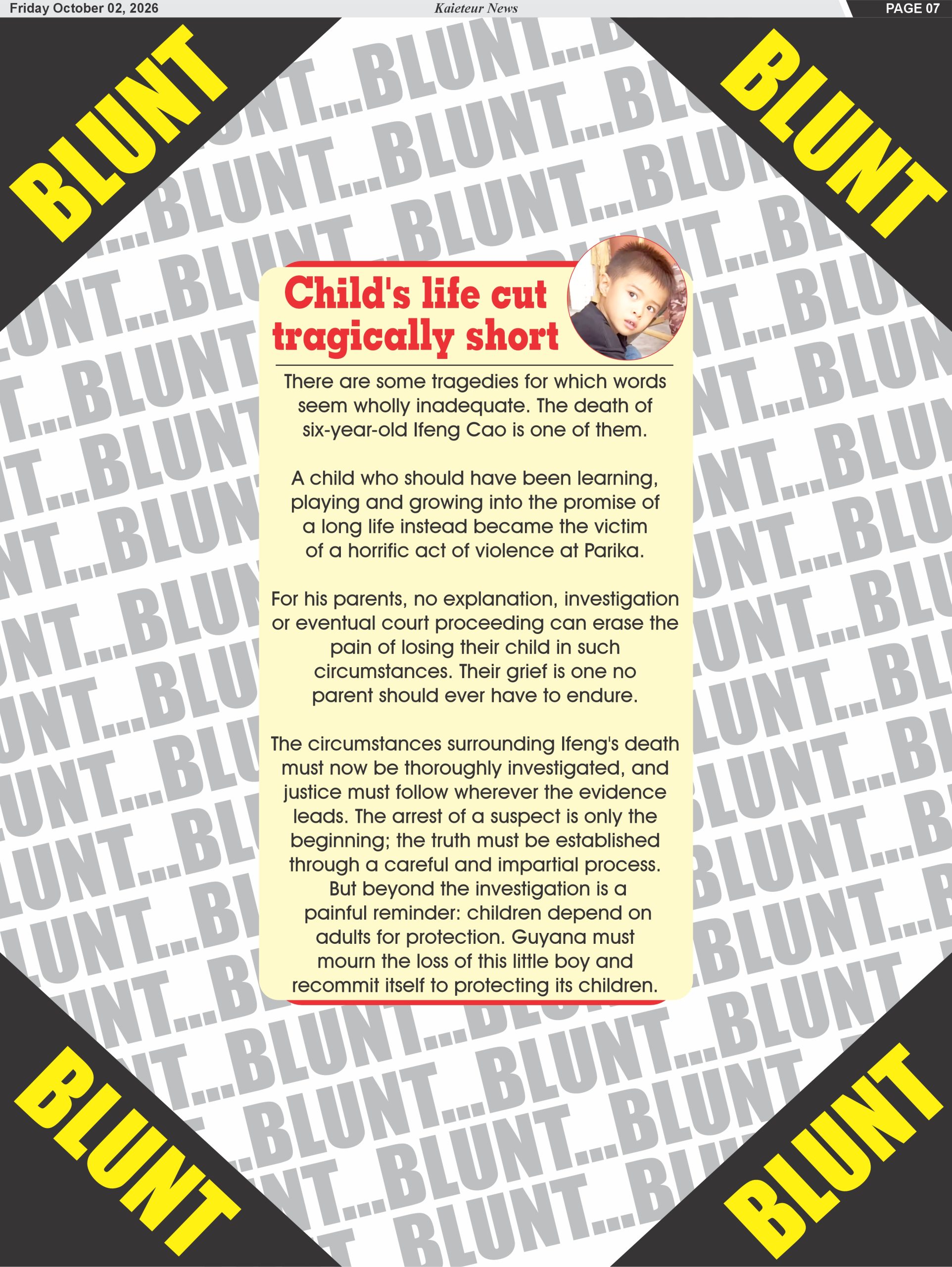
Blunt of the day
Sports

Features/Columnists

Sir. Ronald Sanders

The GHK Lall Column

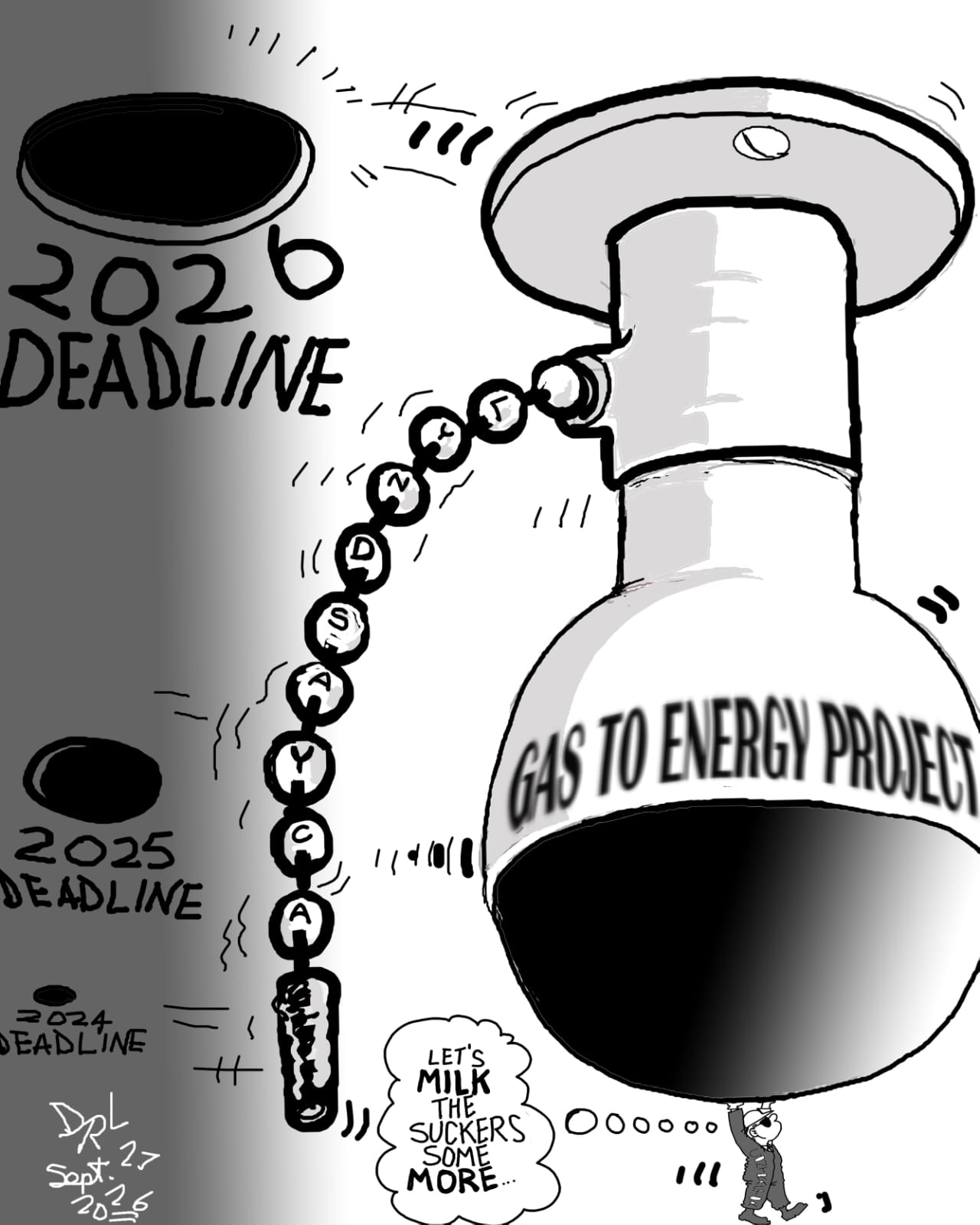
Weekend Cartoon