Latest update February 10th, 2026 12:40 AM

Feb 10, 2026 Letters
Dear Editor,
Another National Budget has come and will be passed, yet again, without any serious effort to address a living wage or the worsening economic conditions of the most vulnerable among us. Those at the bottom were either ignored outright or tossed a few paltry pittances—nothing meaningful, nothing transformative, nothing capable of improving their standard of living. Let me first address the People’s Progressive Party’s (PPP) claim that the 2025 Inter-American Development Bank (IDB) Report, which reveals that more than half the nation lives in poverty, is based solely on data from the David Granger/Moses Nagamootoo administration (2015–2020). That claim makes no sense—and its purpose is clear: to mislead.
By laying the blame for poverty solely at the feet of APNU+AFC, the PPP regime deliberately ignores several critical facts:
Prior to APNU+AFC, the PPP occupied the reins of Government (Executive) for 23 consecutive years.
In 1992, the PPP inherited an economy from President Desmond Hoyte that was already on an upward trajectory. This was evidenced by the PPP’s slavish adherence to Hoyte’s Economic Recovery Programme/Structural Adjustment Programme (ERP/SAP), which fueled growth well into the late 1990s.
The value of the Guyana dollar in 1992, though constrained, was not under the same pressures confronting workers today. At that time, the exchange rate stood at approximately G$125 to US$1. By contrast, APNU parliamentarian Dr. Terrence Campbell stated during the 2026 Budget Debates that the true exchange rate now hovers around G$240 to US$1, exposing the sharp erosion in workers’ purchasing power. The PPP inherited an oil-producing economy, with Guyana beginning production in late 2019, making the party the steward of revenues this nation had never before seen.
Stabroek News continues to run a weekly column where ordinary citizens recount, in their own words, how the rising cost of living is devastating their lives. Many Guyanese are “catching hell” daily and remain dependent on remittances from overseas relatives simply to survive.
Over the last 33 years, the PPP has exercised control of government for 30 of them—if one includes its successful 2018 no-confidence motion and the deliberate constraints placed on APNU+AFC thereafter. Guyana has earned over US$8.25 billion in cumulative oil revenues from December 2019 through late 2025, yet this unprecedented wealth remains concentrated in the hands of a very few.
The levels of poverty revealed today must therefore be laid squarely at the feet of the PPP.
Now to poverty as it relates specifically to African Guyanese, particularly in light of the United Nations’ extension of the International Decade for People of African Descent (2015–2024). At the end of that decade, the UN concluded that insufficient progress had been made in economic, social, cultural, and political inclusion, and that disparities relative to other groups persist, hence the extension.
The purpose of this UN declaration is clear: governments are expected to partner with specific ethnic groups to address the structural issues affecting them. The UN explicitly charges states with strengthening cooperation to ensure “the full enjoyment of economic, social, cultural, civil and political rights by people of African descent, and their full and equal participation in all aspects of society.”
We must therefore ask: What has the Government of Guyana done to advance this directive?
What I know—what African Guyanese know—is that living conditions within the African community have not improved in any meaningful way. This is evident on the ground and documented in multiple reports, including those by attorney-at-law Nigel Hughes on contract allocations; the submission by IPADAD-G to the United Nations; and the 2025 IDB Report, which expressly states:
“Poverty in Latin America and the Caribbean is not only unevenly distributed across geographic areas: it also affects particular groups differently… we find rates higher than that of the general population among Indigenous people and Afro-descendants.” (p. 6)
I have personally met countless individuals who have shared painful stories of exclusion. At the trade union level, we have repeatedly seen workers’ rights and freedoms trampled—particularly in sectors and workplaces where African Guyanese dominate. Just days ago, Dorwain Bess publicly recounted his experience of economic deprivation, despite pioneering services in Guyana’s oil sector. I am also aware of African-owned businesses that choose silence, or even feigned loyalty to the PPP regime, in order to survive and provide for their families.
Some have allowed themselves to become political props, wielding the sword of hate and humiliation against their own people in exchange for a seat at the table, rather than standing up for the marginalised, the aggrieved, and the oppressed. In doing so, they have accepted the dangerous lie that individual survival is more important than collective survival, ignoring the fundamental truth that discrimination against one ultimately weakens all. History teaches us this lesson repeatedly. No people will tolerate marginalisation and oppression forever without resistance.
The problems facing African Guyanese can only be resolved when we are treated as equal and full participants in this society, regardless of which party holds office. We must therefore continue to demand what is already guaranteed under the Constitution. We must insist on inclusionary democracy, as enshrined in Article 13, through legislation that enables meaningful shared governance at the national, regional, and local levels.
This struggle requires all hands on deck. And it is not unique to Africans, for what affects one group inevitably affects all. Resilience means struggle. It means confronting anyone—anyone—who stands in the way of our basic rights and human dignity. Any individual or institution that obstructs these rights becomes an enemy to the process, regardless of the texture of their hair. The African struggle has never been waged by Africans alone. From slavery to indentureship, from independence to the U.S. Civil Rights Movement, progress has always involved principled allies who stood not for colour, but for humanity. We must acknowledge and embrace that truth.
I am aware that formal proposals addressing the Black Agenda were presented to both the David Granger administration and the Irfaan Ali administration. Finally, I remind the African community, irrespective of political affiliation, that our struggle for justice loses authenticity when we confront only those who do not look like us, while excusing those who do. This struggle is not about faces; it is about principles. It is about issues. Those must remain our compass. Resilience demands clarity. It demands courage. And it demands that we fight injustice wherever it exists, and whoever perpetuates it
Sincerely,
Lincoln Lewis
Subscribe to get the latest posts sent to your email.
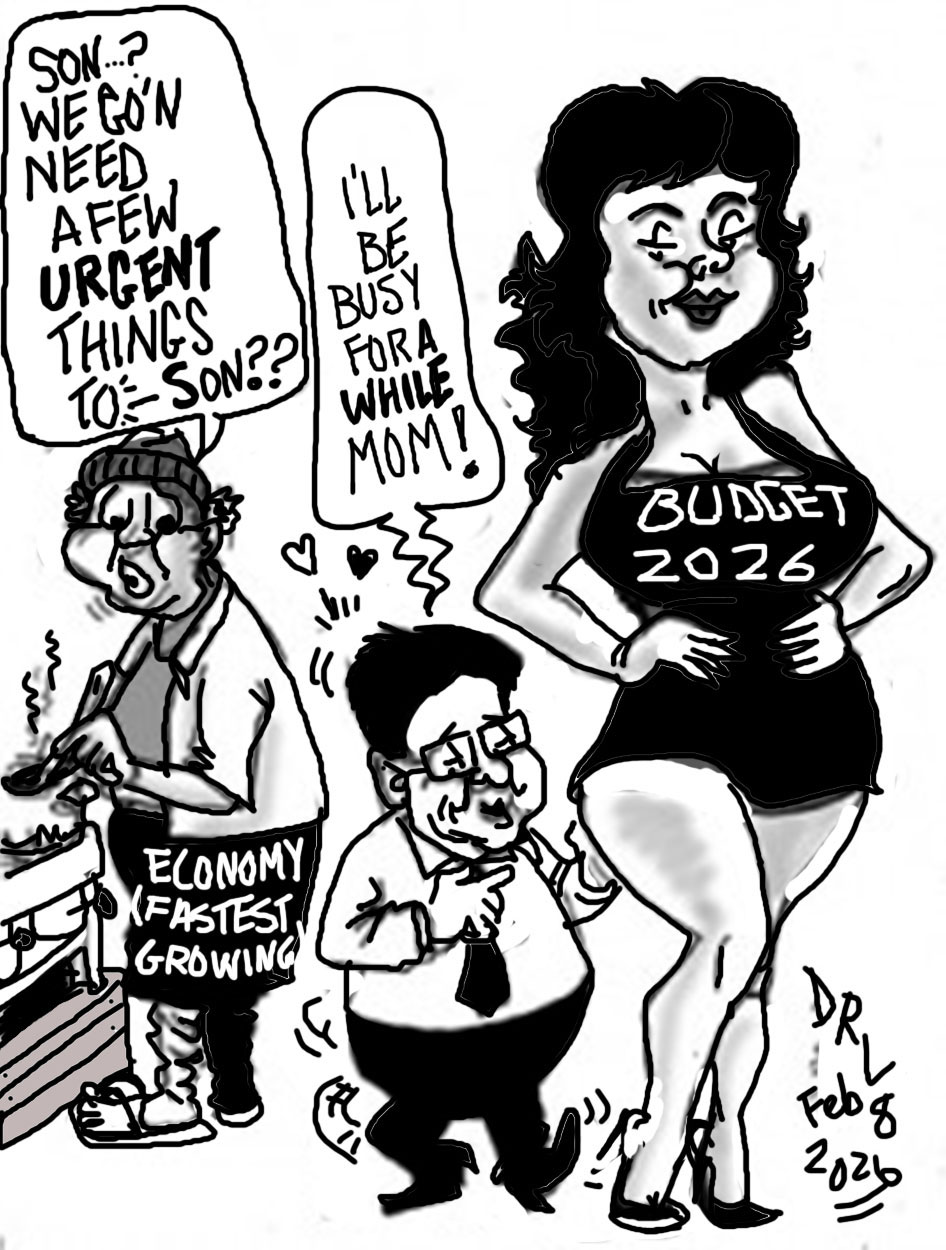
Your children are starving, and you giving away their food to an already fat pussycat.
Feb 10, 2026
Kaieteur Sports – Guyana’s Men’s Under-17 team battled well but came up short against host nation, Honduras, when the two teams met in their Group H encounter of the 2026 Concacaf Men’s...Feb 10, 2026
(Kaieteur News) – For five years, from 2020 to 2025, the PPPC perfected a parliamentary habit that passed for strategy. It was not subtle, nor was it particularly clever, but it was effective in the way that repetition, delivered with conviction and contempt, often is. In every major debate in...Feb 01, 2026
By Sir Ronald Sanders (Kaieteur News) – When the door to migration narrows, the long-standing mismatch between education and economic absorption is no longer abstract; a country’s true immigration policy becomes domestic — how many jobs it can create, and how quickly it can match people to...Feb 10, 2026
(Kaieteur News) – They said he couldn’t talk. He spoke. Proved them wrong. Hostiles said he didn’t know what he was about, that his head is hard. Indeed, his head is hard, which is why he’s still around, makes fools of his detractors. Others persisted through an approach from the...Freedom of speech is our core value at Kaieteur News. If the letter/e-mail you sent was not published, and you believe that its contents were not libellous, let us know, please contact us by phone or email.
Feel free to send us your comments and/or criticisms.
Contact: 624-6456; 225-8452; 225-8458; 225-8463; 225-8465; 225-8473 or 225-8491.
Or by Email: glennlall2000@gmail.com / kaieteurnews@yahoo.com