Latest update January 10th, 2026 6:11 PM

Jan 09, 2026 Letters
Dear Editor,
I wish to respond to an article circulating under the title “Guyana: The Myth of Capitalist Resource Extraction as Development” is written with passion, but its central flaw is its retreat into what I describe as extractive fatalism, the belief that any engagement with global capital necessarily negates national development.
This outlook is not only analytically weak, it is politically disabling for a country that has, in less than a decade, moved from frontier producer to one of the fastest growing economies in the world. It encourages resignation rather than strategy and nostalgia rather than institution building.
The author is correct that Guyana’s economy was historically shaped by colonial extraction in sugar, bauxite, timber and gold, but it is a category error to argue that because extraction once produced underdevelopment it must always do so. The decisive question is not whether resources are extracted, but who governs the extraction, how the rents are captured, and where the surplus is invested.
The Guyanese state today is not the colonial administration of the twentieth century nor the brittle regime of the 1980s. It now operates a functioning Natural Resource Fund, has enacted procurement reform, strengthened parliamentary oversight, improved fiscal transparency, modernised revenue administration and is steadily cultivating a professional cadre of local engineers, geologists, accountants and regulators. These institutional shifts are entirely absent from the article, rendering its critique ideologically tidy but empirically hollow.
The article further treats oil as though it were meant to be development itself rather than the financial instrument that makes development possible. Since first oil, Guyana has embarked on the most ambitious infrastructural transformation in its history, including highways, bridges, port modernisation, gas-to-energy systems, hospital expansion, housing drives and hinterland development corridors.
These are not the characteristics of an enclave economy but the material foundations of a post-extractive future. To argue that oil crowds out diversification is to ignore how oil revenues are being deployed to reduce energy costs, enable agro-processing, catalyse manufacturing and integrate remote regions into the national economy.
The article relies heavily on dependency theory, a framework forged in the 1960s for societies without fiscal sovereignty, bargaining leverage or institutional capacity. Guyana today negotiates production sharing agreements, insists on local content provisions, participates in global energy diplomacy, and engages multilaterals on its own terms.
Development is not achieved by retreating from capital but by disciplining it, and the Guyanese state is increasingly learning to wield this authority. This is not dependency; it is statecraft.
Most troubling is the refusal to credit the political agency of the post-2020 Guyanese state. The government is portrayed as a mere transmission belt for foreign capital, yet it has expanded education funding, raised public sector wages, rolled out nationwide cash grants, strengthened social protection programmes and launched the largest public works programme in the country’s history.
These are not symbolic gestures. They are the operational mechanisms by which resource rents are being converted into social capacity.
Critique is necessary and vigilance is healthy, but the article mistakes suspicion for analysis and fatalism for theory. Guyana does not need lectures on the dangers of extraction; it needs pragmatic confidence in its institutions and people.
Development is not the absence of foreign capital; it is the mastery of it. The task before us is not to dismantle the oil economy but to bend it towards national purpose, and that is precisely what the present government, imperfect though it may be, is attempting to do.
Sincerely,
Dr. Walter H. Persaud
Subscribe to get the latest posts sent to your email.
Your children are starving, and you giving away their food to an already fat pussycat.
Jan 10, 2026
Kaieteur Sports – Following a highly successful year of competition in 2025, the Guyana Squash Association (GSA) has reaffirmed its commitment to hosting its full slate of annual tournaments in...Jan 10, 2026
(Kaieteur News) – A few days ago, I saw a group of small boys roaming the streets. The look on their faces announced that they were up to mischief. They began by pelting a dog walking aimlessly on the road. Then they began to interfere with an old man. A young buxom lass passed by, andJan 04, 2026
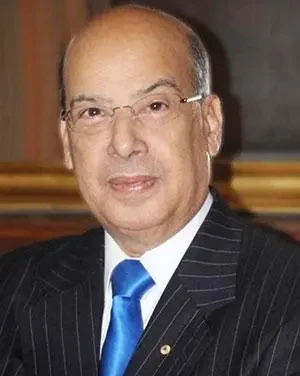
By Sir Ronald Sanders (Kaieteur News) – As 2025 draws to a close, the Caribbean Community stands at a moment that calls for less rhetoric and more realism. CARICOM is experiencing a period in which external pressure is intensifying, new norms are hardening among powerful states, and the need for...Jan 10, 2026
Hard truths by GHK Lall (Kaieteur News) – The PPP Govt can afford to be how it is today. Controlling. Complacent. Not give a damn. After all, it has everything going in its favor. Hence, from the ruling party’s position, if it is not causing any lost sleep, why tamper with what has...Freedom of speech is our core value at Kaieteur News. If the letter/e-mail you sent was not published, and you believe that its contents were not libellous, let us know, please contact us by phone or email.
Feel free to send us your comments and/or criticisms.
Contact: 624-6456; 225-8452; 225-8458; 225-8463; 225-8465; 225-8473 or 225-8491.
Or by Email: glennlall2000@gmail.com / kaieteurnews@yahoo.com