Latest update January 5th, 2026 12:30 AM


Latest News
- ‘Venezuela’s oil must serve US interests’ – Rubio
- ‘Silica City is Pradoville 3′ – Ram warns of exploding costs, lack of accountability
- ‘No Blood for Oil’ – Venezuelans, others protest ‘kidnapping’ of Maduro by US forces
- ‘No Opposition Leader, No Oversight’ – WIN warns Guyana is flying blind as Regional tensions explode
- Fire destroys former Govt. building in NA
GHRA warns of deepening authoritarianism in Guyana
…as political, civic spaces shrink
…says Mohamed saga exposes systematic governance breakdown
(Kaieteur News) – The Guyana Human Rights Association (GHRA) has raised grave concerns over what it describes as an accelerating contraction of political and civic space in Guyana, warning that the country is facing its most serious governance crisis since the adoption of the 1980 Constitution.
In a wide-ranging statement examining the political fallout of the 2025 national elections, the GHRA argues that governance over the past year has been overwhelmingly shaped by the emergence of the political party We Invest In Nationhood (WIN), financed by the Mohamed family, and by the State’s “single-minded” focus on securing the extradition of members of that family.
According to the rights body, both the elections and post-election politics have been dominated by the Mohameds, not only because of WIN’s electoral breakthrough, but also due to what GHRA characterises as a politically motivated campaign to extradite them before they can publicly explain their relationship with the ruling party. The Association contends that this objective has come at a high institutional cost, involving “Byzantine levels of legal and judicial irregularities,” interference with tax processes, and the deliberate postponement of Parliament in order to avoid a domestic legal reckoning. Parliament sidelined to block Opposition Leader central to the GHRA’s concern is the prolonged delay in convening the new Parliament, a move it says was calculated to prevent WIN leader Azruddin Mohamed from being sworn in as Leader of the Opposition.

Leader of We Invest in Nationhood (WIN) and Member of Parliament (MP) Azruddin Mohamed
The non-election of an Opposition Leader, the GHRA notes, has had serious knock-on effects, paralysing constitutional processes that require mandatory consultation. It describes this as the most glaring example of shrinking political space since 1980, when the Constitution was crafted to legitimise the concentration of power under the Burnham presidency. While the delay in convening Parliament has attracted criticism across the political spectrum, the GHRA observes that opposition parties have failed to unite around this pivotal issue. Instead, it says, parties have pursued individual agendas: ranging from corruption to women’s rights, without recognising that none of these concerns can be meaningfully addressed in the absence of a functioning and unified parliamentary opposition.
The failure to mount a collective response, the Association warns, risks normalising the suspension of Parliament as a political tactic that can be deployed whenever it suits a ruling administration.
The GHRA stresses that the current crisis did not begin with the Mohamed saga but is part of a longer, systematic erosion of democratic space since 2020. It points to the paralysis of the Parliamentary Public Accounts Committee, chaired by the Opposition as a clear example, noting that changes to quorum requirements followed by strategic absenteeism by government members have effectively neutralised the body. Further, the Association references findings from the European Union Elections Observation Report, which documented multiple violations of the Representation of the People Act, painting what GHRA calls a “systematic contraction of political space.” The continued failure to confirm key constitutional office holders, including the Chancellor and Chief Justice, is also highlighted as a mechanism that concentrates illegitimate power in the Presidency.
Meanwhile, the political independence of the Guyana Police Force, the GHRA says, has been “fatally undermined” by partisan manipulation of senior appointments.
Civic space under assault
The GHRA warns that civic space has also narrowed dramatically particularly in recent months. It noted the replacement of civil society representation within the Guyana Extractive Industries Transparency Initiative (GYEITI) by the Private Sector Commission is described as a watershed moment. For civil society, the Association argues, this move is equivalent to what the Mohamed saga represents in politics: a high-profile example of institutional contraction. As a result, GYEITI reports can no longer be viewed as independent assessments, but rather as government-approved documents, the GHRA cautions.
The Association identifies authoritarianism and the shrinking of civic space as the single greatest threat facing Guyanese society, warning that it fuels public disillusionment with representative democracy itself. Rather than responding piecemeal to individual abuses, the GHRA urges both political and civic actors to focus on the broader pattern of institutional decay. It calls for a unified response from civil society, including professional bodies, faith-based organisations, cultural groups, sports associations, and advocacy NGOs to confront what it describes as a fundamentally flawed governance framework. Recognising the interconnected nature of Guyana’s crises climate vulnerability, food insecurity, inequality and corruption the GHRA argues that resistance to autocratic influence must be holistic and systemic. Without collective action against clear and persistent institutional abuse, the Association warns, Guyana will remain ill-equipped to confront the profound political challenges confronting the nation.
Discover more from Kaieteur News
Subscribe to get the latest posts sent to your email.
Similar Articles

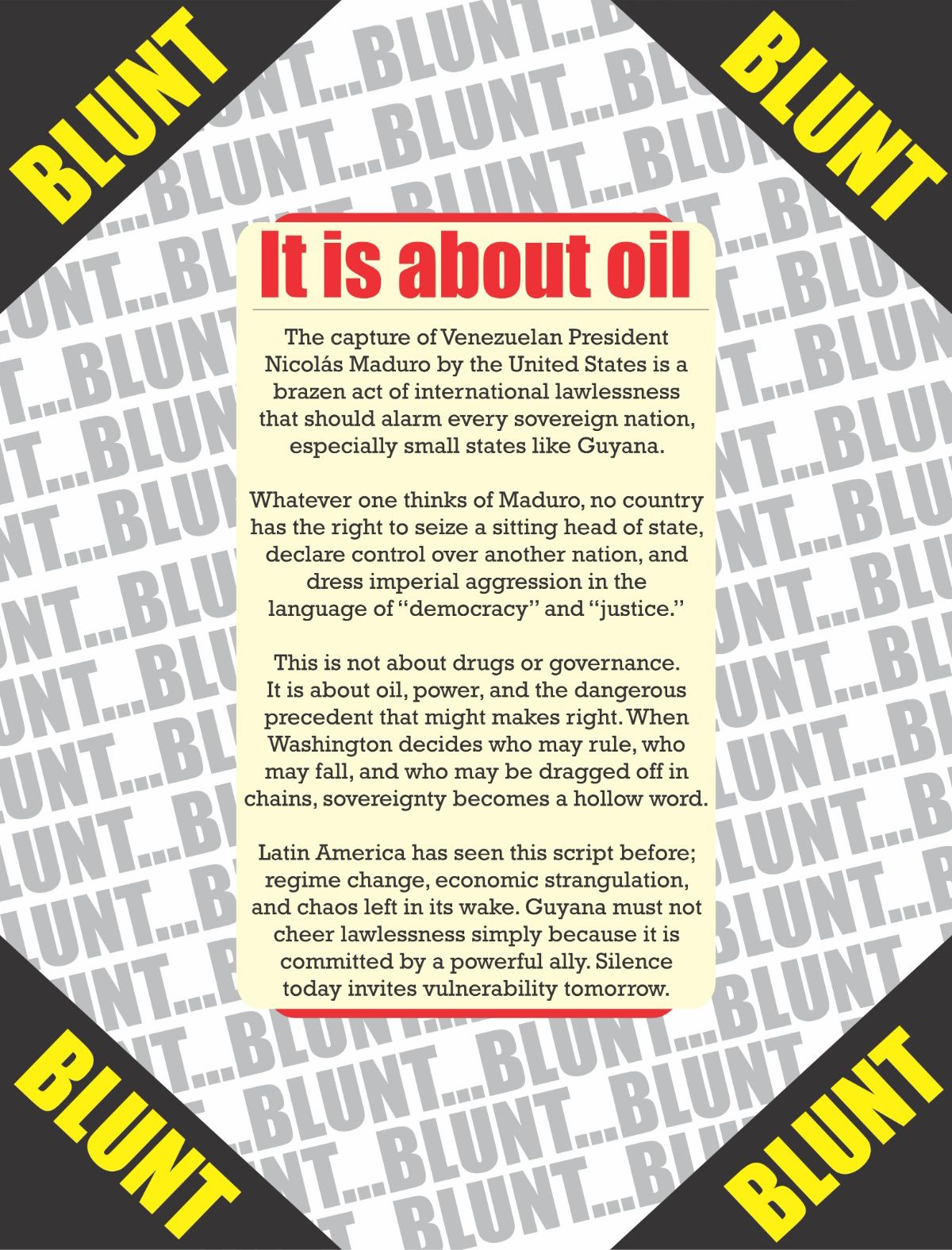
THE BLUNT OF THE DAY
Sports
Features/Columnists

Sir. Ronald Sanders
The GHK Lall Column

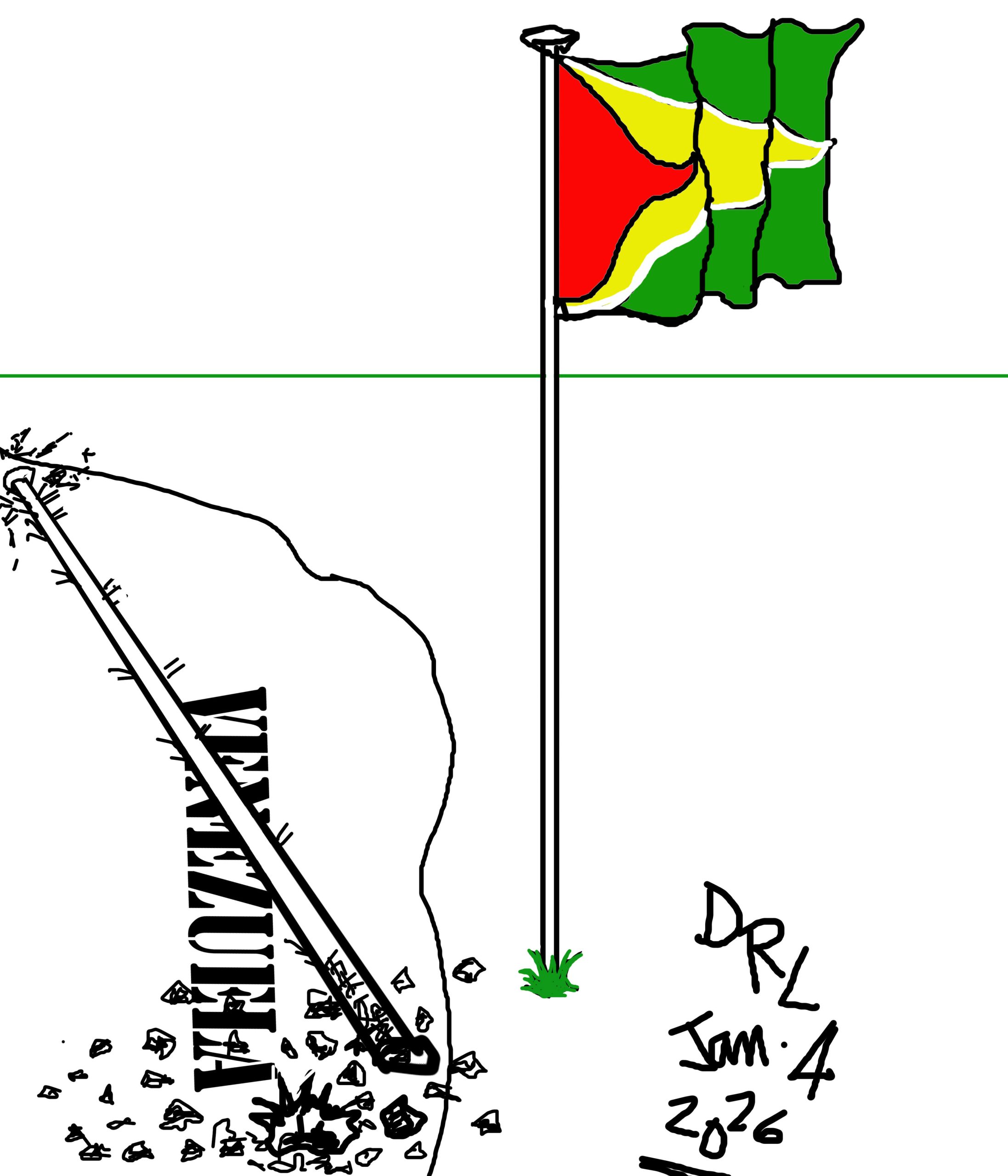
Weekend Cartoon