Latest update January 4th, 2026 12:28 AM


Latest News
- U.S. to ‘run’ Venezuela until ‘safe transition’ – Trump
- Guyana supports efforts that uphold democratic norms – President Ali
- Guyana must prepare for any eventuality after U.S. strike on Venezuela – APNU
- New Amsterdam building gutted by fire
- $2B loan for Hospitality Institute flagged “at risk” by Caribbean Development Bank
From Where I Stand: History Will Not Forgive Our Limited Imagination
By Janelle A. N. Persaud
Lately, Guyana feels trapped in a constant spectacle.
Ministers trading accusations with opposition figures who are posting exposés on social media. Videos of houses, cars, lifestyles, friendships turned feuds. Social media buzzing, sides forming, timelines consumed. And yet, when the noise settles, what has actually changed?
Nothing that touches the daily reality of the poor.
Nothing that expands dignity.
Nothing that shifts the structure.
Like I said, a spectacle; loud, emotional, consuming but ultimately hollow.

By Janelle Persaud
And I don’t say that to dismiss people’s frustration or curiosity. In many ways, the spectacle has become the only remaining entry point for accountability because institutions feel distant, unresponsive, or captured. So it tracks that citizens will engage with what they can see and confront because in many ways it feels like action.
I joked recently that this was “above my income bracket,” but frankly there is truth in that humour.
We are watching the corrupt argue with the corrupt about who is more corrupt and calling it accountability. Meanwhile, the structures that make corruption easy remain very much in place. If institutions do not change, it will not matter who occupies office next. The outcomes will look painfully familiar.
Because while they quarrel, the living conditions for the majority of Guyanese remain unchanged. When the dust settles, public servants will still be earning wages that barely stretch to the end of the month, if so far. Children will still be struggling with literacy long before “free university” ever becomes an option. The cost of food is still through the roof as families prioritise survival over dignity.
And yet, this spectacle consumes us. But why?
As Marxist Theorist Guy Debord observed in his 1967 work The Society of the Spectacle, observed “The spectacle is not a collection of images, but a social relationship between people mediated by images.” In other words, what we are witnessing is not merely a distraction. It is the substitution of structure, governance and justice with performance, visibility, and exposure.
We seem to have a thin appetite for structure and a massive one for spectacle as a people. Structure is boring and slow work. It speaks to institutions that function regardless of personalities and policies with criteria and timelines and reforms that take years surviving election cycles. It rarely produces heroes. The spectacle on the other hand, looks an awful lot like elite quarrels and public ‘buse outs’, viral accusations, outrage cycles that feel like accountability, personalities replacing processes and performance standing in for progress.
So, a spectacle gives the illusion of movement; while structure is what actually moves societies. Maybe we keep choosing the former because the latter asks more of us.
But beneath the noise, something deeper is at work. What we are witnessing is not just corruption, conflict, or distraction. I find it likely the consequence of a society that has lost its capacity to think structurally. When institutions feel unreachable and reform feels unimaginable, performance becomes politics. Exposure replaces accountability. Noise stands in for change.
I landed on the “poverty of imagination shaped by the system we inherited”. You see, state we inherited was designed to manage people, distribute resources, and to maintain order, which still shapes how we govern, imagine solutions, and even how we campaign politically.
The latter is evident when you read the various political manifestos. Election after election, they read like variations of the same document with slightly different figures and branding. That sameness is not accidental. It reflects the limits of our political imagination and narrow space the systems allow our leaders to operate in or they have bound themselves to.
Take Silica City, for example. On paper, it sounds visionary; a smart, modern city built for the future. The language is ambitious.
But when you look at what is actually being proposed it clearly reveals the limits of our imagination.
There is nothing fundamentally new or extraordinary about it. It does not reimagine how ordinary Guyanese live, move, learn, or work. It does not challenge inequality. It does not democratise opportunity. It simply relocates comfort for those already positioned to afford it.
It boils down to replication with better marketing.
The same applies to our preferred policy tools like cash grants. Yes, they provide relief, and for many families they matter deeply. However, universal and untargeted cash grants are a lazy and unimaginative response to the inequality we face.
As I reflect on what does bold leadership look like, I couldn’t help but reflect on some of forefathers. Whatever one thinks of Forbes Burnham, Cheddi Jagan, or Walter Rodney, they were not small thinkers. Burnham imagined economic independence and state-led development. Jagan envisioned social justice rooted in labour and equality. Rodney challenged inherited class and racial hierarchies altogether. Their visions were highly contested, and in some cases deeply flawed. But they shared one thing we seem to have lost: the courage to imagine Guyana as something fundamentally different, not merely better managed.
What we have instead is a politics of immediacy. Short electoral cycles. Short attention spans. Policies designed to show movement rather than create transformation. And a public discourse so consumed by spectacle that we rarely stop to interrogate structure.
Guyanese are absolutely capable of more — but we have to first believe that. And then we have to understand the structures and inherited systems that shape our beliefs and quietly limit our expectations, and dismantle them without apology. I often return to education because it is one of our earliest sites of socialisation. When my son was just six years old, he got lashes in school for doing his “homework” at school. He had finished all of his assigned work and, quite impressively, decided to complete the rest so he could maximise his time for play. When I spoke to the teacher, she told me, “It’s called homework for a reason.”
Could you imagine a system that punishes out-of-the-box thinking so early? What kind of adults do we think that produces? And so, when we speak about “reform,” we must ask ourselves whether tweaking a system like this is enough or whether we should be rebuilding it entirely for the Guyana we claim to envision.
The greatest risk facing Guyana is not corruption scandals or political theatrics. It is the quiet acceptance of smallness in a moment that demands boldness.
I often ask myself what history will say about this moment. Of course, how fast our economy grew but significantly, I think it will ask whether we used this rare window to reimagine our society.
If we fail, it won’t be for a lack of resources or opportunity. It will be because we settled for relief, spectacle and comfort over transformation, structure, and courage.
From where I stand, history will not forgive us for thinking small when we had every reason to think boldly.
Next week, I will turn to what bold imagination actually requires: the institutions, policies, and courage we have so far avoided.
Discover more from Kaieteur News
Subscribe to get the latest posts sent to your email.
Similar Articles

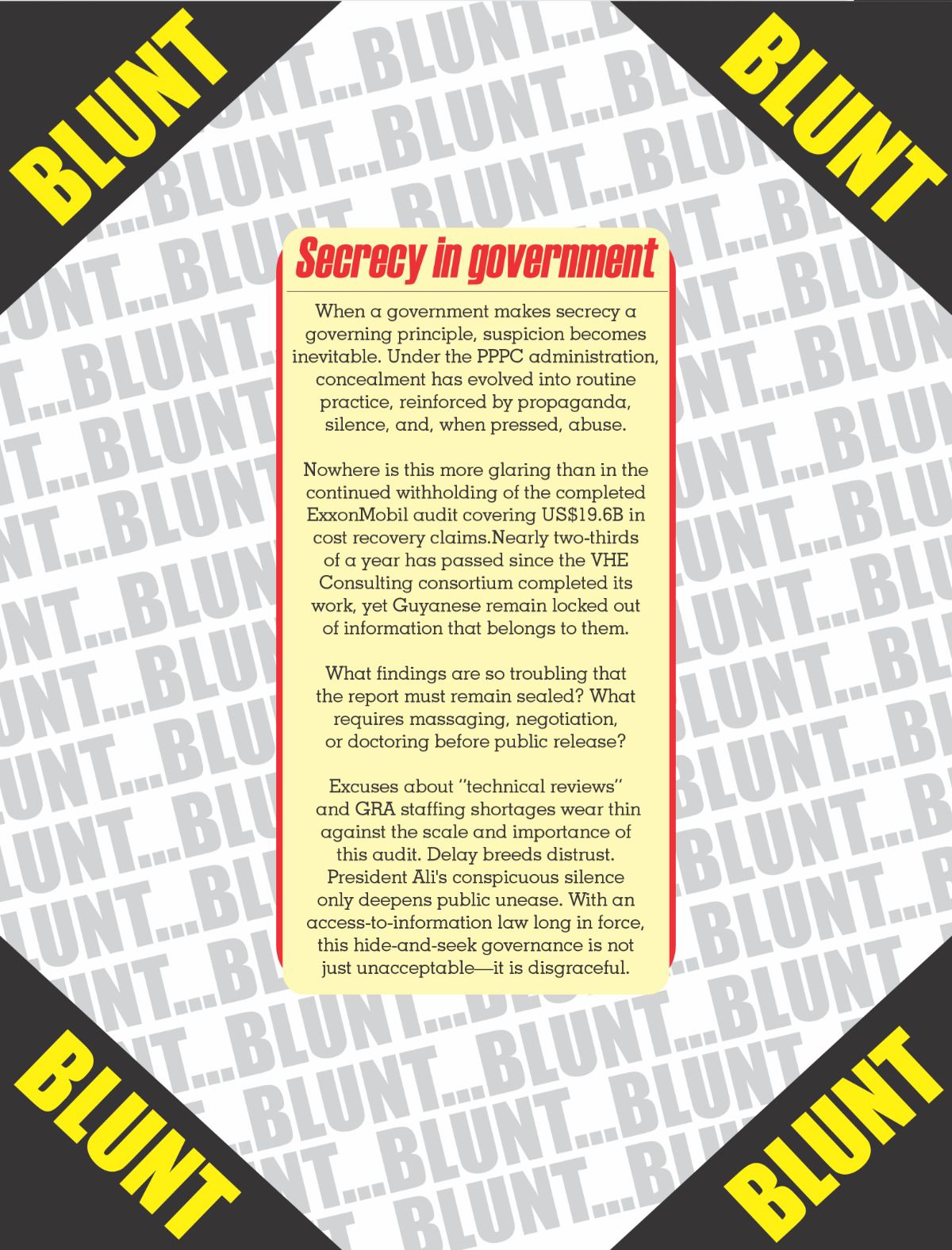
THE BLUNT OF THE DAY
Sports
Features/Columnists

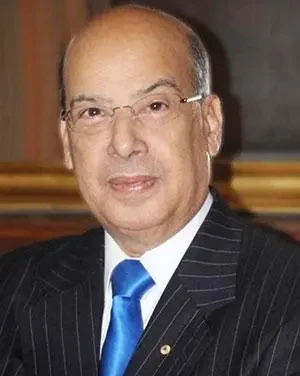
Sir. Ronald Sanders
The GHK Lall Column

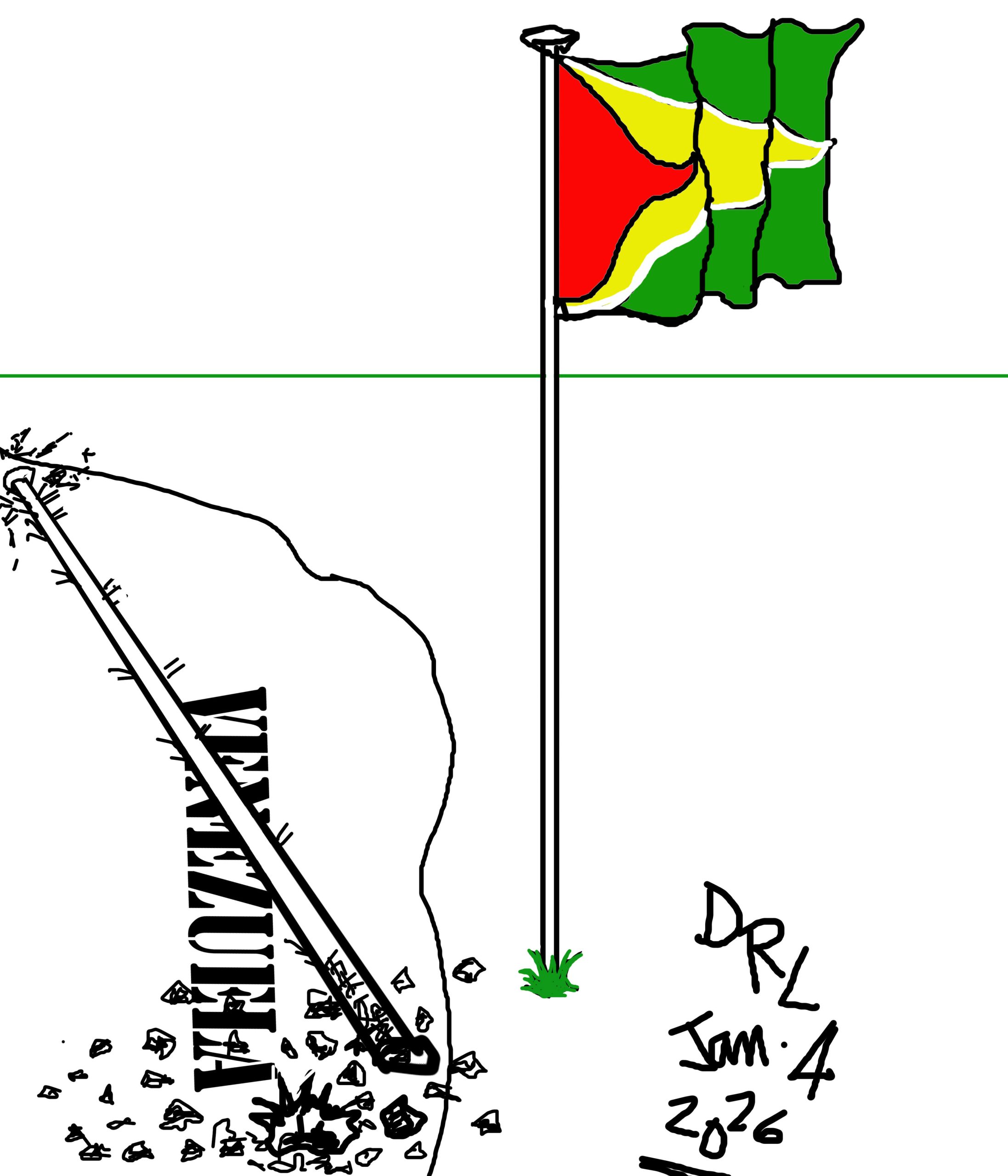
Weekend Cartoon