Latest update September 21st, 2026 2:51 PM


Latest News
- Three killed in Baramita clash
- Defense accuses Police of misrepresenting court testimony, Magistrate says court unfazed by media
- Mohamed alleges political hand behind review of Justice Persaud’s U.S. visa
- ‘Stop blaming ‘sanctity of contract’ for keeping 2016 oil deal – Chris Ram tells Pres. Ali
- Iran and U.S. trade threats after Houthi attacks escalate regional conflict
The grave danger of electing leaders under international sanctions
Dear Editor,
In recent years, the world has witnessed an alarming rise in the election of leaders who are under international sanctions, particularly those imposed by major powers like the United States.
This trend is not just a political issue; it is a profound danger that could further exacerbate the already fragile conditions in many developing countries. Citizens must understand that electing such leaders has far-reaching consequences, which often result in the suffering of the ordinary people, while those in power remain insulated from the very sanctions that affect the masses.
One of the clearest examples of this is Venezuela. Under the leadership of Nicolás Maduro, Venezuela has been subjected to numerous international sanctions, primarily by the United States, aimed at pressuring his regime into changing its policies. These sanctions have crippled the country’s economy, leading to hyperinflation, mass poverty, food shortages, and a collapse in healthcare. Yet, despite the hardships faced by millions of Venezuelans, Maduro and his inner circle continue to live comfortably, insulated from the worst of the sanctions.
Maduro’s government has been accused of hoarding wealth and power while ordinary Venezuelans suffer from scarcity, unemployment, and an overwhelmed health system. Even with the sanctions in place, he has managed to maintain a tight grip on power, with accusations of widespread corruption and manipulation of state resources. Meanwhile, the Venezuelan people face escalating poverty, with the majority of the population living below the poverty line and many forced to flee the country in search of better opportunities abroad.
Other countries, such as North Korea and Iran, offer similar examples. In North Korea, Kim Jong-un’s regime remains in power despite stringent international sanctions imposed by the United Nations and other Western powers. The country is facing widespread food shortages, energy crises, and a lack of basic necessities, yet the ruling elite continues to live in luxury, enjoying privileges that the average citizen could never imagine. Likewise, in Iran, the repressive government under leaders like Ayatollah Khamenei has weathered US sanctions for years, but the people continue to endure the brunt of the consequences, facing skyrocketing inflation and unemployment.
This stark contrast between the suffering of the general population and the comfort of those in power is not only a moral issue, it’s a strategic one. The continued election of leaders who are under international sanctions is a dangerous choice for the people. These sanctions are meant to target the government and its officials, but in practice, they rarely affect the elite who have access to foreign currency, private accounts, and offshore assets. Meanwhile, the ordinary citizens are left to bear the economic burden, leading to widespread poverty and social instability.
It is crucial that citizens in developing countries, where political discontent and frustration are high, understand the devastating consequences of electing leaders who are already isolated on the international stage. While these leaders may make promises of national pride and sovereignty, they are often only able to maintain power by appealing to populist sentiments, often at the expense of their people’s well-being. The real cost is borne by the ordinary citizen who suffers from rising prices, diminishing access to basic goods and services, and a diminishing standard of living.
As voters head to the polls, it is important to consider not only the promises and rhetoric of candidates but also their international standing and the potential ramifications of electing a leader who is under sanctions. Sanctions rarely impact the ruling elite directly; they are often insulated by corruption, foreign bank accounts, and international allies. But the average citizen suffers on a daily basis, facing shortages of food, medicine, and employment opportunities.
Voters must ask themselves: is it worth electing a leader who may offer promises of defiance and sovereignty at the expense of our well-being? Will we be able to endure the economic hardship, social instability, and international isolation that inevitably follows? More importantly, we must demand transparency from our leaders and hold them accountable for the impacts their leadership choices have on the daily lives of ordinary citizens.
In conclusion, while political ideologies and national pride may motivate the election of leaders under international sanctions, it is vital to acknowledge the long-term damage that such leaders bring to their nations. The ordinary people of these countries, who are already struggling to make ends meet, are the ones who suffer the most. Let us not be swept away by the promises of defiance that come with such leaders, but rather, let us choose leaders who have the well-being of the people in mind and seek peaceful, constructive paths to national prosperity.
Sincerely,
Raymon Abdul
Share this:

Discover more from Kaieteur News
Subscribe to get the latest posts sent to your email.
Similar Articles
Website Hits

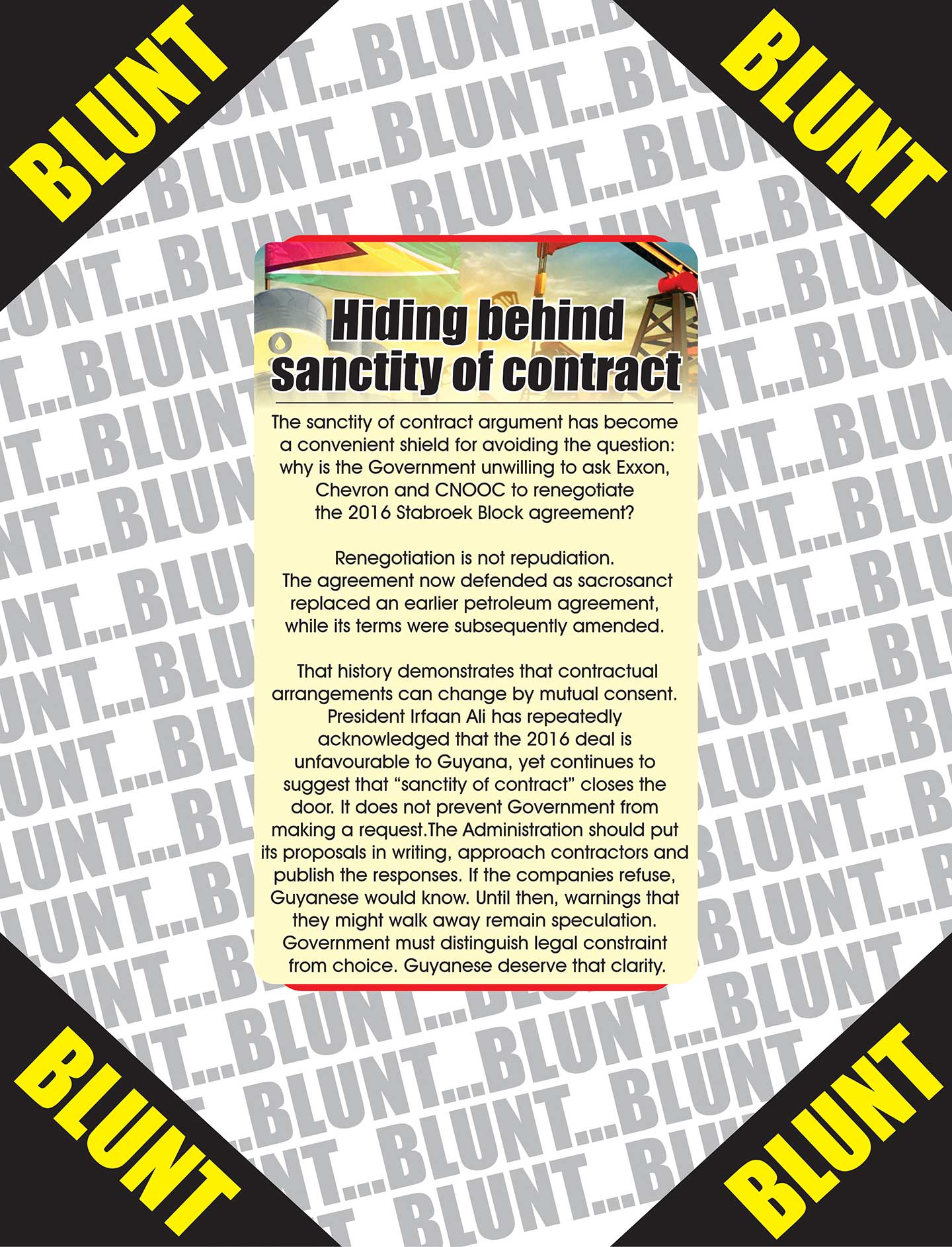
Blunt of the day
Sports

Features/Columnists

Sir. Ronald Sanders

The GHK Lall Column
Weekend Cartoon